Summary
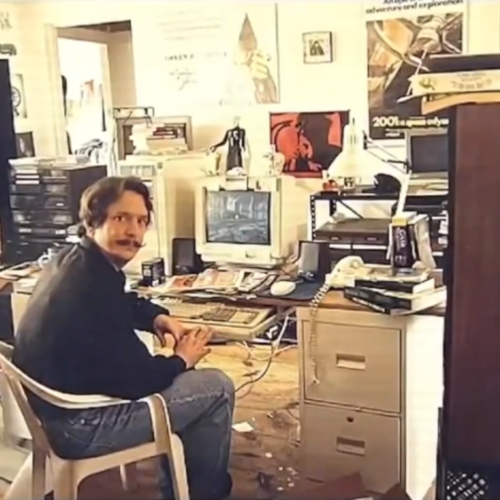
Prolific first-person shooter level designer Richard “Levelord” Gray died Monday at the age of 68, based on reports shared on social media by Apogee Entertainment yesterday. He had “dealt with cancer on and off for a while now,” according to former colleague Joe Siegler. After studying computer engineering in the ’80s and tinkering on some early games in COBOL, Gray broke into the industry at the age of 35 in 1994 with the launch of GrayDoom, a set of four maps for the then-new Doom that were widely shared on CompuServe and beyond. The work attracted the attention of Q Studios’ Nick Newhard, who contracted Gray to work on level design for the late ’90s cult classic Blood. Gray was subsequently hired by 3D Realms, where he said he was given free rein in designing “half the levels” for Duke Nukem 3D. There, he was also responsible for the famous, signed “You’re Not Supposed to Be Here” easter egg, which players could find only by using cheats to explore outside of the usual confines of the map. Gray said in a 2016 interview that he assumed the prevalence of cheats in Duke Nukem 3D would mean that “of course, most all of you would be flying around, seeing what you could break, find easter eggs the easy way …bingo! I gave you an easter egg that you had to cheat to find.” Remembering Richard “Levelord” Gray. In this interview, Richard reflects on the creative freedom he and Allen Blum had while designing the iconic levels of Duke Nukem 3D. — Apogee Entertainment ( [@apogeeent.com])[October 14, 2026 at 8:18 AM] In the years following, his level design work appeared in games ranging from SiN to Quake: The Offering to Half-Life: Opposing Force and Counter-Strike: Condition Zero. “The most important duty you have as a level designer is to bring the player ‘into’ your level,” he said in a 1999 interview for the book Game Design: Secrets of the Sages. ”It’s not until after this submersion that issues like action, game play, and even the Fun Factor enter the game. The more of your level to which the player can attach himself via familiarity, the stronger the player’s sense of ‘being there’ will be.”