Summary
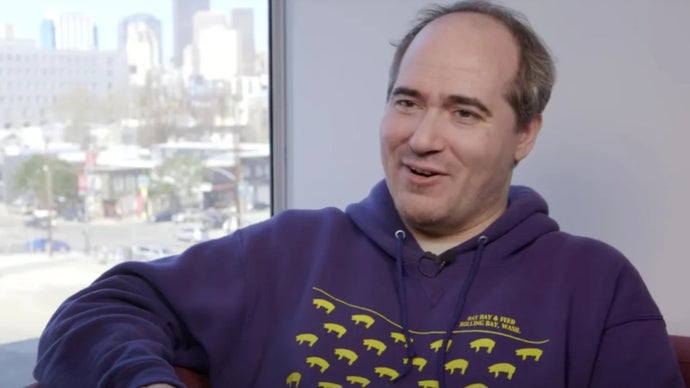
Another day of news, another day in which I find something genAI-related to write about while sighing. But, lo and behold, for once, it isn’t a case of a company shifting gears to prioritise AI usage over paying workers, or a studio tucking its tail between its legs admitting ‘yes, we used it, but we hoped you wouldn’t notice’, but instead a developer loudly and happily rejecting it. Rejoice! Dwarf Fortress’ Tarn Adams, in an interview with GamesIndustry.biz (thanks!), laid out his feelings on the tech pretty clearly. He’s aware and empathetic for it as an epidemic sweeping through the industry, making employees terrified that they’ll be replaced by “some kind of robot that can’t even do your job at this point”, and noting that he’s seen the same thing happen with acquaintances in the medical field. Actual functionality has never been a real concern for companies genAI as an infinite money generator/cost saver, but the employees sure have to worry that their jobs will still be done well if it’s forced onto them or replaces them entirely. Adams makes the apt point that even if he were to try using it, “I don’t think it would really boost my productivity at this point.” Something he mentions that I think is often underdiscussed in notions of genAI in development is the effect that generated code has on performance, and by that I mean tanking it. Generated code does not care for optimisation, and without someone to give a shit about that, games featuring it end up running like shit. This has been seen in the recent wave of genAI-coded decompilations and recompilations ‘made’ by people who don’t care for development, just for being the first to say ‘[x] is now available on modern hardware for free!’ Adams clarifies, “You can tell when you grab a vibe-coded game and your [computer] fan starts spinning. It’s not good enough. But even if it were, I’d still have reasons not to do it.” While he hopes this will never come to pass, he reflects that “the only thing that would push me forcibly […] would be if I could no longer release the game on Windows because Microsoft did some Copilot-ass thing that forced you to do some sort of gen crap to get your game recognised there.” With how much Microsoft has been pulling back on Copilot in recent months, I can only hope, for Adams and the industry at large, something like this doesn’t happen. Anyway, interviewer Lewis Packwood then goes on to ask more specifically about Dwarf Fortress, upon which the joy returns to Adams’ face as he recaps future plans for boat transport, as well as player experiments in building in-game computers powered by the increasingly irate vampires said players have trapped inside them. There’s no happiness like a parent talking about their child.