Summary
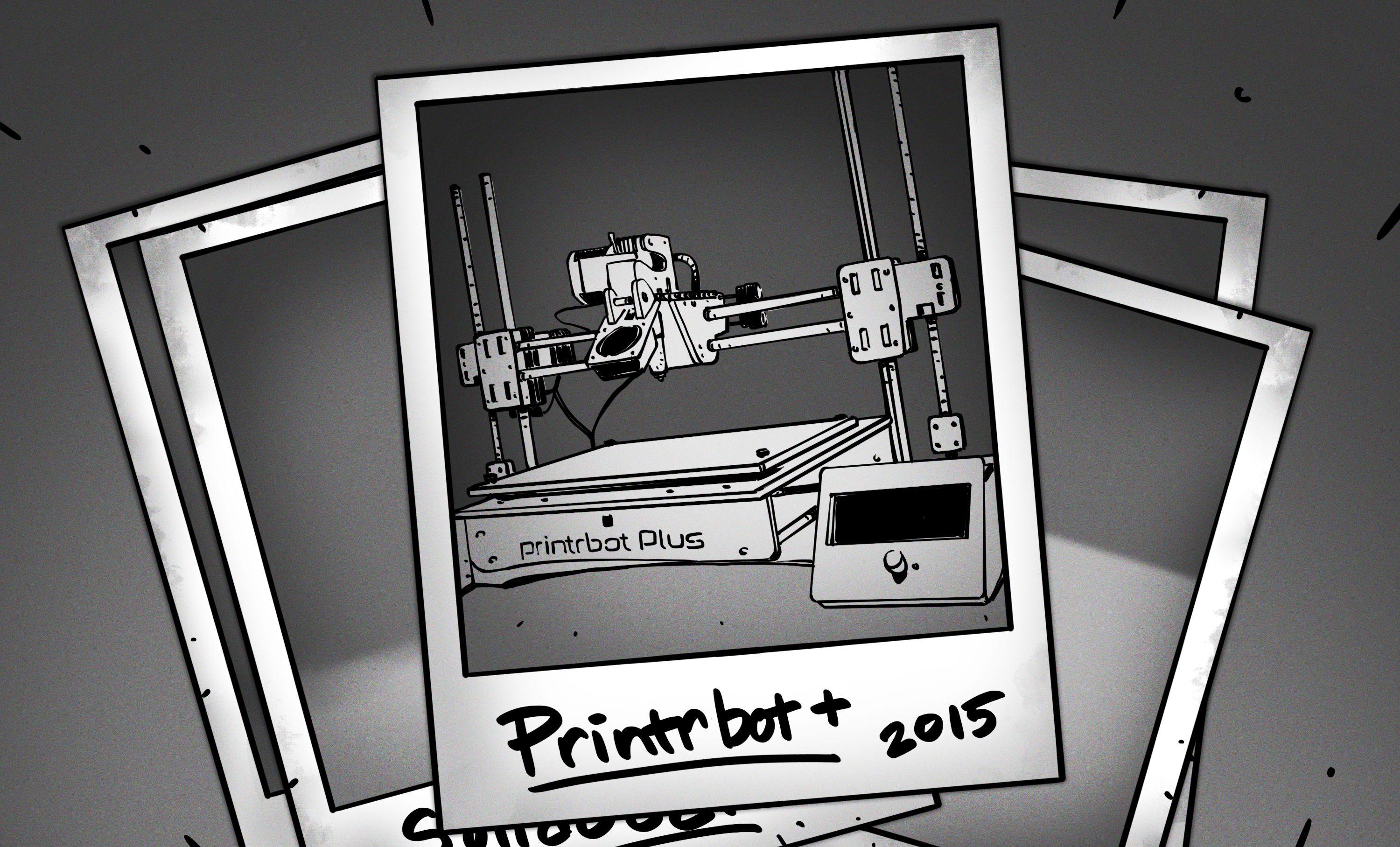
Bridges are a part of our constructed landscape that we take for granted. And bridges by themselves aren’t especially important. What is important is that bridges let you get from one place to another. Technology is often the same. We get from point A to point B through some bridge technology that, probably, most normal people never even notice. Years ago, point A was commercial 3D printing. Industry had stereolithography, selective laser sintering, fused deposition modeling, and other rapid-prototyping technologies. These were not toys. They were expensive industrial systems used by companies that needed prototypes badly enough to pay serious money for them. Fast Forward to Today Today, you can go to a big box store and buy a 3D printer for well under 499 machine, which was exactly the sort of price that made people start thinking desktop 3D printing might jump from hackerspaces to ordinary homes. The Solidoodle story also shows the danger of that moment. The market wanted cheap, reliable, attractive, assembled, easy-to-use machines. The technology could supply maybe three of those at once. Companies were trying to scale production, support beginners, improve hardware, and hit aggressive prices while the entire field was still learning what “reliable” even meant for a low-cost filament printer. Solidoodle eventually suspended operations in 2016, a fate that befell more than one early desktop 3D printing company. Part of Solidoodle’s problem was that they were too invested in the original RepRap idea. I almost bought a Solidoodle because I was fearful of trying to put a kit together with so many mechanical parts. Why didn’t I? Because RepRap lead times were enormous. At least part of the problem was that they were using Solidoodle printers to produce parts for Solidoodle printers. Say you have ten printers. You get orders for 100. Great, right? But getting parts for those 100 printers done on your ten printers will take a long time. Of course, you could take the first ten to help, but now you can only ship 90 printers. If you only had 100 orders, you’d be fine. But in the printer-starved 2010s, a cheap printer like Solidoodle or Printrbot would get orders faster than they could fill them, and had to decide if they’d fill orders faster or try to make do with their existing printer farms. There really isn’t a right answer to that question. We heard that [Brook], for example, expected to sell 50 printers through Kickstarter. They wound up with a backlog of over 1,000 printers. Within a year they had 200) that, up to that point, had seemed impossible. The Anet A8 represented another branch of the same tree: a very cheap kit printer, descended in spirit from RepRap machines, that put a large-ish build volume within reach of people willing to accept risk, tinkering, and sometimes questionable electrical design. The End? These machines were not the end state either. The cheap printers democratized access, but many still required an operator rather than a mere owner. The Anet A8 in particular became infamous not just for its low price but for the upgrades people considered mandatory: better firmware settings, frame braces, MOSFET boards, power supply caution, and general fire-safety paranoia. Still, it mattered. A rough kit at 200 changes a market. It lets students, hackers, model builders, repair-minded homeowners, and the merely curious take a chance. My A8 is unrecognizable today with an aluminum frame and a 32-bit controller board, a proper 24V power supply, a custom hot end mount, and other enhancements. You can see my original A8 (and a peek at the Printrbot in the background) in the video below. A few years later, it looked like this video. The real consumer-ready printers came later, after years of iteration. Auto bed leveling became common. Filament paths improved. Machines got stiffer. Slicers became far better. PEI spring steel sheets replaced a lot of glass-and-hairspray rituals. Direct drive and better Bowden setups reduced extrusion drama. Enclosed CoreXY machines brought speed without quite so much ringing and finagling. Companies learned that the printer had to be a system: hardware, firmware, slicer profiles, materials, documentation, and support. Right, Yet Wrong Looking back, the funny thing is that the early hype was both wrong and right. Desktop 3D printers did not become like inkjet printers, and they certainly did not become like microwave ovens. Most people do not need to manufacture a plastic bracket before breakfast. Most people do not want to think about layer adhesion, nozzle wear, or whether that weird clicking noise is the extruder eating the filament. I lived through the time when the hacker dream was that every home would have a computer. Most of us didn’t see what would really happen. Every person has at least one computer; every home has dozens. But we were on the right track; most of us just didn’t see what would drive it. But I never really thought 3D printers would become as common as personal computers. I did think it might become like a drill press. Not everyone has a drill press. In fact, most people probably do not. But no one is amazed to learn that you have one. It is a normal thing for a certain kind of person to own. If you fix things, build things, make brackets, or restore equipment, a drill press is not exotic. It is just one of the tools that may live in the shop. That is where 3D printing has largely landed. Not universal, but ordinary. A decade ago, saying you had a 3D printer was a conversation starter. People wanted to see it move. They wanted to know if you could print a wrench, a phone case, a toy, or, inevitably, another printer. Today, in technical circles, saying you have a 3D printer is more like saying you have a bench vise. The interesting question is not whether you have one, but what you use it for. That normalization is the real legacy of the awkward Kickstarter era. Those machines were crude, but they were legible. They let us see the process. They forced us to learn what mattered. They converted 3D printing from an industrial service into a shop skill. A Printrbot with zip-tied LM8UU bearings and bits of filament jammed in as shims was not a consumer appliance. It was a bridge. And like many bridges, it was not the destination. It was the thing that got us there. Of course, things continue to move. Maybe one day we will look back on the current generation of printers and wonder how we ever used them. But, like the personal computer, we probably can’t imagine what is going to drive the adoption of those new machines. I got in relatively late. I started out with an Ender 3 many many years ago and fried the mainboard a day after putting it together, because I upgraded it with a touch probe. Turned out that the touch probe cable wasn’t plug and play for my board and I should have moved cables in the connector. After buying a new board, I was able to get it so it wouldn’t burn down the printer. But it took weeks to get to the point where I could actually use it. Turns out I had to modify Marlin firmware and after weeks, I couldn’t do it. No one was apparently willing or capable of helping me. After several weeks I found a pre-compiled firmware on a source I didn’t know if I should trust it, that had precompiled Marlin firmware. I uploaded it and it worked. I ran the printer like that for years. Eventually bought an Ender 3 pro version and used it for another few years, again with firmware someone else made so I wouldn’t have to touch Marlin. Last year I bought the Anycubic S1C. Great hardware but the software is a pain to use, locked down firmware so you can’t use other software. Their software is using their servers to connect to it. I sometimes open their software and it’s horrible. It’s a bad clone of OrcaSlicer modified with their cloud services. I’m glad that Rinkhals exists or that printer would have been an expensive paperweight. I like 3D printing. I use it a lot and these days I’m glad that it’s come down to a ‘it just works’(TM) level of printing. Especially now the days of glass/PEI is over and we are in the cryogrip era. I’m constantly making brackets, mounting options for motorcycles, for things around the house, even for work. But sadly when I look at manufacturers like AnyCubic and Bambulab, it’s nothing worth cheering for. They have amazing hardware, you just place it down on a stable surface and you can print. But it’s getting locked down more and more and it’s not looking like we are heading towards a good future. And now with new laws coming in California and New York that will impact the rest of the world too, companies are likely to be forced to lock down printers even further which will result in locked down being the new thing, just like it happened with cars. With several modern car brands, things like replacing a tail light on a BMW, causes the car to go into fault mode as it needs to be reregistered by the dealer. A new Mercedes model refuses to start if you open the hood yourself. I see that happening to printers too. im still on the a side of this bridge, as my printrbot still works. I started with a Makerbot Replicator 2 (which hadn’t been assembled correctly) and thought “this is the future!”. The (correctly assembled) Prusa Mk2S was next and it still works perfectly fine without any maintenance. The Mk4S MMU is also pretty faultless and sits beside my drill/mill machine. Add the printing pen for touch-ups and I’m happy living in the future!