Summary
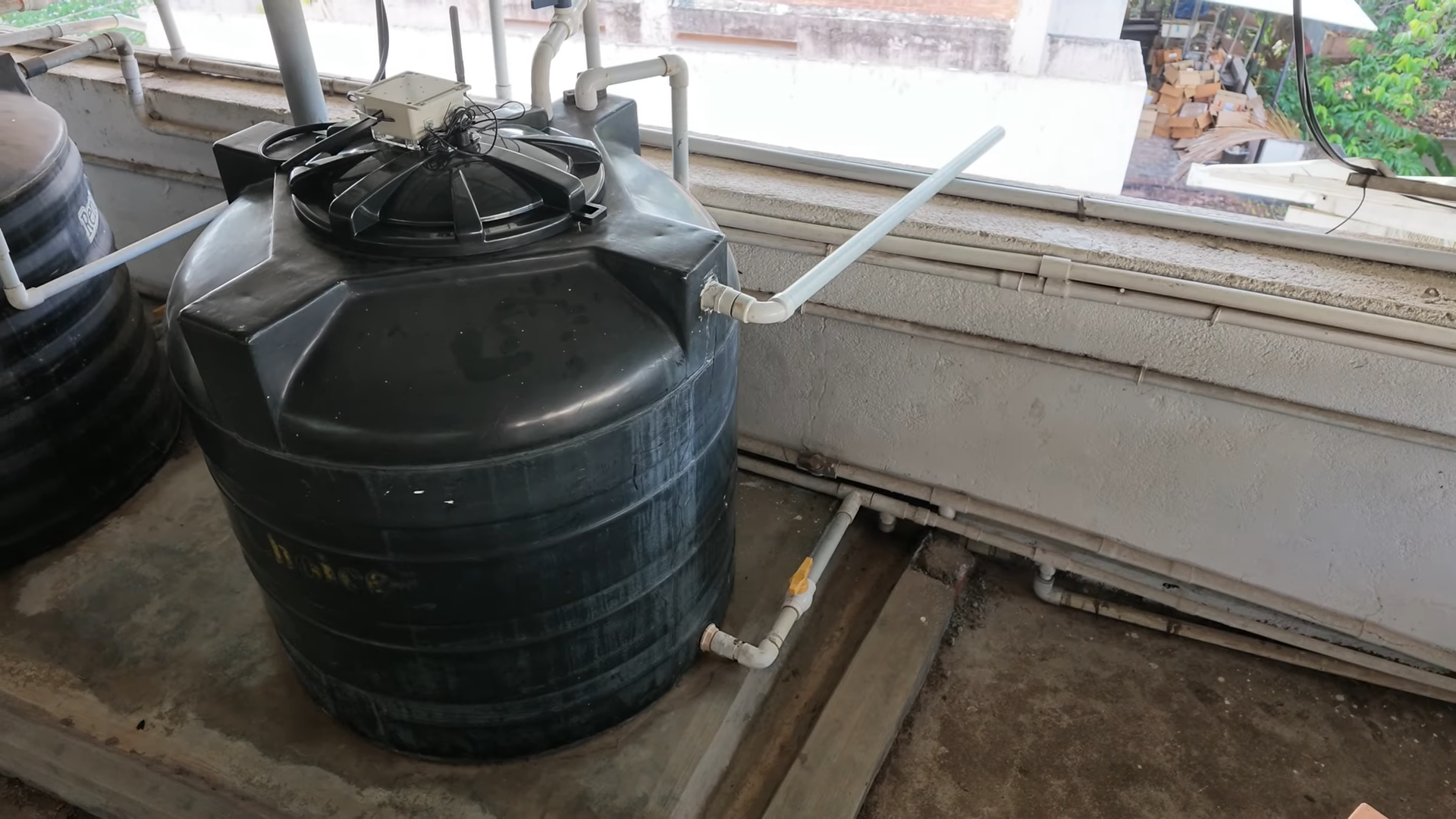
[Jumpor] lives in a part of India where the water infrastructure is a little frustrating to use. Water gets delivered to underground tanks outside of homes, and must then be regularly pumped into rooftop tanks prior to use inside the building. Typically, this pumping is handled manually—by switching on a pump and running it until water comes out of an overflow pipe to indicate the rooftop tank is full. [Jumpor] decided to improve this wasteful and time consuming process with a little automation project. The build is based around an ESP32 microcontroller. It’s hooked up to an ultrasonic sensor which can measure the water level inside the rooftop water tank. When the sensor detects the level descending below a set point, the microcontroller fires a relay to trigger the lift pump to fill up the tank. Once the sensor detects the tank is full, the pump is shut off, saving liters of water compared to waiting for water to pour out of the overflow as an indicator of the same. It’s a simple enough project, but [Jumpor] was sure to include the important practical considerations. Since the rig was being installed in a rental, it was desirable to not make any permanent modifications to the water system. Thus, a fresh cap for the water tank was modified to host the electronics and level sensor, such that the original could be replaced at a later date. Due consideration was also paid to things like avoiding crossing the minimum detection threshold of the sensor, which could lead to accidental overflows if not managed correctly. The aim of this project was to ease the day to day burden of maintaining a basic utility. That’s the sort of project we love to see around these parts. Just wondering, why not a float level sensor? Harder to make a youtube video sound interesting/different? First reaction is that moving parts wear and are inherently inaccurate. I have a float sensor on my fish pond that gives me nothing but grief. Something fishy may be happening there. It’s actually in a box separated from the koi by a net, so it’s more like algae buildup and leaves and the fact I can’t seem to get quality float sensors, they’re all cheap and nasty. Hmm, algae seems a bit harder to deal with …. Float sensor would be more expensive and give less detail on how much water is left? Ultrasonic is good, no water contact or moving parts. Float switches could directly control a pump. Of course if it gets stuck, the pump runs all night until the well runs dry or it sucks mud, etc. Redundancy – two float switches in series would be a good idea. Also, capacitive switch right through the wall of the container is a thing too. Seemed it was more a video about the interface. As long as the sensors can handle the humidity levels in a water tank, like 100% RH and condensation Yep From experience, the bare PCB module sensors you get off of online places will not hold up long in those environments. That’s the perk of a float sensor. They are very reliable. For example: millions of toilets Also: the gas gauge on your car Hmm. I’ve been looking for something like this for my camper for a while. I bet it would work just as well for the gray water tank so I know when it needs dumped as well.