Summary
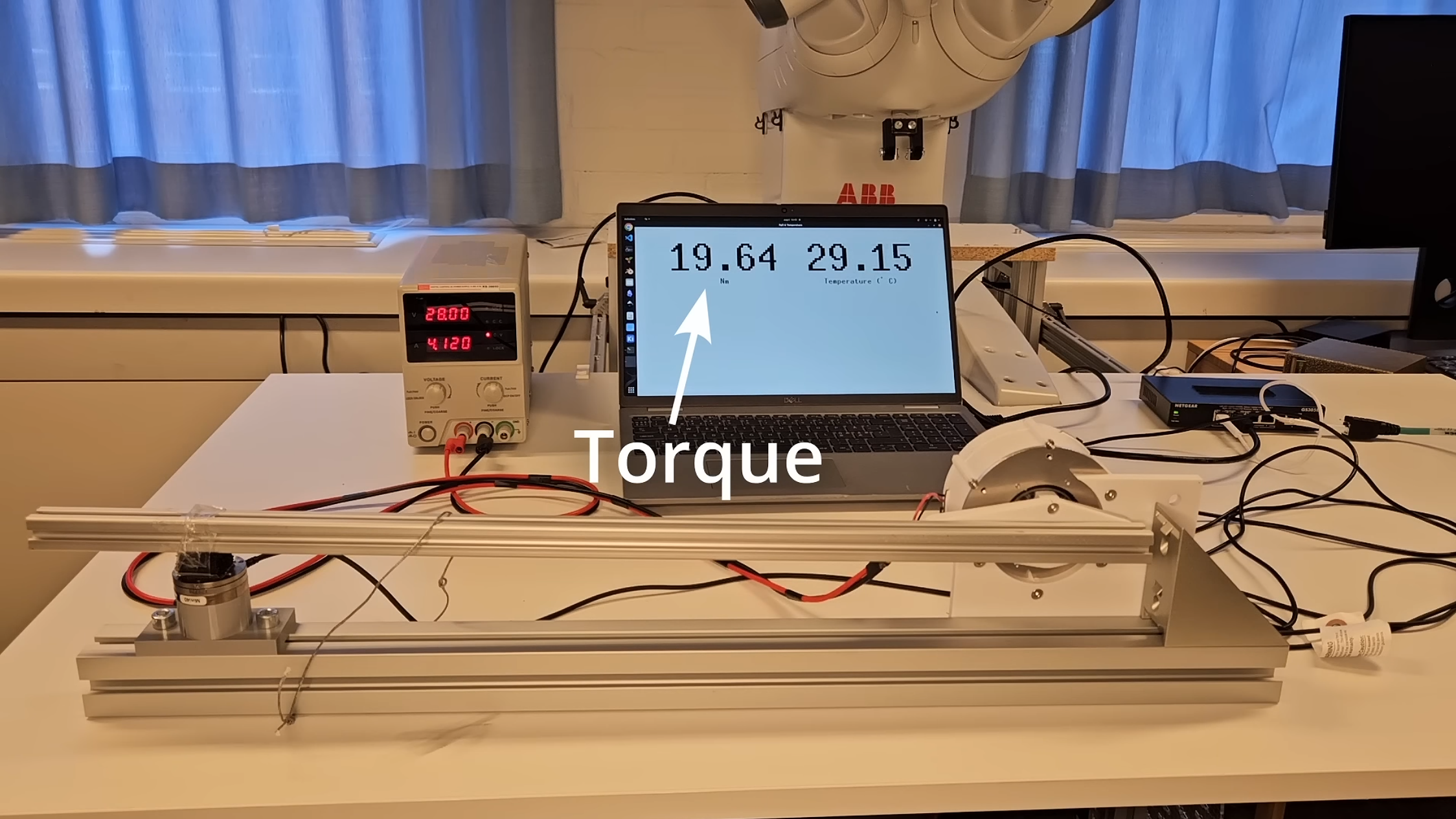
Unlike biological systems, which can use muscles, robots that try to imitate them don’t have particularly fast, powerful, compact linear actuators available. This puts walking robots at a particular disadvantage, since they can’t spread their actuators along a limb and have to place them right at the joint. [Food for Robots] took on the challenge of building such a joint-mounted actuator, and shared the results in a recent video. [Food for Robots] is building a walking robot, so he needed a compact, lightweight, and backdrivable actuator capable of producing 20 Newton-meters of torque. He’d previously built a largely 3D-printed actuator, but when he tried to exceed 10 Nm of torque with it, various parts kept breaking. He therefore machined the second iteration out of aluminum; since it didn’t need to be 3D printed, he switched from a Capstan drive to a planetary gearbox. The gearbox sits in the center of the actuator, inside the stator, and uses several stacked layers of gears to increase strength within the limits of a small CNC. The back of the motor’s rotor holds a small magnet, and the control board uses it to read the position. [Food for Robots] reused the controller from the earlier actuator. In the first test, the actuator didn’t pass 10 Nm of torque, despite doubling the stator’s thickness. After some investigation, [Food for Robots] found that increasing the number of windings hadn’t increased power, since it had cut the number of wires used and thus increased resistance. However, increasing the current limits in the field-oriented control algorithm did let it reach 20 Newton-meters. For a few other quasi-direct drive actuators, check out some of the other great builds we’ve featured. Please be kind and respectful to help make the comments section excellent. (Comment Policy)