Summary
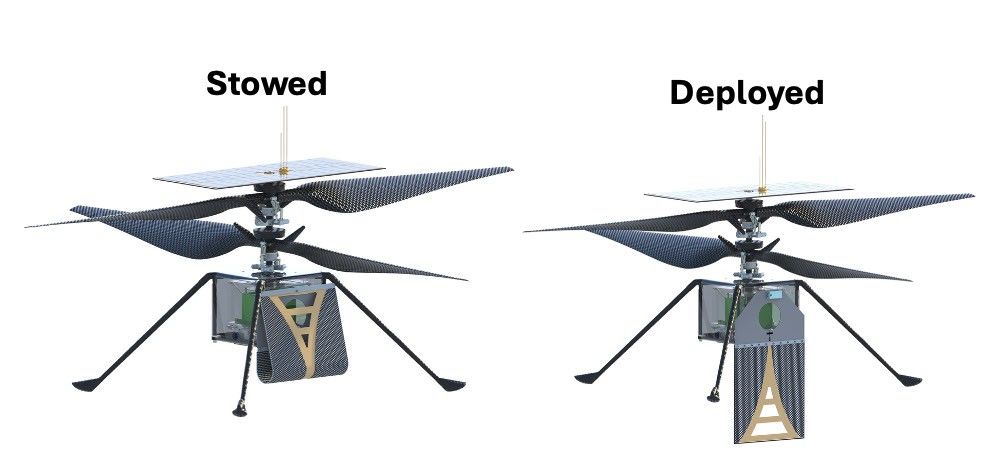
After the little Mars helicopter Ingenuity blew everyone away with its performance, it was clear that a future Mars mission should involve more helicopters like it, with even more capabilities. The main proposal here is NASA’s SkyFall mission which would involve three autonomous helicopters, capable of searching for resources like water. To this end they would need a ground-penetrating radar system, with the antenna somehow folding away for landings, an idea that JPL is currently testing. The SkyFall mission is currently penciled in to commence in 2028, following which it will be deployed from the Space Reactor-1 fission reactor-powered spacecraft based around elements of the now discarded Lunar Gateway space station. This obviously poses some uncertainties around when and if this mission will actually take place, but that doesn’t prevent JPL engineers from solving issues with these SkyFall helicopters. As the antenna for the ground-penetrating radar extends beyond the landing legs, it was crucial that said antenna was flexible enough to simply fold in on itself like fabric. For this they used an existing flexible antenna design called Vivaldi, which was downscaled for the helicopters and subsequently tested to see how many simulated Mars landings it would be able to resist, as well as the effect of the cold nights and warm days. We’re looking forward to seeing these SkyFall helicopters zip over the Martian surface. Maybe they can even swing by Ingenuity while they’re in the neighborhood. The Space Reactor-1 nuclear propulsion sounds interesting but what happens to the craft after it gets to Mars and deploys the lander+helicopters component? Does it just orbit for a few years until it decays and the HALEU gets splattered over the martian surface? I browsed through most of the links at the end of the SR-1 wikipedia page and not one of them had any mention of disposal plans. Looks like a Vivaldi horn antenna?