Summary
After building a couple of internal combustion engines by milling billet aluminium stock and cringing at the absolute waste of material this created, [Camden Bowen] figured he’d give casting metal parts a shot. Of course, the key here is to create the molds for said casting, which is where you got a few options available.
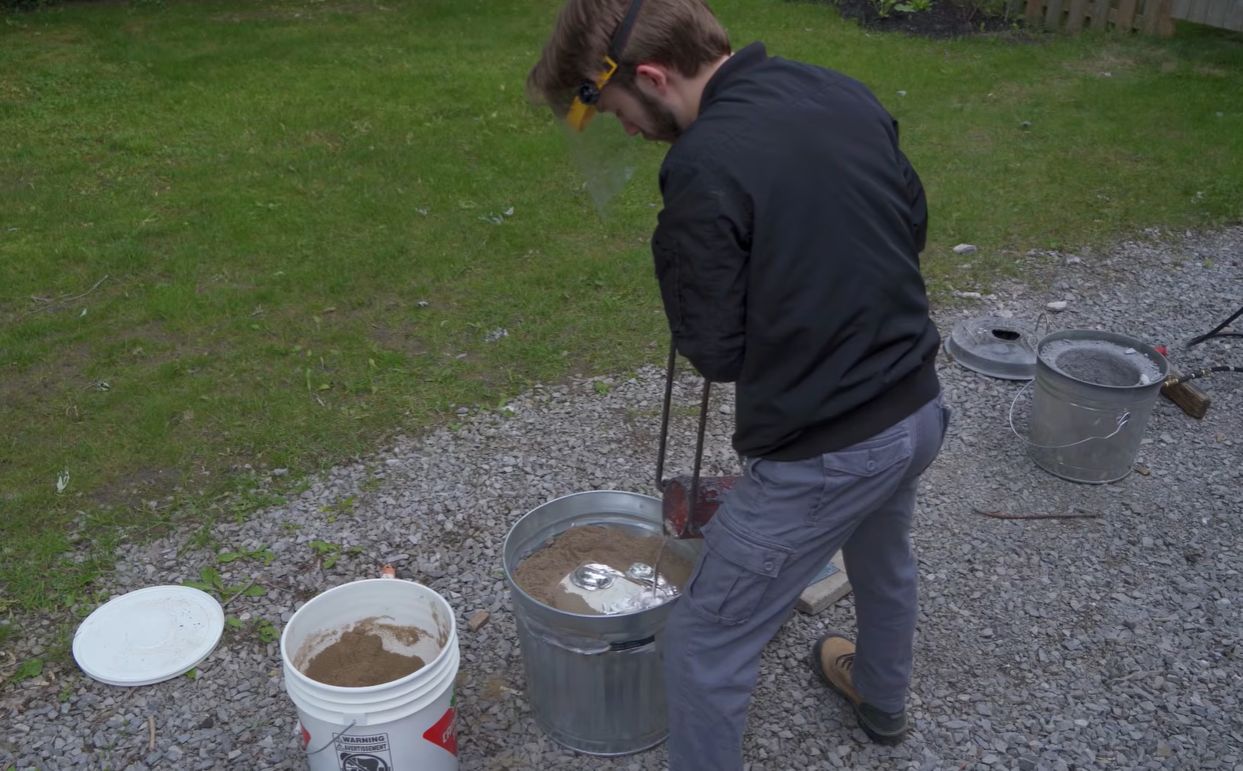
 Since DIY is really his thing, he also made his own kiln using cement and perlite, plus a propane burner. For the aluminium material to melt, he bought a stack of aluminium alloy wheels, as these are made of an alloy that’s actually suitable for casting. These were turned into ingots as a first step towards casting the engine parts, which among other things helps to purify the metal.
For the actual casting method he picked lost PLA, meaning the intended shape is 3D printed in PLA, then put into plaster before it’s melted out of the newly minted mold in an oven and subsequently burned out in the kiln. For the plaster [Camden] used regular Plaster of Paris, mixed with sand to give it suitable heat-resistant properties.
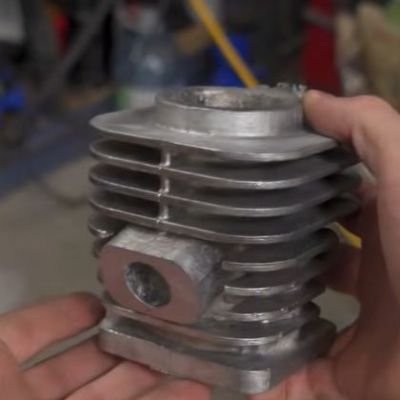
After some trial and error, as well as a lot of trouble burning out all the PLA, he got a usable mold and managed to eventually cast an engine cylinder with only a few imperfections. Considering just how convoluted it would have been to mill that part out of billet aluminium, it’s easy to see why commercial manufacturers are casting such parts as well.
Nice, but is it really a waste when it gets melted back down?
If he only used milling as a process and not casting then when would the mill-scrap get melted back down?
2STROKESTUFFING on youtube has done both lost PLA casting and direct print in aluminium cylinders
I really, really like this project. Maybe lost wax would work better?
Make a negative SLA mould → make a wax part out of it → use lost wax moulding to cast the metal part
Also makes me think, if a single individual can cast engines and make them work, why do defence companies want a hundred thousand for a fixed wing military UAV drone? I get that reliability costs money, but if a prototype can be made for under 1k1000 for a switch is ridiculous, but it’s pre-approved and the approval process costs way more. It’s all a big scam in my opinion, but this is the claimed reasoning.
little reason to have rigid certification for part for a military UAV drone, it’s disposable
The certification is for the supply chain as much as the reliability of the part. Can’t have our drones suddenly not be “our” drones anymore. I have bought and messed with a usb c cable with a wifi chip in it that connected and provided terminal access to the phone it was plugged into plus all kinds of automated scripts that can be remotely executed. Supply chain matters.
Has anyone here done this type of thing? I’ve been doing some aluminum casting, dabble in small engine design, and would love to venture into something as complicated as casting a cylinder head. I’ve been avoiding lost PLA for the reasons Camden ran into: when I tried it, I could never get all of the PLA (and residue) out. I have a petrobond setup, and I’ve done a bit of lost foam casting successfully (best results when painting the foam with plaster before dunking into a fluidized sand bed).
Has anyone used one of the wax 3D printing filaments made for burnout. How well does this work? Is there a better way?
I’ve been looking into some of this myself; and I’ve wanted to try out Polymaker’s Polycast. I know that’s not an answer, but it might lead you down an interesting research rabbit hole.
Ambitious. It would probably be more productive to 3D print a multipart negative mold, use expanding foam to cast a positive, then use that foam positive to cast the aluminum positive.
Since DIY is really his thing, he also made his own kiln using cement and perlite, plus a propane burner. For the aluminium material to melt, he bought a stack of aluminium alloy wheels, as these are made of an alloy that’s actually suitable for casting. These were turned into ingots as a first step towards casting the engine parts, which among other things helps to purify the metal.
For the actual casting method he picked lost PLA, meaning the intended shape is 3D printed in PLA, then put into plaster before it’s melted out of the newly minted mold in an oven and subsequently burned out in the kiln. For the plaster [Camden] used regular Plaster of Paris, mixed with sand to give it suitable heat-resistant properties.
After some trial and error, as well as a lot of trouble burning out all the PLA, he got a usable mold and managed to eventually cast an engine cylinder with only a few imperfections. Considering just how convoluted it would have been to mill that part out of billet aluminium, it’s easy to see why commercial manufacturers are casting such parts as well.
Nice, but is it really a waste when it gets melted back down?
If he only used milling as a process and not casting then when would the mill-scrap get melted back down?
2STROKESTUFFING on youtube has done both lost PLA casting and direct print in aluminium cylinders
I really, really like this project. Maybe lost wax would work better?
Make a negative SLA mould → make a wax part out of it → use lost wax moulding to cast the metal part
Also makes me think, if a single individual can cast engines and make them work, why do defence companies want a hundred thousand for a fixed wing military UAV drone? I get that reliability costs money, but if a prototype can be made for under 1k1000 for a switch is ridiculous, but it’s pre-approved and the approval process costs way more. It’s all a big scam in my opinion, but this is the claimed reasoning.
little reason to have rigid certification for part for a military UAV drone, it’s disposable
The certification is for the supply chain as much as the reliability of the part. Can’t have our drones suddenly not be “our” drones anymore. I have bought and messed with a usb c cable with a wifi chip in it that connected and provided terminal access to the phone it was plugged into plus all kinds of automated scripts that can be remotely executed. Supply chain matters.
Has anyone here done this type of thing? I’ve been doing some aluminum casting, dabble in small engine design, and would love to venture into something as complicated as casting a cylinder head. I’ve been avoiding lost PLA for the reasons Camden ran into: when I tried it, I could never get all of the PLA (and residue) out. I have a petrobond setup, and I’ve done a bit of lost foam casting successfully (best results when painting the foam with plaster before dunking into a fluidized sand bed).
Has anyone used one of the wax 3D printing filaments made for burnout. How well does this work? Is there a better way?
I’ve been looking into some of this myself; and I’ve wanted to try out Polymaker’s Polycast. I know that’s not an answer, but it might lead you down an interesting research rabbit hole.
Ambitious. It would probably be more productive to 3D print a multipart negative mold, use expanding foam to cast a positive, then use that foam positive to cast the aluminum positive.