Summary
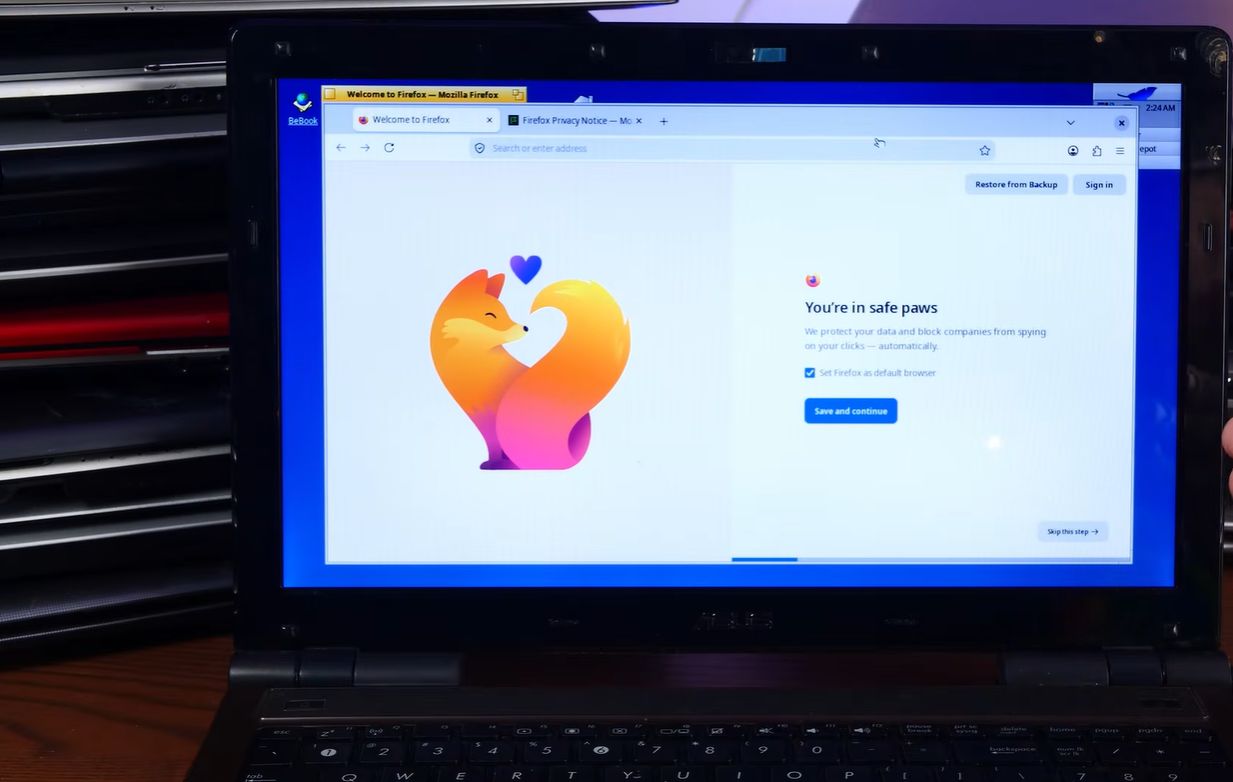
After just a little over 25 years of the Haiku project trying to keep the BeOS spirit alive, the team has now released Beta 6. The spicy details of what is now all better can naturally be found in the detailed release notes. Part of the size of these release notes is due to the previous beta release being two years ago, though nightly builds have kept Haiku users appeased in the meantime. The headline features that are new compared to the previous release include the ability to run the Firefox browser and derivatives, QEMU hardware virtualization using the NetBSD Virtual Machine Monitor (NVMM), improved POSIX and hardware compatibility, as well as many bug fixes. Unfortunately 64-bit ARM support still has to wait a bit longer. Naturally, such a joyful new release wouldn’t go unnoticed by [Action Retro], who decided to celebrate by installing this new release on a stack of old laptops that he bought for a dollar each. With system requirements starting at a Pentium II with 256 MB of RAM, it’s very zippy to install and boot on. As [Action Retro] noticed, a fresh install on a random 2000s Asus laptop both WiFi and audio worked out of the box. Wrestling through his e-waste pile of laptops, the functional laptops provided a pretty good experience, making these at least an excellent target for a fresh Haiku install as a daily driver. We looked at Beta 5 and the nightlies back in 2024, with recently attempts being made to port Nvidia GPU drivers to Haiku, with good results. BeOS 5 requirements: x86 CPUs or PowerPC (up to release 5.03) needs at least 32MByte RAM https://www.operating-system.org/betriebssystem/_english/bs-beos.htm Also interesting: BeOS was originally developed by the company Be with the former Apple coworker Jean-Louis Gasse for its own type of computer, the BeBox. It contains 2 power PC CPUs and was equipped with maximally with 256 Mbyte of RAM. https://www.operating-system.org/betriebssystem/_english/bs-beos.htm IMHO: Haiku seems like it could profit from some further optimizations in order to run smoothly on an ordinary (normal) x86 PC, such as a Pentium/Pentium MMX with 32 to 64 MB of RAM. 256 MB of RAM must be considered a luxury, since it’s workstation level, as it was with the BeBox. Also, Haiku seems to rely a bit too much on VESA VBE 3, which was exclusive to later AGP and PCIe graphics cards. KolibriOS is guilty of this, too. It wont’t run out-of-box with an S3 Trio32/64, for example. Better support for standard PCI VGA cards with VESA VBE 1.2 or VBE 2, would be nice, thus. Classic laptops that did run BeOS well can’t have their VGA/VBE BIOS to be upgraded to VBE 3, after all.