Summary
 recreate the Orion’s heatshield using a variety of methods and materials.
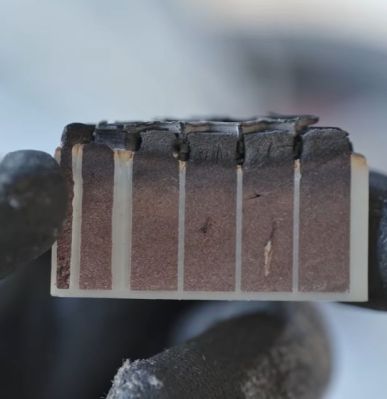
For this test a number of samples were created, each using the same kind of segmented structure as the larger Orion heatshield. The filler was created from the published materials for the heat shield by NASA, requiring just serious mixing.
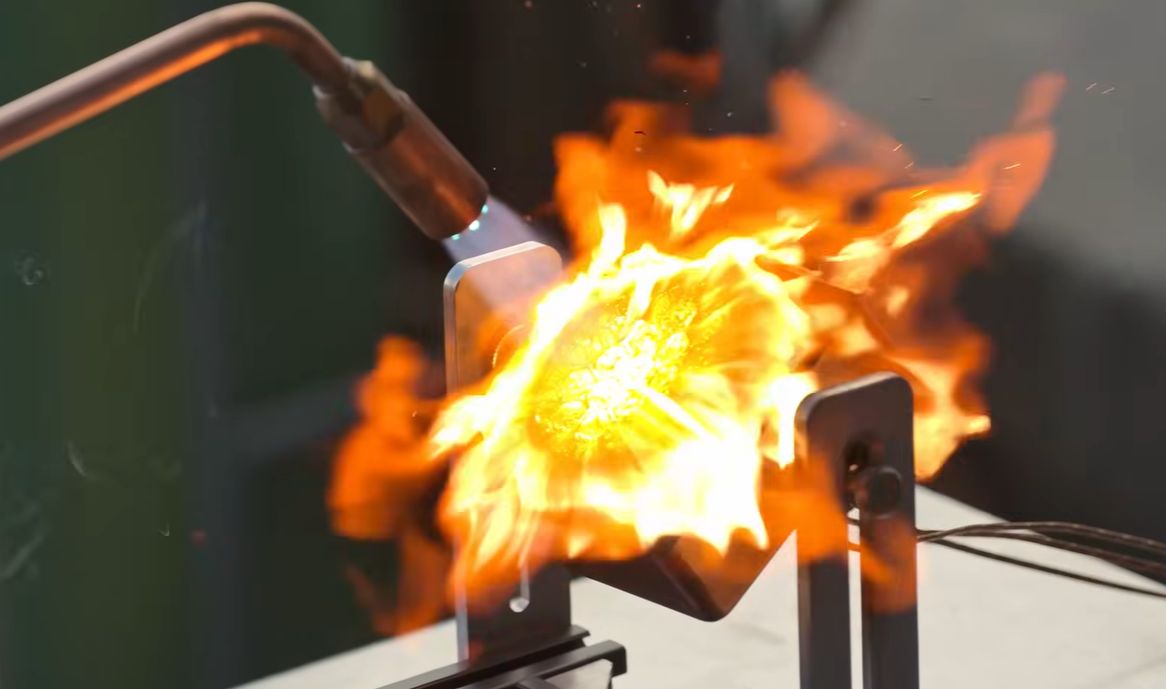
The resulting samples were then cured with thermocouples inserted, before they got blasted with the heat from a propane torch, trying to simulate the various re-entry patterns.
Perhaps unsurprisingly, the results matched the findings by NASA for why the Orion’s heat shield had failed, being the build-up of gases due to the sustained pyrolysis processes that eventually fractured the material. Despite some experimental flaws that injected residual heat from the copper structure, this still seems to be a pretty good setup to test ablative heat shields in DIY lab conditions.
mayhaps the heatsheild needs a tread, like a car tire, to shed the gasses more effectively
Artemis II was fine
https://arstechnica.com/space/2026/09/it-turns-out-that-orions-much-maligned-heat-shield-performed-really-well/
Pure nitrogen can be a problem
https://phys.org/news/2026-03-titan-entry-lab-flag-nitrogen.html
Take a look at the 7:19 minute mark here:
https://m.youtube.com/watch?v=HxaPVRh3Bgs&ra=m
Sounds like some at SpaceX got humbled.
recreate the Orion’s heatshield using a variety of methods and materials.
For this test a number of samples were created, each using the same kind of segmented structure as the larger Orion heatshield. The filler was created from the published materials for the heat shield by NASA, requiring just serious mixing.
The resulting samples were then cured with thermocouples inserted, before they got blasted with the heat from a propane torch, trying to simulate the various re-entry patterns.
Perhaps unsurprisingly, the results matched the findings by NASA for why the Orion’s heat shield had failed, being the build-up of gases due to the sustained pyrolysis processes that eventually fractured the material. Despite some experimental flaws that injected residual heat from the copper structure, this still seems to be a pretty good setup to test ablative heat shields in DIY lab conditions.
mayhaps the heatsheild needs a tread, like a car tire, to shed the gasses more effectively
Artemis II was fine
https://arstechnica.com/space/2026/09/it-turns-out-that-orions-much-maligned-heat-shield-performed-really-well/
Pure nitrogen can be a problem
https://phys.org/news/2026-03-titan-entry-lab-flag-nitrogen.html
Take a look at the 7:19 minute mark here:
https://m.youtube.com/watch?v=HxaPVRh3Bgs&ra=m
Sounds like some at SpaceX got humbled.