Summary
 recently tried to fix.
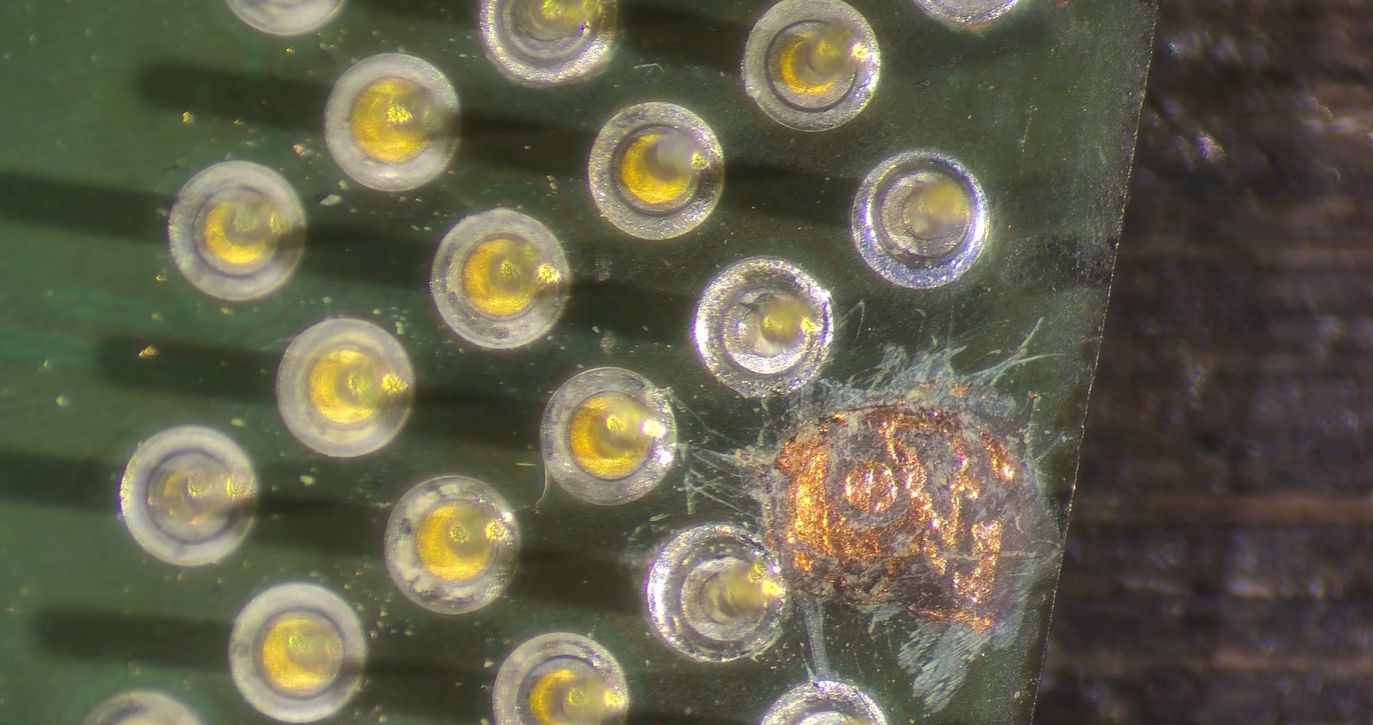
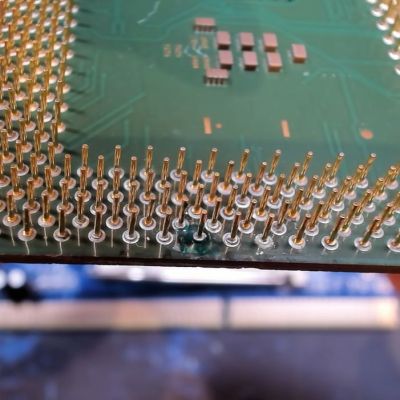
In the case of something like a ground pin or similarly unimportant pin you can ignore the damage, but in this case it concerned an important pin for this 1.2 GHz Tualatin PIII core, with the damage consisting of a well and truly destroyed pad. The first step to repair the damage is thus to try and rebuild the pad, which was done using solder mask and solder.
Although a PIII-era Celeron CPU is definitely not a high-value CPU, since they have so few and such large pins they do make for useful test subjects when it comes to PGA repair practicing. In this case the affected data pad and pin appears to have been repaired successfully, with it running overclocked to 1.6 GHz and crushing similarly or higher clocked Pentium 4 and AMD Athlon CPUs of the era.
I had a Celeron with a bent pin, spent at least an hour trying to fix with a dental scraper, right as I got it perfectly straight, it snapped off. As far as I can tell, it was a NOOP because the thing still runs 20yrs later with no issue I’m aware of.
In my experience if the pin is bent more than about 30 degrees, you get one chance to bend it back and if you bend it more than that it’ll work harden and break off. I use a pair of smooth jaw mini pliers to pinch the whole length of the pin to try to get it as straight as possible in one go.
I had a bent pin on I think an AMD K6-2 and what fit perfect was the little metal tube at the end of higher quality mechanical pencils, not the plastic bits. Slid it over and slowly bent it back till realigned. I remember it working till upgraded to one of those slot A Athlons.
recently tried to fix.
In the case of something like a ground pin or similarly unimportant pin you can ignore the damage, but in this case it concerned an important pin for this 1.2 GHz Tualatin PIII core, with the damage consisting of a well and truly destroyed pad. The first step to repair the damage is thus to try and rebuild the pad, which was done using solder mask and solder.
Although a PIII-era Celeron CPU is definitely not a high-value CPU, since they have so few and such large pins they do make for useful test subjects when it comes to PGA repair practicing. In this case the affected data pad and pin appears to have been repaired successfully, with it running overclocked to 1.6 GHz and crushing similarly or higher clocked Pentium 4 and AMD Athlon CPUs of the era.
I had a Celeron with a bent pin, spent at least an hour trying to fix with a dental scraper, right as I got it perfectly straight, it snapped off. As far as I can tell, it was a NOOP because the thing still runs 20yrs later with no issue I’m aware of.
In my experience if the pin is bent more than about 30 degrees, you get one chance to bend it back and if you bend it more than that it’ll work harden and break off. I use a pair of smooth jaw mini pliers to pinch the whole length of the pin to try to get it as straight as possible in one go.
I had a bent pin on I think an AMD K6-2 and what fit perfect was the little metal tube at the end of higher quality mechanical pencils, not the plastic bits. Slid it over and slowly bent it back till realigned. I remember it working till upgraded to one of those slot A Athlons.