Summary
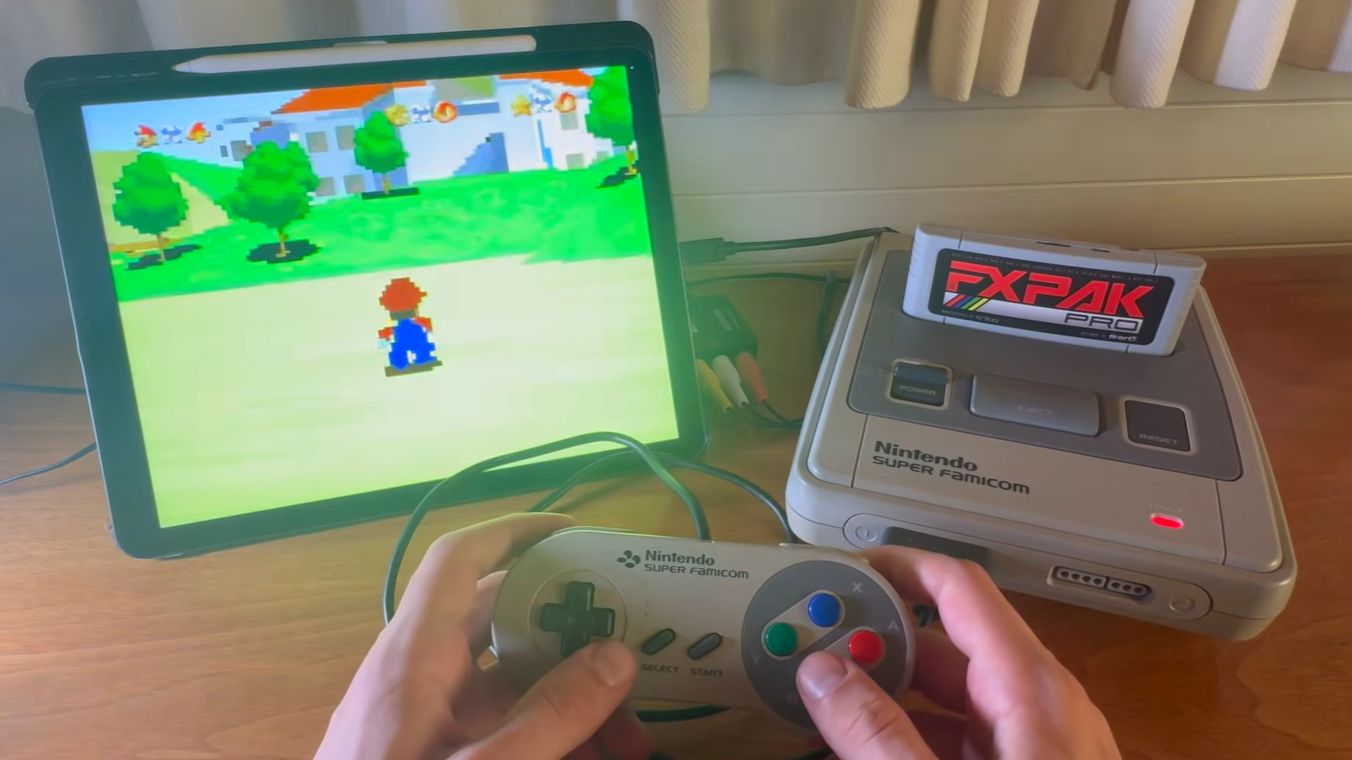
Although the Nintendo 64 was the first to bring real 3D graphics to the table in 1996, the Super Nintendo had an ace up its sleeve in the form of the Super FX chip. One major advantage of using cartridge-based games is that you have the option to add wild features such as a 3D graphics chip to your SNES, something that got used to make games like Star Fox, and as [Tobi] demonstrates in a recent video, can also totally run Super Mario 64 if you squint a lot. While there’s a rumor that Nintendo was looking to release a ‘Super Mario FX’ game for the SNES, there’s no evidence for such a project. Fortunately these days we got hobbyists prepared to give it a shake to see what a determined group of SNES game developers could have accomplished back then. The pleasant surprise here is that although a new engine was needed, the SM64 assets could be used with this ‘SMFX’ game and it runs fairly well. There is still room for performance improvement, and the 2 MB memory limit is a problem that may require some culling of parts of levels. Frames are painted back to front since there’s no advanced Z-culling or similar features, but it shows just how capable the Super FX chip is. [Tobi] has said that he’ll look at releasing the project in some form once he’s happy with how it works and runs, which is definitely something that we’ll look forward to. Queue Nintendo lawsuit. Shit company that it is. This is one of the reasons why i loved cartridge based game consoles, the cartridges in theory could house extra hardware that could add new concepts to the game system. For example a company could put a small ISM radio in their cartridge with a small processor to interface with an external peripheral (like a wireless light gun, or something entirely new!). Or enable wireless play. GBA had cables that could enable multiplayer but there is no reason why the cartridge itself couldnt have a radio. Or a mic to shit talk while you beat someone in a wireless pokemon fight? Sadly cartridge based games were also a waste of resources to essentially have an entire FR board with memory chips, and other hardware. Optical media rightfully beat them