Summary
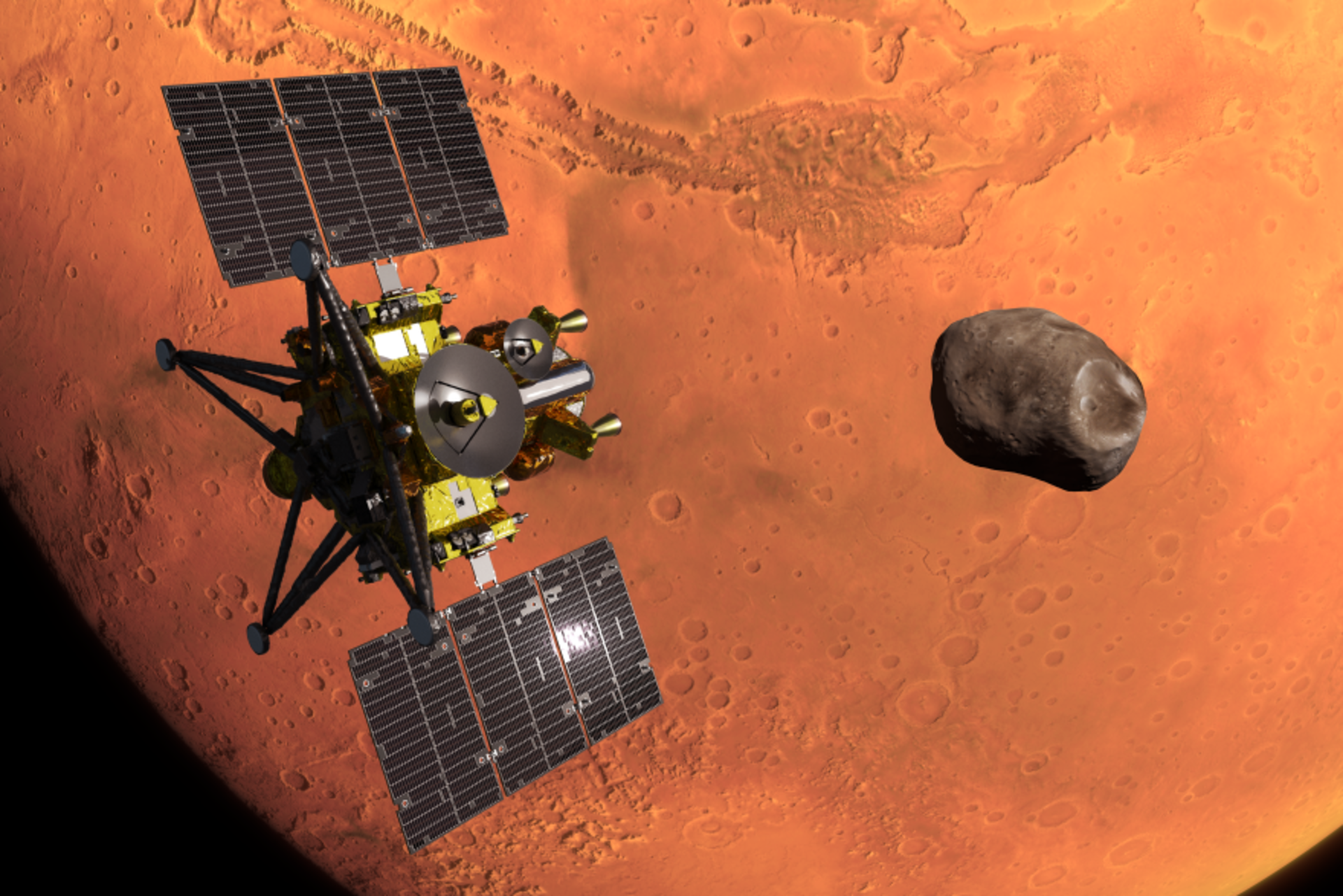
Although for many decades the planet Mars has been prodded, poked, driven upon, flown over and especially orbited by various spacecraft, landers and rovers sent over by a certain humanoid species on Earth, the two moons that orbit Mars have featured significantly more in science-fiction and video games than in scientific literature. This is now about to change when the Martian Moons eXploration (MMX) mission launches on October 19th, which will include a sample return from Phobos. So far these two moons of Mars – Phobos and Deimos – have only received a few cursory glances by passing spacecraft, leaving many fundamental questions surrounding their formation and composition very much open. With the MMX mission this should change dramatically, with this spacecraft intended to perform detailed measurements of both moons. In addition a rover – called Idefix – will perform a landing on Phobos for observations of its surface. This will be quite a feat as despite this lander coming in at 25 kg, on Phobos’ surface it will weigh only 15 grams due to the low gravity, or even less than the diminutive dog companion of Obelix, with potential bouncing as we have seen with previous landing attempts on such small bodies. After launch, the MMX mission will take a year to arrive at Mars, in August of 2027, with Idefix being released in early 2029 for its hopefully soft paws-down on the surface of Phobos where it can scurry about for a while until the main MMX spacecraft lands later for its sample retrieval and return part of the mission. If everything goes well, this would mean that a sample of Phobos should be landing in Australia in 2031. Please be kind and respectful to help make the comments section excellent. (Comment Policy)