Summary
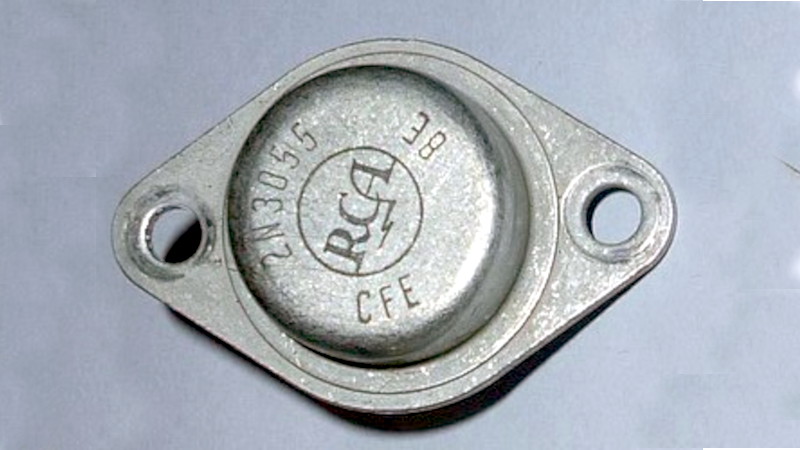
There are some devices which achieve electronic immortality, it’s likely that you have used a few of them yourself. The 555 timer of course, or the 741 op-amp. [ElectronicsNotes] is here with another candidate that might not have been on your mind as you read the previous sentences, and it’s a transistor. The 2N3055 is an NPN power transistor, no, THE NPN power transistor, that has found its way into an astounding array of devices over the last six decades or more. For such a ubiquitous device one might imagine that there’s not much new to know, but the video delivers on that front. Here as well as probably for you the 3055 has always been an epitaxial device whose quirks you likely know well, but originally it was something different. It used the hometaxial construction process on its launch in the early 1960s, but in the mid 1970s it was replaced by a version with the same capabilities but using the epitaxial process. The consequent higher Ft required modifications to circuits using the device to stop unwanted oscillation. Where this is being written there are several 2N3055s, in the by now rather old office audio amplifier, in a bench power supply, and probably elsewhere too. It’s been superseded in many ways and its TO3 case now feels antiquated, but it will probably never entirely go away. Meanwhile if you’d like to read about another iconic 1960s device that never went away, we have you covered. Header: a really early example. Eule4404, CC BY-SA 4.0 Forrest Mims had a pretty standard beginner’s circuit involving one of these NPNs, a carbon microphone, a loudspeaker, and a lantern battery. That transistor ran really hot, but it sure worked as a make-shift megaphone. Saw the top off of a 2n3055 and you can use it as a radiation detector. Glue the nib from a smoke detector to it, add some amplification, and detect individual alpha particles striking the B-E junction. (It also will see CBR muons, but it’s aperture is really small, so… they’re rare.) Don’t forget the 2N2222 and the 2N3414. Just sayin’… Apropos of my post above, if the 2N2222 is a “tophat” metal can version, you can clamp it by it’s “forehead” in a drill, hold a file against it while rotating, and the tophat will come off, revealing the transistor guts. This, too, can be used as an alpha particle detector, although the aperture here is really small. And the 2N3904/2N3906 complementary devices.
