Summary
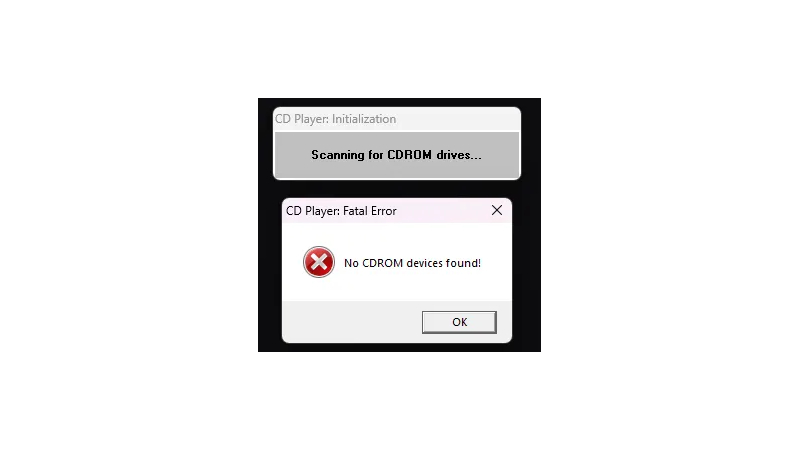
In the open source world we are used to software being compiled from source for our particular distro, so while in a few cases an ancient release may still be in use, it’s just going to run on the latest distro version. But in the Windows world it’s rare for software to come with the source, so you’re left with a binary that will only run if your Windows version has the right APIs for it. Since the more recent versions of Windows dropped 16-bit support a while back, that means there must be a hard date set on the earliest Windows GUI application that can still run today. [Enlyth] decided to investigate. Given that the earliest API supported in WIndows 11 is the 32-bit version, the hunt led straight to either the first Windows NT release and ancestor of Windows 11, or the Win32s extension for WIndows 3.1. Thus a 1993 Win32S version of Freecell runs happily, but that want’s the end of the trail. Somewhere in the pre-release builds of Windows NT 3.1 would be the requisite binary, but there’s a snag. Early Windows NT 3.1 APIs were incompatible with later ones. This led through a lot of crashing binaries to a November 1992 version of the CD player app, that ran because it called a DLL which happens to still be present. The need for another DLL to emulate a CD drive speaks volumes about the progress of the PC world, back then they were the last word in storage but who’s got one now? That’s the earliest official binary to run, but the story’s not quite over. Windows 11 may not have a VDM to run 16-bit apps, but there’s a WINE VDM for that. Behold, Reversi from Windows 1.01 in November 1985, in Windows 11. Your ancient software may yet be saved. My late 90’s Delphi programs still run fine on Windows. Borland was doing multiple things right, I think. Or Windows drags quite a bit of old history, like that SimCity-hack. Windows runs a lot of corporate software so Microsoft takes backward compatibility pretty seriously. It’s still amazing that 30 year-old executables can run as-is on modern a Windows machine without installing additional emulators or compatibility layers. WinAPI is over 30 years of binary compatibility. People may bitch at Microslop but no Linux distro can come close to that. Wrong, but believe what you want Universal reply to anything Wrong, but believe what you want You can’t prove that Pope John Paul II wasn’t keen on pedophilia and molesting children. We just spun up a WinXP VM on the Linux lab laptop at work to load some clunky software that interfaces with an instrument. There’s always a place for old operating systems in the lab. Cheaper to do this than to buy new equipment. A bit ironic that software is the part that would degrade with age… no it is inherent with the medium. software is like time. changes all the time. only some people dont sync their clocks that often as the machine they use likes the time it shows. It’s less the software that is degrading, and more that the environments they run on no longer exist. There are isolated instances of software humming along happily running unique equipment for decades until the hardware it’s running on dies, an off the shelf replacement hasn’t existed since the 90s, and the source code evaporated along with the company that made in it the dot com crash of the 2000s. New software can be written, but without technical documentation on the equipment, and a well paid engineer to translate that into code, its often not worth it to write a new app for a modern environment to keep a machine alive when a VM and duct tape will let you get a another decade out of the old girl.