Summary
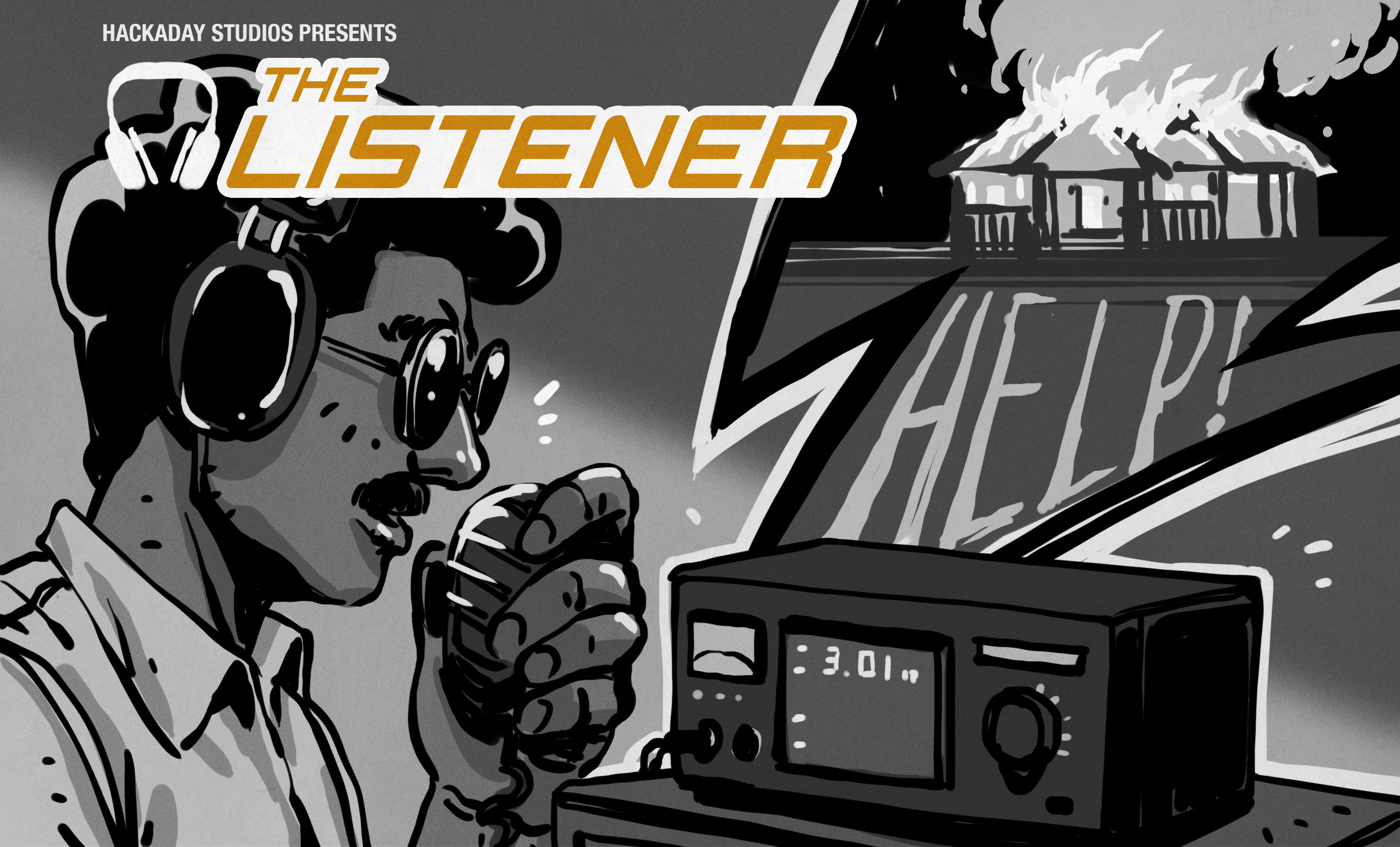
A constant in film and TV if you work with technology is to continually see wildly inappropriate depictions of it on screen. Whether it’s all those hacking scenes in which the teen wizard mashes a keyboard and instantly gains access to the military grade computer system, the infamous NCIS sequence in which two people work simultaneously on the same keyboard, or CSI‘s magical video enhancement technology, we’ve seen it all. But there’s one area of technology which surprisingly has had a few accurate portrayals on screen, and that’s amateur radio. Yes, just sometimes, film crews do their homework.
Comedy, Hero, or Excentric. Which Are You?
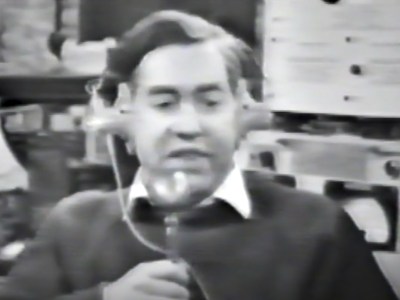 Writing this from the rainy edge of Europe, the depiction of a radio amateur non screen that first comes to mind dates from the early 1960s. The British comedian Tony Hancock devoted a whole episode of his series to it, in which he plays an inept operator with hilarious consequences. It’s not in any way accurate and some of the comedy is … dated, but it’s interesting to watch. There’s a whole genre of comedic episodes featuring the hobby, in researching this piece I found a 1965 episode of The Munsters in which Herman minstakes some kids at play for real Martians, and a Simpsons episode in which Principal Skinner is revealed to have a licence.
But amateur radio as a source of comedy isn’t the only genre at play. Radio amateurs are often depicted as heroic rescuers or communicators. alternately sending help to shipwrecked mariners, solving crimes, or providing emergency comms. In 1969’s The Red Tent starring Sean Connery for example a Russian radio amateur picks up a distress call from an airship crash, while in 2008’s The Bank Job is based on the true story of a London robbery in which a radio amateur heard the radio comms of the criminals. I’m sure many of you meanwhile will have seen Independence Day, in which radio amateurs use Morse code as a last ditch global communication system.
Probably the most frequent depiction though is through science fiction. 1996’s Phenomenon for example has amateur radio associated with paranormal events, and in a more comedic vein, 1980s TV’s ALF follows an amateur radio signal to Earth. Meanwhile The X Files has multiple episodes peripherally featuring the hobby, after all, us radio amateurs know the truth is out there, right?
There Are More Radio Amateurs In The Movie Business Than Hackers
Through all of this, when compared to hacking scenes in movies and TV, amateur radio gets off lightly when it comes to accuracy. Tony Hancock’s performance may be more comedy than radio, but frequently there have been real radio amateurs involved in the production somehow. Principal Skinner’s callsign is one previously held by the show’s executive producer David Mirkin for example, and the ARRL have some comments on the accuracy of 2011’s Super 8. Perhaps this is because people with the skills to be thought of as hackers by movie production crews tend to have jobs in allied fields and never come near a movie set, while radio amateurs are more widely spread among the population. The chances of a radio amateur being in proximity to a film set are high, while the chances of a hacker? No chance, the lights are too bright.
where’s the hack?
Didn’t you see? It was 707411y 1337, they had two people hacking on the same keyboard!!!
I didn’t. Knowing how to quickly identify and skimp content while browsing the Internet for useful informations is a crucial skill.
It’s difficult to make a portrayal of hacking that is both accurate and entertaining. Failing that, the script writers go for entertaining.
Annoying to the technologically enlightened like HAD readers, but true for any technical issue. My wife has to restrain me from throwing things at the screen any time the police procedural says “matching wheelbase of a car” (when they mean track width) or when the screens show an IP address like 1925.168.1234.470.
I grind my teeth and remind myself that they’d hardly want to use a real IP address, though using one of the test net ranges would be fine. Like using 555-XXXX telephone number.
https://en.wikipedia.org/wiki/List_of_reserved_IP_addresses
192.0.2.0–192.0.2.255 TEST-NET-1, documentation and examples
198.51.100.0–198.51.100.255 TEST-NET-2, documentation and examples
203.0.113.0–203.0.113.255 TEST-NET-3, documentation and examples
233.252.0.0–233.252.0.255 MCAST-TEST-NET, documentation and examples
That’d be just as realistic looking to the average viewer, but give those in the know a nod.
Oh, I could come up with how you might need three on one keyboard.
One blind who uses braille key caps, the other with THEY LIVE shades (polarized light on screen) and one regular hacker.
All three HAVE to use that one keyboard/monitor because reasons….you could probably find a way to require more at one location.
As for the article—where did we first hear “Radio Riley?”
That applies to Amateur Radio also.
Any movie plot these days would be remiss if it doesn’t include one of the great repeaters of So Cal….
145.28
147.435.
The former is where amateur radio is still interesting.
The latter is So Cal’s Free Speech machine.
ah the one with all the animal mouse, right? Or am I thinking of a different one?
Limitless tv series handled the hacking scenes by not showing hacking, but instead filled the scene with something completely unrelated while explaining that actual hacking was boring to watch. So, pretty accurate.
MR.ROBOT handled it well.
Please don’t forget the movie Frequency with Dennis Quaid. ;) Also, Tim Allen’s show Last Man Standing. I do believe the station is active on a Hollywood film lot and the callsign is valid. Along with half the staff got their licenses as it became part of the show as well. I played a bit part in an independent film as a ham operator and made a few contacts for the film. Someone has to “respec’ tha tech.” Thanks for the artical Jenny.
73 DE KC8KVA
what a terrific claim to fame!
I definitely won’t forget the movie Frequency. I have enjoyed watching that a few times.
One of the staff on the Hancock show had a license so the actual equipment and procedures depicted were accurate for the period. Being able to chat with someone half way around the world using a piece of wire as an antenna just as if they were using a mobile phone was obviously not. But that’s comedy for you.
I sat through a modern post-apocalyptic movie recently that was a bit silly because the only radios the protagonists had were GMRS/FRS sorts which (obviously) couldn’t communicate over mountains but had absolutely no problem doing simplex operation through hills and other obstructions. Amateur operators actually practice for this kind of scenario so they get used to what systems will work and what are chancy — locally we have a network of repeaters for VHF/UHF, they’re solar powered, reliable and give county wide coverage. H/F is a bit more chancy but you’d certainly be able to get messages in and out. (A lot of amateur kit uses 12 volt power — with half decent propagation you can go half way around the world on as little as 20 watts of power, and with the End Times killing off all those interference sources….who knows?)
My favorite Hollywood hacking depiction is still Swordfish.
And why can’t two people not mash a single keyboard? Every kid of the 80s earlier must remember playing 2p games on does/c64?!
That ARRL article about Super 8 said “Soon after the crash, the Air Force arrives and strange things start happening in the small town”. Well even stranger things happen later in the film! And that was in 2011. Just say’n