Summary
As difficult as it may be to believe, it’s not possible to adjust the time on a 2014 Renault Latitude’s in-dash navigation system unless you have an original SD card with valid map data on it. If you loose that card, or never had it in the first place because you’re not the original owner of the vehicle, you’re out of luck.
That is, unless you’re [Rasmus Moorats]. Not willing to pay for an original Renault SD card just for the privilege of adjusting the time on his vehicle’s dashboard, he set out to hack the navigation system so he could fiddle with its parameters manually.
You might think that the end result of this hack is really only interesting if you happen to own a Renault of a similar vintage, and to a point you’d be right. The part that’s worth sticking around for even if you don’t have an applicable vehicle is the fascinating process of poking and prodding at the car’s embedded Linux operating system which [Rasmus] was kind enough to document for us.
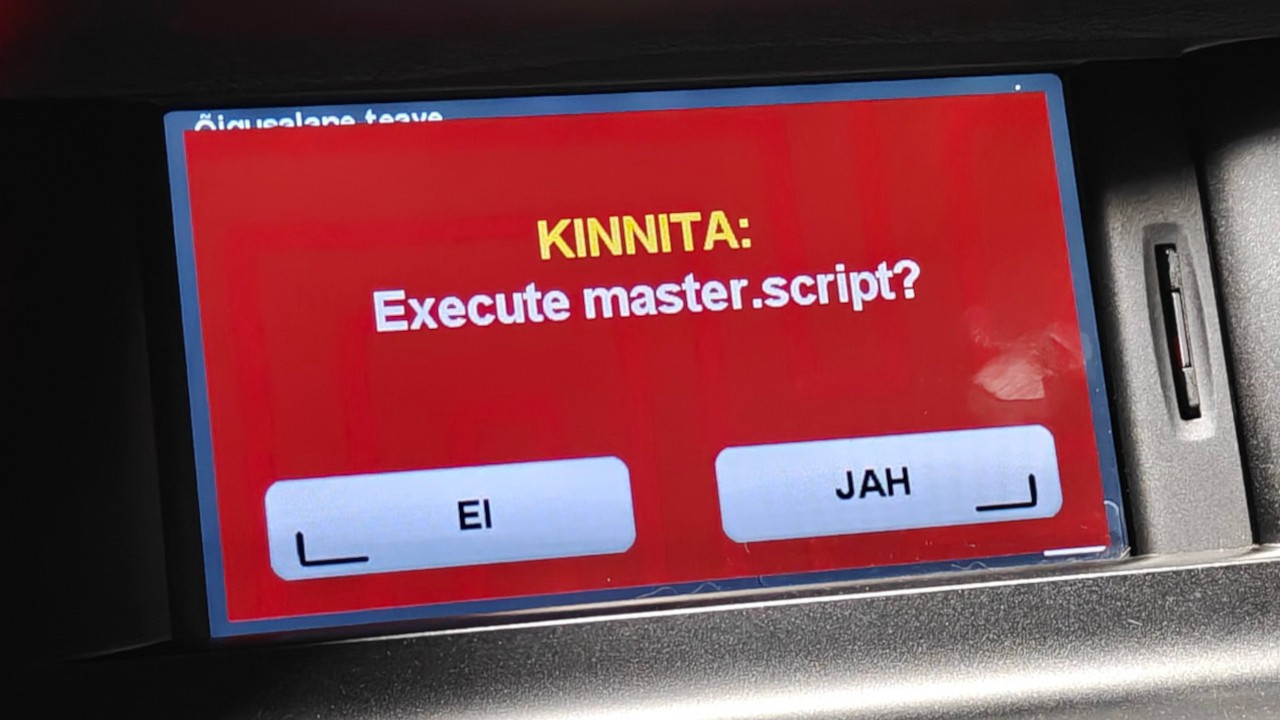
There’s a lot of ground covered in the write-up, but the short version is that while the navigation system has the ability to load scripts from the SD card, as designed there are pretty strict limits on what said scripts can actually do. The trick for [Rasmus] was to find a way to break out of the limited sandbox. After a number of only partially successful attempts, he finally found the solution by using the script’s built-in logging functions to overwrite the operating system’s core_pattern
string which is executed whenever a process crashes. By then using a different function of the scripting language to intentionally crash a binary, he was able to execute commands of his choosing, and in turn modify the configuration file that held the time data.
If you’ve ever found yourself trying to hack your way through a locked down embedded Linux system, we’re willing to bet at least a few of the tricks [Rasmus] outlines here could come in handy. As for hacking obstinate in-dash navigation and entertainment systems, it gets even harder on more modern vehicles.
I need this for my flat’s doorbell which has slowly been drifting since it’s ±2010 installation (which is weird because it also keeps track of grid frequency, as we could see in the 2018 Kosovo-Serbia grid frequency dip). Such that it was installed when daylight saving time was in effect and now is almost on standard time.
My parents have two ovens, each with their own clock. They keep one on DST, the other on savings, and put a fridge magnet over the wrong one.
I do like this story and I generally appreciate the frequent typos on Hackaday as evidence it’s not LLM slop, but maybe you can at least have a second set of eyes on things? Could at least catch the whole 1200m 12km thing, and hopefully also that LOOSE is the opposite of TIGHT??
Oops sorry, that wasn’t meant as a reply to you, my bad 😅