Summary
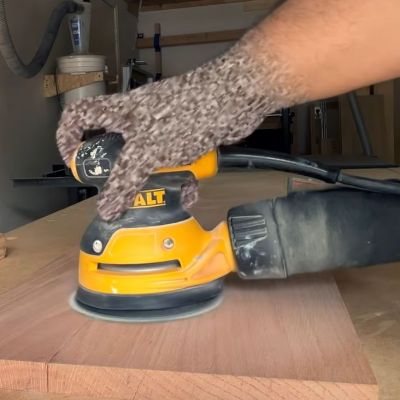 Most people know about orbital sanders, as the cousin of sheet sanders, with many people using them every day to make wood and other surfaces smooth. Yet if you have ever wondered at the slightly numb and tingling feeling in your hands after using them for a while, you really want to watch this deep dive by [Five Duck Studio] on how orbital sanders work and why not all vibrations are good vibrations.
First, the basic workings of an orbital sander are explained in the video, including the way that the orbital sanding pattern is created by the spinning disc. These patterns aren’t the same size for each sander, with the ‘finisher’ ~2.5 mm pattern being decidedly more suitable for fine work, while the roughly 5 mm pattern is better for coarser work.
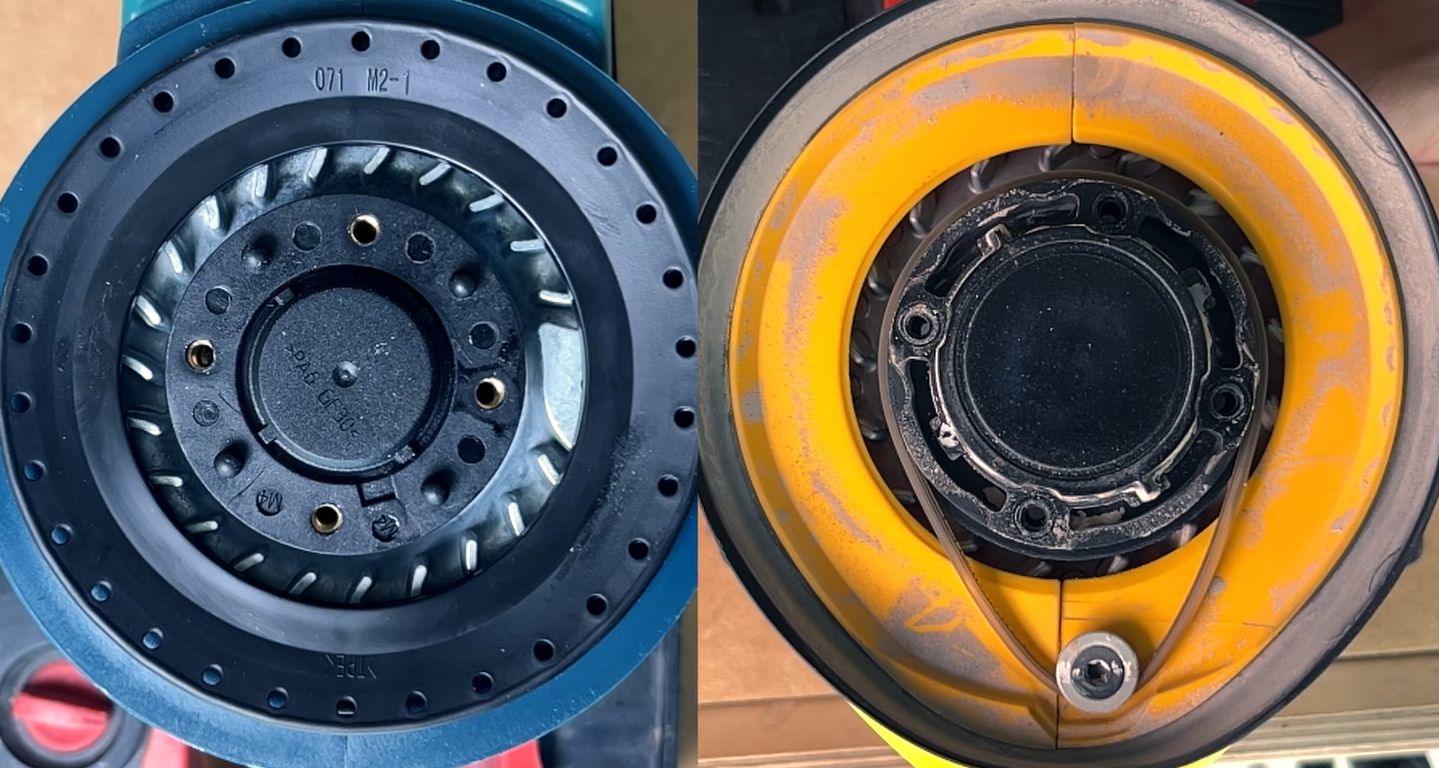
From here, the details spiral into the various brake mechanisms, which prevent the disc from spinning wildly when not on a surface. This can be as simple as an O-ring providing some friction.
Also covered are dust filtration, sanding speed, when to touch that speed dial, the different types of pads and sandpaper, and maybe most important of all, the vibrations. These are what numb your hand while you are using the sander, and although this may seem like something you can just ‘shake off’, it’s actually your body warning you that you’re at risk of vascular and nerve damage. This is called Hand-Arm Vibration Syndrome (HAVS), and can lead to permanent damage, including the loss of fingers.
Fortunately, the EU has some regulations on occupational hazards, with sander manufacturers required to test and report the vibrations from their tools. As demonstrated in the video, manufacturers are of course more than happy to use loopholes in said regulations to skirt by with much more vibration than reported.
Using the EU’s point-based system, you can easily see how many damage points you rack up from a sanding session, though of course the type of wood you’re sanding will play a role too. Either way, this video should hopefully give some good information on how to pick a good orbital sander and how to use it safely, without one becoming a case study for HAVS or COPD from dust inhalation.
Just be aware that about 85% of that video is claptrap mixed with “memes”. You can easily skip 5 minutes, watch 15-30 seconds and skip another 5 minutes. Rinse and repeat until the end.
Sorry to hear you missed the systematic approach and his own demonstrations that walk the viewer through his insights. You can’t be so abrasive in the comments section and only get skin deep. You’ve barely scratched the surface of this video.
I’ve got 99 problems but an orbital sander ain’t one.
Makes me glad I use a sheet sander.