Summary
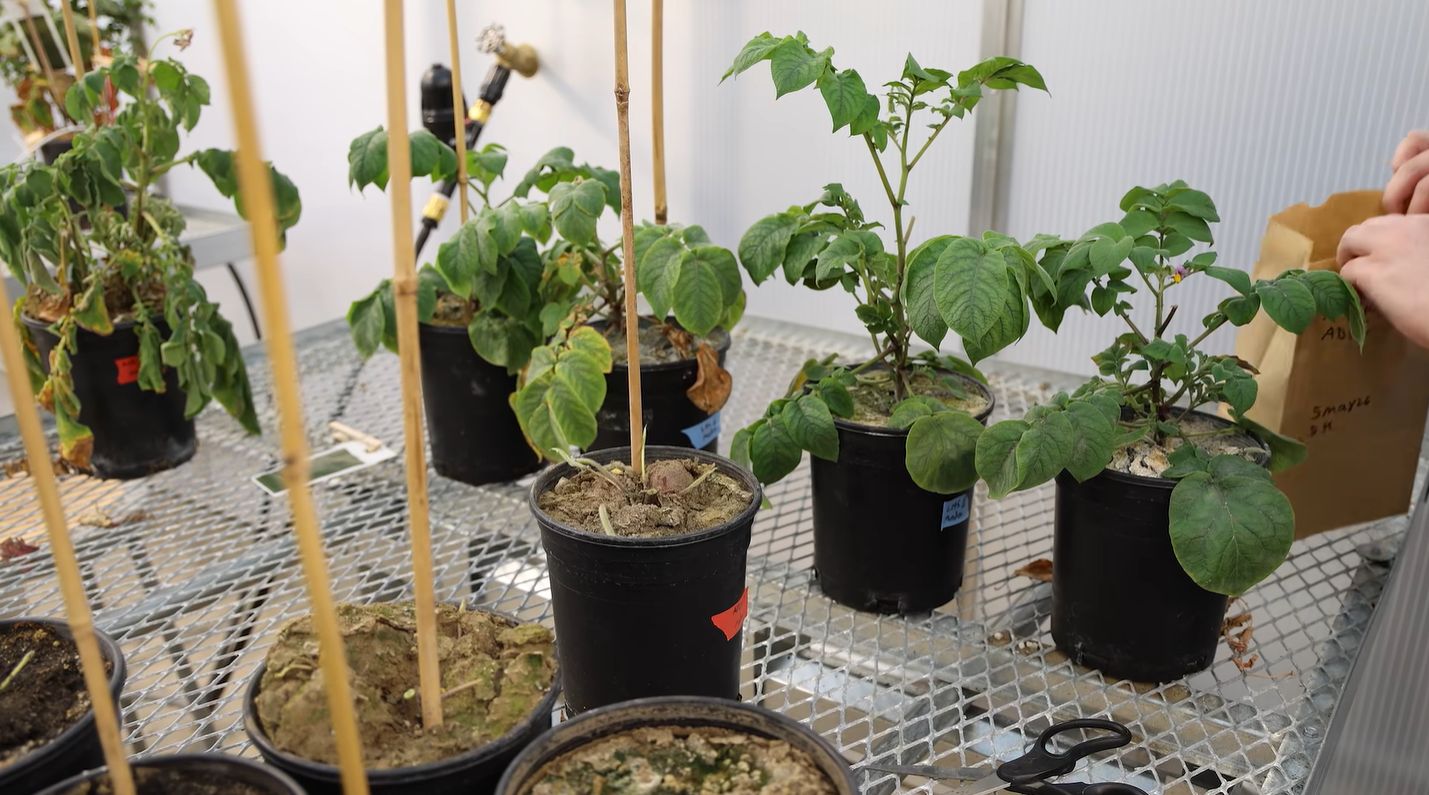
Popularized by a certain book about a Martian, growing potatoes in very non-Earth-like environments has become somewhat of a meme. Perhaps unsurprisingly, it’s not so far from actual science being performed today, such as Oregon State University researchers who are spending their time growing potatoes in lunar regolith simulants. In addition to the paper in npj Microgravity there’re also a PR piece from the university and a video that has been embedded below. All of this seeks to answer the question of whether you can farm potatoes on the Moon, a question that will become important if humanity sets up lunar bases and do not want to become reliant on constant food resupplies from Earth. It’s probably not too shocking that since regolith is rather poor in plant nutrients that adding fertilizer helped them grow a lot better, pretty much following what fans of The Martian already knew. In addition to simply seeing how well the potatoes grew the researchers also investigated the nutritional value, absorbed metals like copper and cellular health. Notable is that compared to the Earth soil (Adkins) control all lunar regolith potatoes were less healthy and produced less biomass. This is likely due to how sharp regolith is on a microscopic level, which are postulated to cause constant damage to the roots and other elements of the plant. In short, while you can grow potatoes on the Moon, you better bring suitable fertilizer and expect a lower yield than on Earth. As any yeast farmer knows the absolute best nutrient is dead yeast cells. They have perfection balance for new yeast to grow. So I wonder if potatoes are the same, can new ones be fed dead ones. And if they are able to grow well, what is the delta from the chemicals in dead potatoes relative to moon soil. Basically, what I am wondering what is the absolute minimum mass of potato fertilizer that would need to be transported to the moon to grow one potato. And then for the second planting where possibly only some potato skins might be fed back into the growth process, what is the minimum mass of type 2 fertilizer that would need to be transferred from earth to grow one potato. And thinking about it more if nitrogen fixing bacteria is involved, you probably need to bring additional initial nitrogen canisters from earth. As the bacteria makes ammonia/ammonium available in the soil for plants (and other. soil microbes) to use. Potatoes don’t necessarily need any soil to grow – it’s called aeroponic farming. They grow them in hanging baskets and mist nutrient solution on the roots inside a box. I thought regolith was deadly to inhale, akin to asbestos. So while it might be a viable growing medium wouldn’t working around it as in farming, or potentially ingesting it, also be unhealthy?