Summary
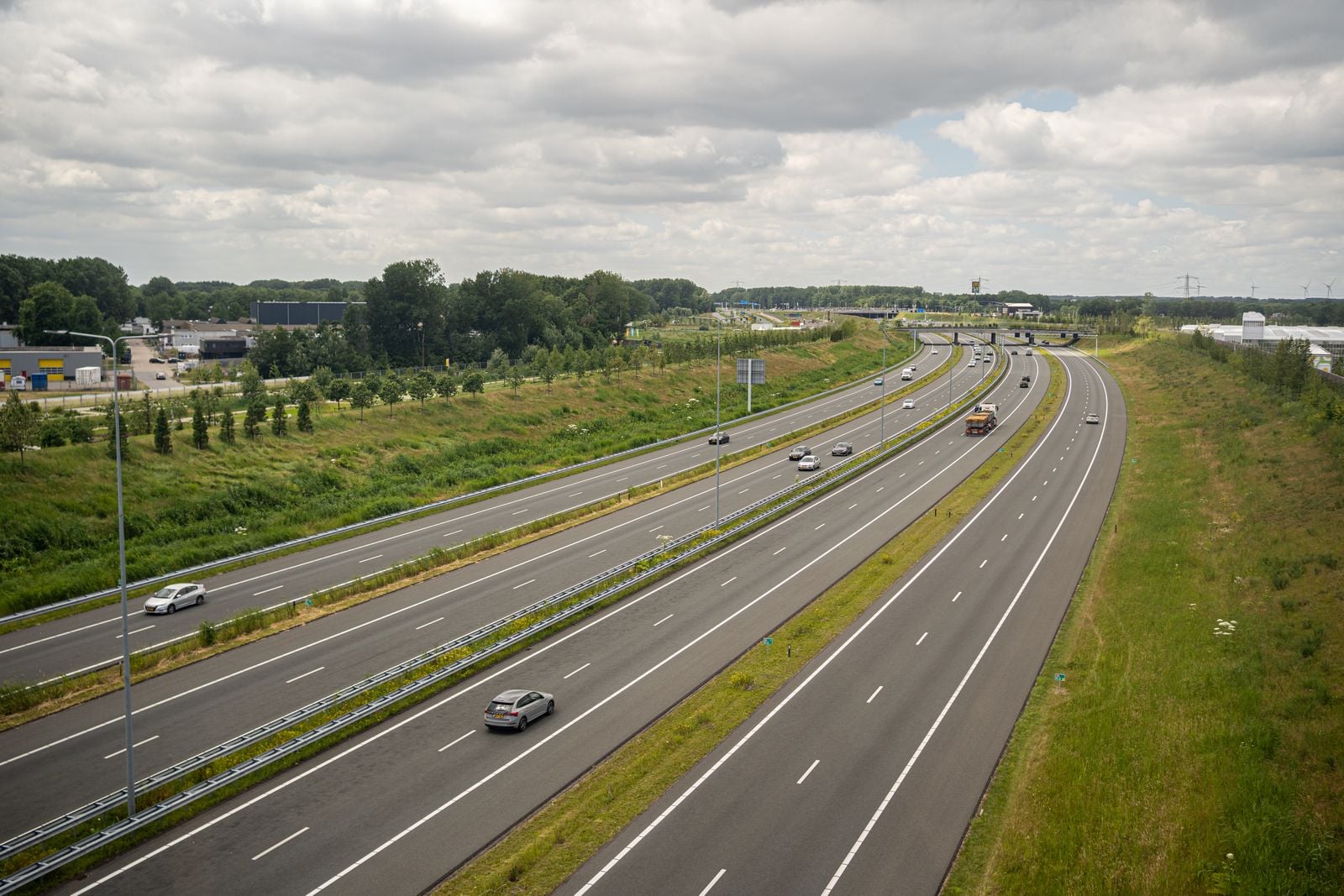
On Sunday 4 November 1973, the A12 between The Hague and Utrecht was silent enough for children to ride bicycles down the middle of it. Prime minister Joop den Uyl had gone on television days earlier to tell the country that the Arab oil-producing states had cut supplies, that petrol would be rationed, and that private cars were banned from the roads every Sunday until further notice. The photographs from those weeks — families picnicking on motorway asphalt, roller skaters on empty flyovers — became some of the most reproduced images in postwar Dutch memory. The ban itself lasted only until January 1974. Its consequences did not. The Netherlands now has roughly 35,000 kilometres of dedicated cycle path, according to figures published by the Dutch government, and about a quarter of all trips nationally are made by bike. That network did not appear because the Dutch are culturally predisposed to cycling. It appeared because a specific decade of crises, deaths and political decisions pushed the country off the trajectory it had been on — which, in 1971, looked almost identical to every other wealthy Western country’s. What the Sunday ban actually was The autoloze zondag — car-free Sunday — was an emergency energy measure, not a cycling policy. OPEC’s Arab members had announced production cuts in October 1973 in response to Western support for Israel during the Yom Kippur War, and singled out the Netherlands for a full embargo because Rotterdam was Europe’s main oil-import hub. The Dutch cabinet responded with petrol rationing coupons, a reduced motorway speed limit and, most visibly, a prohibition on driving private vehicles on Sundays. According to the Dutch National Archives, the measure ran for ten car-free Sundays between 4 November 1973 and 6 January 1974, after which it was dropped because it wasn’t producing the fuel savings the cabinet had hoped for. What the ban did was give an entire population a weekly demonstration of what their streets looked like without cars. Children who had been kept off main roads for a decade were suddenly on them. Families who had never considered a Sunday bike ride took one. Newspapers ran editorials asking whether the noise, the fumes and the danger of ordinary weekday traffic were really the natural order of things. None of this was planned as infrastructure policy. It was a side effect of an energy emergency that happened to coincide with a country already arguing with itself about what its streets were for. The ban ended. The question did not. The campaign that was already waiting The oil shock did not create Dutch cycling advocacy — it collided with a movement that had been organising for two years. In 1971, 3,300 people had been killed on Dutch roads, of whom more than 400 were children, according to figures compiled by SWOV, the Dutch road-safety research institute. That toll produced a citizens’ campaign called Stop de Kindermoord — Stop the Child Murder — founded in 1972 by journalist Vic Langenhoff after his own six-year-old daughter was killed by a car. Stop de Kindermoord organised bicycle demonstrations, occupied dangerous intersections and demanded that residential streets be redesigned around people rather than through-traffic. By 1973 it had chapters across the country and political traction inside the den Uyl cabinet, which had taken office that May as the most left-leaning government in Dutch postwar history. Its members’ most visible show of strength came a few years later, in 1978, when roughly 15,000 protesters gathered on Amsterdam’s Museumplein to demand car restrictions in the city. When the Sunday ban arrived in late 1973, the campaign had a ready-made argument: if the country could function like this every week, perhaps it should be built to. The two forces reinforced each other. The oil shock supplied the vivid, photographable proof that a car-free street was liveable; Stop de Kindermoord supplied the organisers, the political contacts and the specific demands — safer intersections, slower residential streets, separated cycle paths — that turned a temporary mood into a policy agenda. What planners actually did The infrastructure did not follow immediately. The Dutch cycling network was assembled slowly, in three overlapping waves. The first wave was experimental. Minister of Transport Tjerk Westerterp announced in September 1975 that the national government would fund two “demonstration cycle routes” — physically segregated from motor traffic — and reserved 25 million guilders of the 1976 roads budget for the work. Tilburg and The Hague were chosen. Tilburg finished first: Westerterp cycled its new red-asphalt route in person when he opened it on 21 April 1977. The Hague’s version ran into local opposition and was built only in part, but Tilburg’s became a template other municipalities visited and copied. The second wave came in the 1980s, after the second oil shock of 1979 and a change of coalition. The woonerf — the residential yard-street where pedestrians and cyclists have priority and cars must move at walking pace — had already been given legal status by royal decree in 1976, but it was through the 1980s that municipalities built thousands of them and that red-coloured asphalt, first tried in Tilburg, spread from a local experiment into the de facto national convention for marking a cycle path (it has never been a legal requirement). According to a historical evaluation compiled for the Dutch Bicycle Master Plan review, the total length of Dutch cycle paths roughly doubled between 1980 and 1990, from around 9,500 kilometres to nearly 19,000. The third wave, from 1990 onward, was the national masterplan phase. The Bicycle Master Plan of 1990 set explicit targets for cycling’s share of trips and network density, and tied central-government funding to municipal delivery. That is the period in which the network grew from a patchwork of local schemes into the roughly 35,000-kilometre continuous system that exists today. What the record supports, and what it does not The popular telling — that the 1973 oil crisis turned the Netherlands into a cycling country overnight — is not what the archives show. Bicycle use had been declining in the Netherlands throughout the 1960s at almost the same rate as in Britain, West Germany and Denmark, as postwar prosperity put cars in more driveways. The decline was arrested, not reversed, by the events of 1973. Cycling’s modal share continued to fall in Dutch cities into the late 1970s and only began climbing meaningfully once the infrastructure from the first and second waves was actually on the ground. What 1973 did was political. It made a car-dependent future look contingent rather than inevitable, at the exact moment a well-organised road-safety movement was demanding an alternative and a sympathetic cabinet was in office. Historian Ruth Oldenziel and colleagues, in the collection Cycling Cities: The European Experience, published by the Foundation for the History of Technology, describe the crisis as functioning like a window of opportunity — a concept borrowed from policy studies — rather than a cause in itself. The infrastructure that followed was the product of thousands of local decisions taken over two decades, each of which could have gone the other way. Denmark, which faced the same oil embargo and had a comparable cycling culture, chose a partially different path. Denmark’s own dedicated, physically segregated bike paths and lanes add up to roughly 7,000 kilometres nationwide, according to figures collated on Wikipedia’s overview of Danish cycling infrastructure — a fraction of the Dutch total even accounting for the size difference. The gap is a rough measure of how much the specific Dutch combination of Stop de Kindermoord, den Uyl’s cabinet and the woonerf legislation actually mattered. What survived into the present The 35,000-kilometre figure is the headline number, but it undersells what was built. The Dutch network is not simply cycle paths alongside roads. It includes grade-separated tunnels under motorways, bicycle-priority roundabouts, dedicated traffic signals with sensors that detect approaching riders, and the fietsstraat — a road where cars are guests and must yield to bicycles along its full length. Even so, the advantage is not automatic or complete. A 2025 study by the Fietsersbond, the Dutch cyclists’ union, found that more than 36,000 children still cycle daily on roads near 162 primary schools where cars are permitted to travel at 50 km/h with no separated path at all, and called for mandatory 30 km/h zones around every school. Five decades of network-building have not reached every street. The road death toll that produced Stop de Kindermoord has still fallen dramatically: from 3,300 in 1971 to 684 in 2023, according to SWOV’s road-deaths fact sheet, in a country whose population has grown by roughly a third over the same period. Not all of that improvement is attributable to cycling infrastructure — seatbelt laws, drink-driving enforcement and vehicle safety standards all contributed — but the separation of bicycles from cars is consistently identified in the Dutch literature as one of the largest single factors. Ten Sundays of empty motorway in the winter of 1973–74 did not build any of this. What they did was let a country see its own streets differently for long enough that the argument for rebuilding them stopped sounding utopian. The rebuilding took thirty years and, on the roads near those 162 schools, is still going on.