Summary
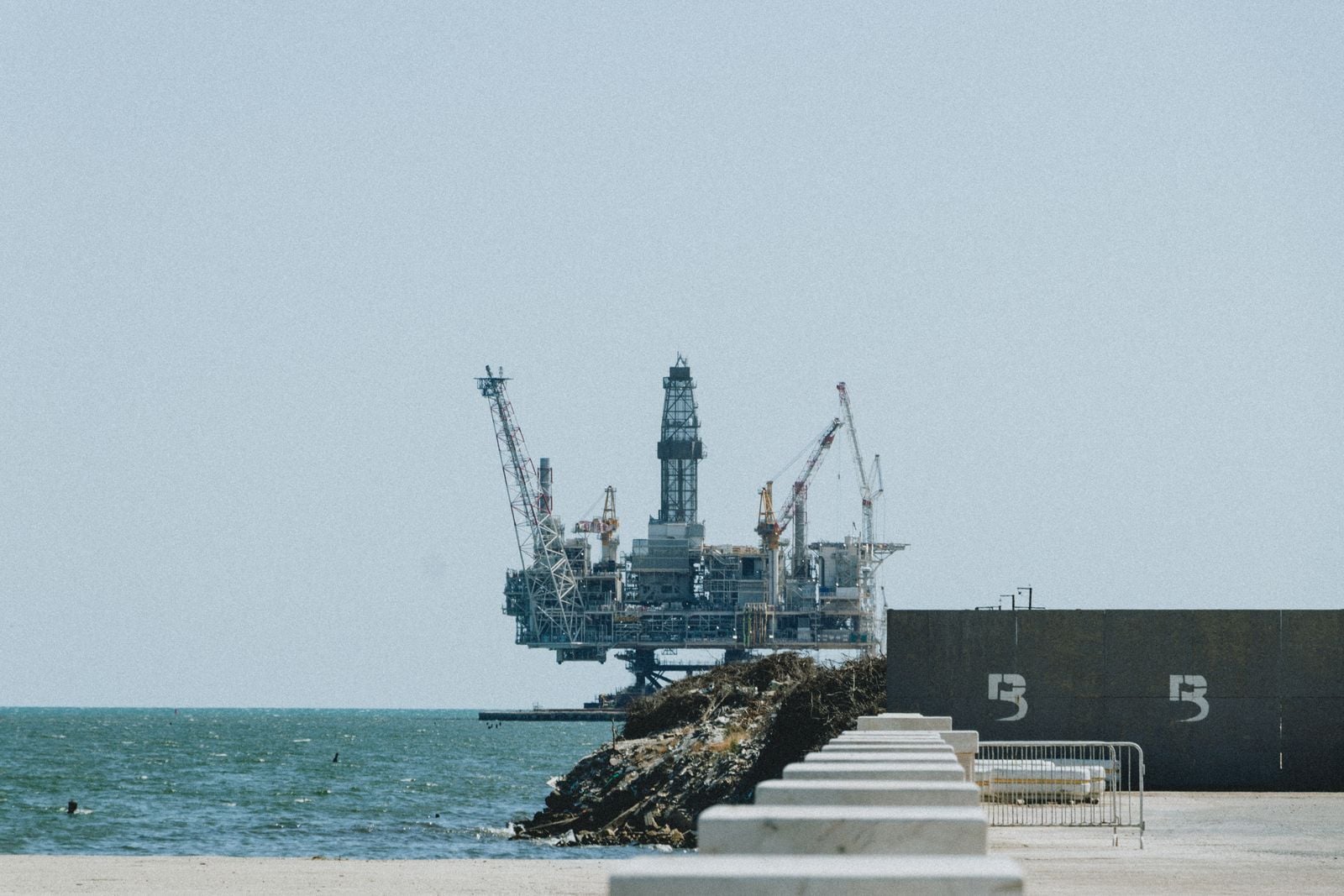
The Gulf of Mexico is one of the most heavily industrialised bodies of water on the planet. According to the Bureau of Safety and Environmental Enforcement, its federal waters alone hold thousands of active and inactive wells, along with roughly 1,800 platforms and tens of thousands of kilometres of pipeline. Much of it is nearing the end of its working life. Under existing federal rules, operators are required to plug wells and remove structures within a set period after production ends — a process the offshore industry calls decommissioning. That process is expensive. A Government Accountability Office report published in 2024 found that federal regulators held about 40 billion to 800,000 for techno-economic work, as UH’s share of a 500,000 from the same award went to a Cullen College of Engineering workforce-development program. The figure is modest by offshore-industry standards — a single well plug-and-abandonment operation can cost several million dollars — but it marks a shift from cataloguing possibilities to producing site-specific proposals that operators, regulators, and investors can act on. The work involves matching individual assets to end uses. A platform in shallow water near shore has different reuse options than one in 1,500 metres of water 200 kilometres offshore. A well drilled into a sandstone reservoir with good porosity may be a candidate for CO₂ injection; one drilled into fractured carbonate may not. The pipelines that carried natural gas are not automatically suitable for hydrogen, which embrittles certain steels and leaks through seals designed for larger molecules. The commercial plans, as described in program materials, are meant to answer the practical questions that decide whether a repurposing project happens: who owns the liability once the asset changes use, what insurance covers it, which federal agency regulates it, and whether the economics beat the cost of removal. Why the regulatory question is the hard part Under 30 CFR Part 250, Subpart Q, offshore operators in US federal waters must decommission wells and remove structures within one year of lease termination. The rules were written for a Gulf whose main product was hydrocarbons. Repurposing sits awkwardly across several agencies: the Bureau of Ocean Energy Management leases the seabed, the Bureau of Safety and Environmental Enforcement oversees safety, the Environmental Protection Agency regulates injection wells under the Safe Drinking Water Act, and the Federal Energy Regulatory Commission handles some pipeline questions. The record does not yet show a clear federal pathway for handing a depleted oil well to a carbon storage operator, or a decommissioned platform to an offshore wind developer, without unwinding and re-issuing multiple permits. Part of what ROICE’s commercial planning work is intended to identify is where those gaps sit and which of them can be addressed with existing statutory authority versus which would require new rules. None of that is unique to the Gulf. The North Sea has spent more than a decade working through similar questions — the UK’s North Sea Transition Authority has published guidance on reusing infrastructure for carbon storage — and the results have been mixed. Some projects have proceeded; others have found the cost of adapting old steel exceeded the cost of new construction. What repurposing does not solve A well plugged and abandoned properly is meant to be sealed for geological time. A well kept open and converted to a new use — carbon injection, for instance — is a well that still has to be monitored, maintained, and eventually closed. Repurposing defers decommissioning rather than eliminating it. The financial assurance question, which the GAO flagged as a risk to taxpayers, does not disappear when an asset changes hands; it moves. There is also the matter of scale. The Gulf holds, by BSEE’s count, tens of thousands of wells across its federal waters. Even an ambitious repurposing program would touch a fraction. The rest still has to be plugged, and the platforms still have to be cut off at the mudline and hauled to shore. ROICE’s own materials are clear that reuse is a complement to decommissioning, not a replacement for it. The program’s value, on the record so far, is in producing the technical and commercial detail that lets specific projects proceed or be ruled out. That is unglamorous work — reservoir modelling, pipeline metallurgy, permit sequencing, insurance structuring — and it is the kind of work that determines whether large infrastructure ideas turn into anything built. What to watch next The near-term signals will come from individual projects rather than from the program itself. A permitted CO₂ injection well in a depleted Gulf reservoir, an offshore wind lease that incorporates an existing platform, or a pipeline conversion that clears its regulatory review — any of these would indicate that the commercial planning work has translated into practice. Their absence, four or five years from now, would suggest the barriers ROICE was set up to map are harder to move than the engineering. The Gulf’s ageing infrastructure is not going to remove itself, and the bill is coming due either way. Whether some of it gets a second working life or all of it gets cut up for scrap is, at this point, still an open question — and one that a few hundred thousand dollars of planning money is trying to answer before the removal deadlines force the issue. For related reading on the physical infrastructure that connects the modern world, see how undersea fibre cables carry signals across entire oceans.