How did a metal box first secured to a converted tanker in April 1956 cut ocean freight loading costs by more than 90 per cent?
6 min read
Summary
On 26 April 1956, Malcom McLean’s converted T-2 tanker Ideal X left Port Newark for Houston with 58 aluminium trailer bodies secured to a special spar deck. McLean’s containerisation system eliminated piece-by-piece transfer across the ship’s rail: the reported calculation for the 1956 operation put the loading cost at less than 16 cents per ton, against 5.83pertonforconventionalbreak−bulk,areductionofabout97percent.Theboxeswerenotpiledontopofoneanother.A[TransportationResearchBoardhistory](https://onlinepubs.trb.org/onlinepubs/trnews/trnews246.pdf)recordsthateachdetachedtrailerbodywasfixedinalongitudinalslotonaraisedspardeck,thenliftedoffinHouston,placedonfreshrunninggearanddeliveredwithoutitscontentsbeinghandledattheport.Thatdistinctionwasthewholemechanism.McLeanhadsoldhistruckingbusinessandacquiredthePan−AtlanticSteamshipCompany,butthebreakthroughwasnotaradicallynewshiporanewlyinventedbox.Itwasatransportsysteminwhichcargocouldremainsealedinsideonemovableunitfromshippertoconsignee.Whatbreak−bulkshippingactuallycostBeforecontainerisation,mostgeneralcargocrossedadockasbreak−bulk.Sacksofcoffee,balesofcotton,barrels,cartonsandcratesarrivedinseparatelots,passedthroughashed,roseinnetsoronpallets,andwerestowedbyhandinsideaship’shold.Theprocessconsumedtheassetthatmatteredmost:theship’stime.Aconventionalcargovesselcouldspendasmuchtimeinportbeingloadedandunloadedasitspentatsea,whileoutboundgoodsmightwaitbesidetheberthfordaysorweeks.Everyhandoffalsocreatedanotherchanceforacratetobedropped,soaked,miscountedorstolen.Theshipownerpaidforlongshorelabourandidleberthtime;thecargoownerpaidthroughdelays,losses,insuranceandstocksittingunproductivelynearthewater.McLean’sanswerwastomovetheboundaryoftheportoperation.Workerspackedandsealedthecargobeforeitreachedthequay,sothedocknolongerhadtohandlehundredsorthousandsofindividualpieces.Ithadtomoveonebox.Whythesavingcameto97percentThearithmeticisdirect.Thecomparisonwas5.83 per ton for conventional loading and less than 0.16pertonfortheIdealXmethod;using15.8centsproducesareductionofabout97.3percent.Thatfiguredescribestheloadingoperation,notthefullpriceofmovinggoodsfromafactorytoadistantbuyer.Itdoesnotabsorbthecostofbuildingcontainers,modifyingships,installingcranes,buyingchassis,pavingterminalsorcarryingaboxinland.Theoriginalbodieswereroughly35feetlong,reflectingAmericanroadequipmentoftheperiodratherthanaglobalstandard.Theyweredetachedfromtheirwheelsforthevoyage,thenreunitedwithrunninggearattheotherend,whichpreservedthecargowhilediscardingthespacethatcompletetrailerswouldwasteaboardship.Interchangeabilitycamelater.[ISO668](https://www.iso.org/standard/76912.html)specifiescontainerclassification,dimensionsandratings,while[ISO1161](https://www.iso.org/standard/65553.html)specifiesthecornerandintermediatefittingsthatliftingandsecuringequipmentengages.Thecornerfittingispartofthecontainer;thetwistlockisthedevicethatturnsinsideitandholdstheboxtoacrane,chassis,railwagonoranothercontainer.WhyoldportslostthenewtradeAbreak−bulkpierneededshedsandastripofworkingspacebesidetheship.Acontainerterminalneededbroadpavedyardswhereboxescouldbesorted,stackedandtransferredamongships,trucksandtrains,plusheavycranesandroadorrailaccessabletocopewithconcentratedflows.TheoldfingerpiersofManhattanandBrooklyncouldnoteasilyprovidethatfootprint.PortNewarkcould,andthe[PortAuthority’saccountofthefirstsailing](https://portfolio.panynj.gov/2016/04/27/port−newarkmalcom−mcleans−box−changes−the−world/)traceshowIdealXwasfollowedin1957byGatewayCity,thecellularshipthatstackedcontainersinpurpose−builtholds.Containerisationthereforerearrangedwaterfrontgeographyaswellascargohandling.Acenturyearlier,the[GreatEastern’stransatlanticcable](https://www.maketecheasier.com/mte−when−the−ss−great−eastern−laid−the−first−working−transatlantic−telegraph−cable−in−1866−a−message−that−had−taken−ten−days−by−steamship−suddenly−crossed−the−ocean−in−minutes−and−the−financial−ma/)hadcompressedthetimeneededtomoveinformationacrossanocean;thecontainercompressedthetimephysicalgoodsspentstalledatitsedge.Thelabourconsequencesweresevere.Fewerpeoplewereneededtoloadfarmorecargo,sounionsandemployersfoughtoverjobguarantees,retirementandcompensationwhiletheremainingworkshiftedtowardcraneoperation,equipmentmaintenanceandterminalcontrol.WhattheVietnamroutedemonstratedThesystem’slargestearlytrialcamethroughmilitarylogistics.A[USGeneralAccountingOfficereview](https://www.gao.gov/assets/b−145455.pdf)recordsthattheMilitarySealiftCommandnegotiatedShippingAgreement1029withSea−LandinMarch1967forcontainerservicetoVietnam.Thesamereviewsayscontainerisationrelievedcongestioninthesupplypipeline,reduceddamageandpilferage,andmighthavesavedmorethan800 million between 1965 and 1968 if used to the maximum extent. That is a broader estimate than the Ideal X loading calculation, but it measures the same advantage spreading through a complete logistics chain.
At Cam Ranh Bay, the change could be seen in the speed of a turn. In a 1970 US Army exit interview, the former support commander said Sea-Land could move 12,000 tons of cargo, backload the ship and complete the turn in as little as 36 hours.
Once regular container services crossed the Pacific, boxes that would otherwise return empty could carry commercial cargo on later legs. The gain did not come from the rectangle alone; it came from enough ships, terminals, chassis, standards and customers forming a network around it.
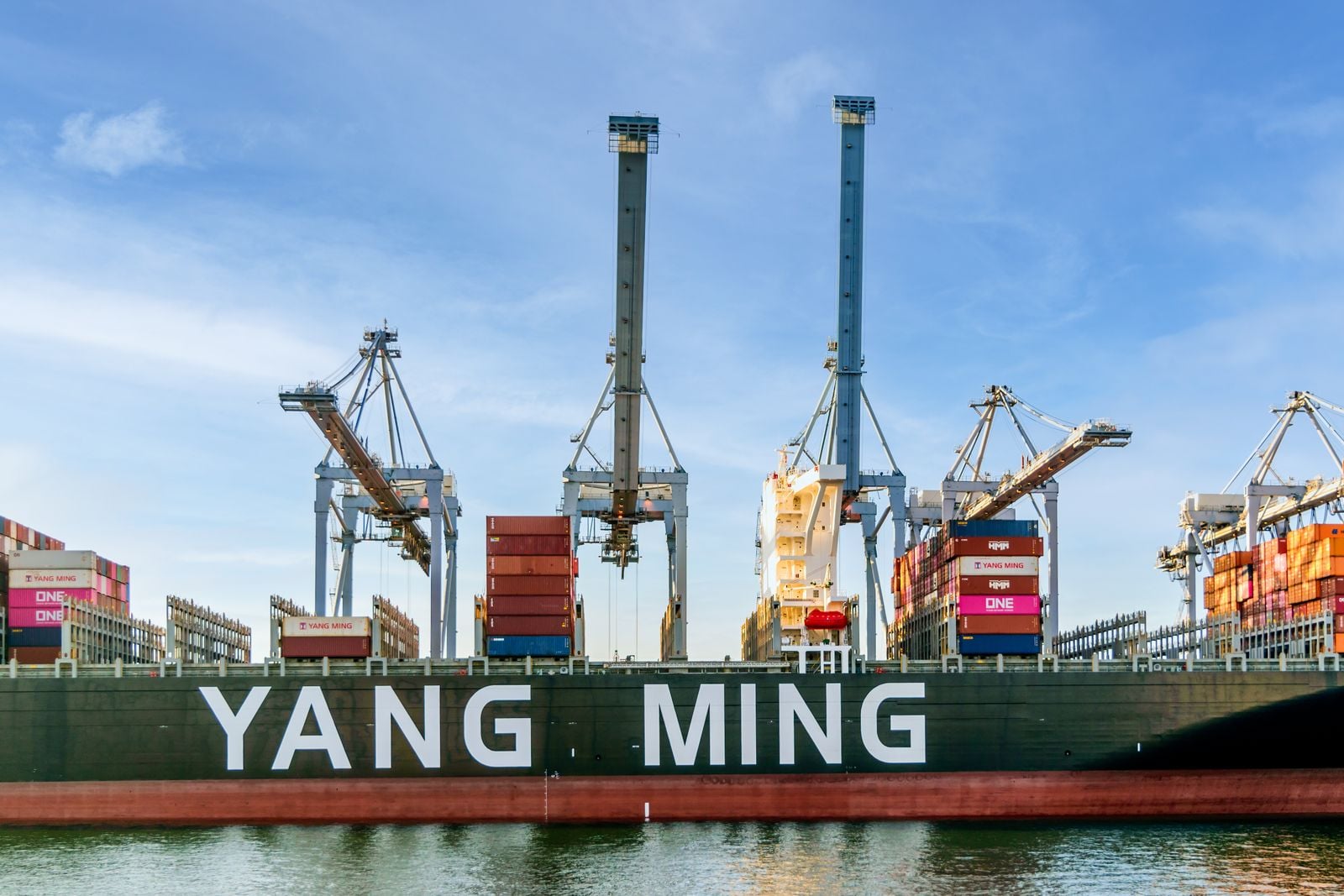
The scale is now measured in twenty-foot equivalent units, or TEU. UNCTAD’s Review of Maritime Transport 2023 reports global container-port throughput above 800 million TEU in 2022, while the MSC Irina, delivered in March 2023, has a stated capacity of 24,346 TEU.
What McLean invented, and what he did not
Reusable freight boxes existed before McLean, and railways, coastal operators and armed forces had all experimented with them. As Marc Levinson’s history of the project explains, McLean’s achievement was to assemble the boxes, detachable chassis, cranes, modified ships and operating rights into a viable intermodal service.
Nor was Ideal X a modern cellular container ship. Its boxes were individually secured to a platform; Gateway City introduced the below-deck racks and vertical stacks that made much denser loading possible in 1957.
The 97 per cent figure is genuine, but its narrow denominator matters. Containerisation’s larger economic effect arrived gradually as compatible equipment spread, ships grew, port calls shortened and sealed cargo could move among sea, road and rail without being unpacked at every boundary.
Once the physical format became common, identification and tracking became the next layer of the system. The later history of machine-readable logistics, from barcodes to the QR code, follows the same logic: an object moves more smoothly when every participant can read the same identifier.
At a modern terminal, steel boxes rise in walls above the harbour while gantry cranes lift them in steady cycles. On the wet April morning when Ideal X left Newark there were 58, each fixed separately to a tanker deck; a vessel delivered in 2023 can carry the equivalent of 24,346 twenty-foot boxes in purpose-built stacks.