Summary
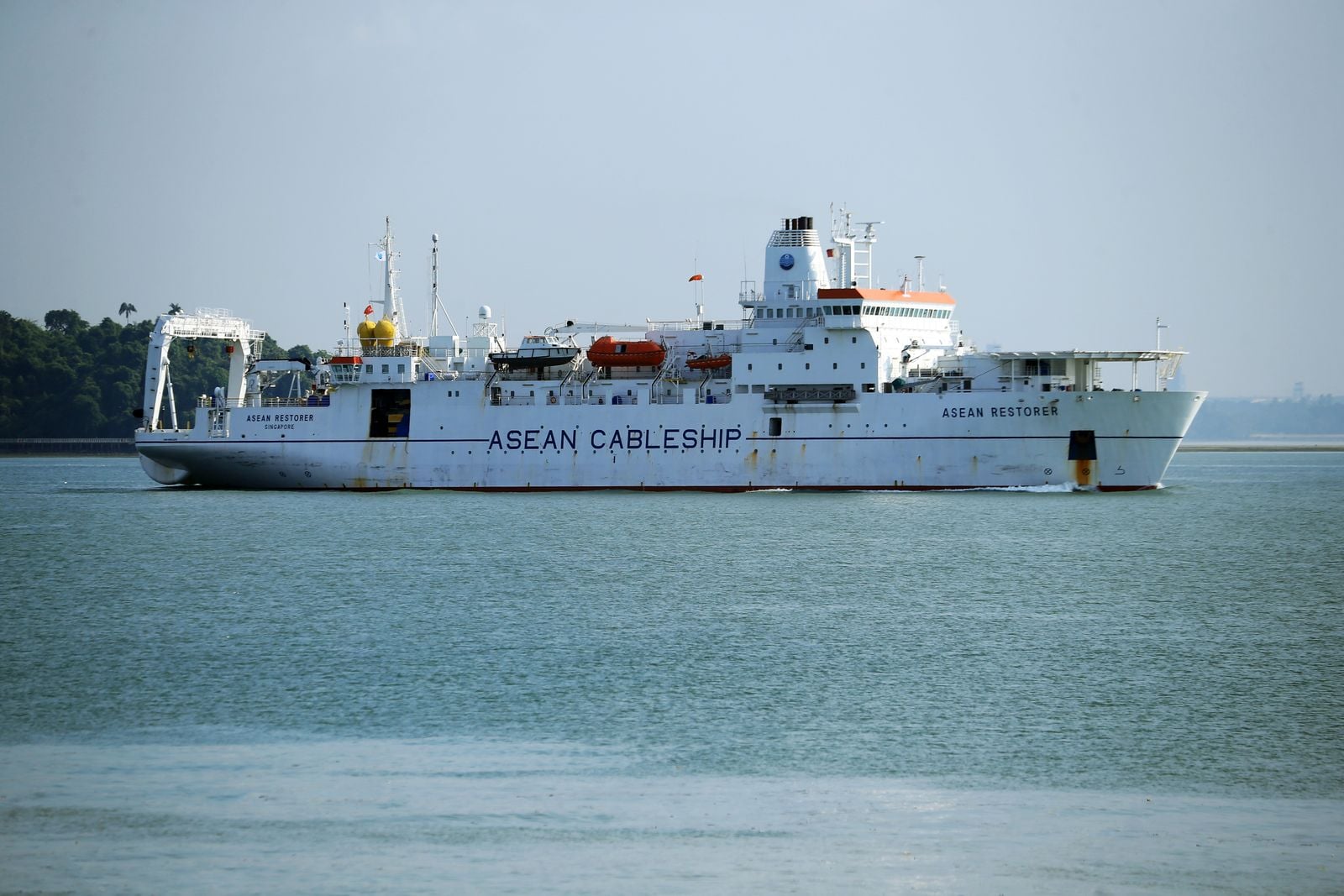
The cables on the seabed carry the bulk of the world’s international data: video calls, bank transfers, cloud traffic and almost everything else that crosses an ocean. When one of them breaks, the only fix is a specialized ship, and there are very few of those. Scientific American puts the global fleet at roughly 60 vessels that lay and maintain cables, fewer than 20 of which work exclusively on repairs. When the right ship is far away, or the fault sits somewhere dangerous, repairs can stall badly. The same report notes that after a ship hit by Houthi militants sank in the Red Sea in 2024 and severed several cables as it went down, repairs were delayed for months while companies and governments worked out whether crews could safely and legally enter the area. Sixty ships for the entire planet The figure of around 60 recurs across industry reporting. Data Center Dynamics has set it against the more than 400 subsea cables either operating or in development. Exact counts vary with the definition. Some tallies include ships built mainly for laying new systems; others count only vessels on maintenance duty. Every version describes a fleet small enough to list by name. The part of the fleet that matters most in a crisis is smaller still. Because fewer than 20 ships are dedicated to repair alone, a surge in faults falls on that group first, not on the fleet as a whole. The 2040 retirement cliff and the 3 billion bill over 15 years to upgrade its repair and maintenance fleet](https://www.lightreading.com/optical-networking/aging-subsea-cable-fleet-needs-a-3b-upgrade-report). The difference between those two fleets is the key nuance. The two-thirds figure refers to maintenance ships, the vessels that actually fix breaks. Across the whole fleet, including ships built mainly to lay new cable, the share is closer to half; Light Reading put it at 47 percent. Scientific American’s account of the study draws the same line between the maintenance fleet and the broader one. A December 2025 analysis in Armada International rounds the repair-fleet figure to about 65 percent retiring by 2040. The retirements cluster because the ships were built in a cluster. Citing SubTel Forum’s 2021/2022 annual industry report, Data Center Dynamics reported that after a wave of construction around the turn of the century, no new-build cable ships were delivered from 2004 through 2010, and just five arrived between 2011 and 2020. In that analysis, only eight of the roughly 60 ships were under 18 years old and 19 were over 30. The oldest, Finland’s Telepaatti, was built in 1978. Cable ships are designed for a working life of around 40 years, so a fleet commissioned in one burst ages out in one burst. Replacements have not closed the gap. According to Scientific American, many recent additions are second-hand vessels converted from other industries, including oil and gas construction ships, not purpose-built new ships. Why demand is rising as the fleet shrinks The retirement wave coincides with a construction boom. TeleGeography’s research team projects a 48 percent net rise in total cable kilometers laid across the world’s oceans by 2040, driven by bandwidth demand and the push for redundant routes. More cable in the water means more to fix: Light Reading’s summary of the study puts the expected increase in annual repairs at 36 percent over the same period. Faults are routine, not rare. Scientific American, citing the International Cable Protection Committee, reports 150 to 200 cable faults a year, most of them caused by fishing gear and ship anchors. The KIS-ORCA cable-awareness service attributes around 70 percent of faults to fishing and anchoring, and about 12 percent to natural hazards such as earthquakes and current abrasion. Each fix is slow and expensive. Gulf News, reporting after the September 2025 Red Sea cable cuts, put a typical repair at 10 to 20 days. The Armada International analysis estimates the cost at 1 million per fibre-optic cable repair. What a repair actually involves The work itself shows why a small fleet becomes a bottleneck. Japanese cable-ship operator KCS sets out the sequence:
- Engineers pinpoint the fault from shore.
- A ship is sent out urgently.
- The crew recovers the damaged cable and cuts the failed section out.
- A length of spare cable is jointed in.
- The line is tested and reburied. KIS-ORCA’s technical guide adds the mechanics. The ship drags a cutting grapnel along the seabed until it hooks and severs the cable. It then swaps to a holding grapnel to lift each cut end to the surface in turn. In buried sections, a remotely operated vehicle may locate and cut the cable instead. On deck, according to Gulf News, technicians cut away the damaged stretch, usually between 1 and 5 km long, and fusion-splice in replacement cable before sealing the joint. Depth slows every step. KCS notes that simply hauling a cable up from 8,000 meters can take longer than a day. Where the cable had been buried, KIS-ORCA says, an ROV jets it back into the seabed to its original burial depth, and the whole job can stretch over many days. What the fix looks like The study translates the 3 billion. Make Tech Easier has also reported on San Francisco’s floppy-disk-booted subway control system, another case of modern life resting on quietly aging infrastructure.