Summary
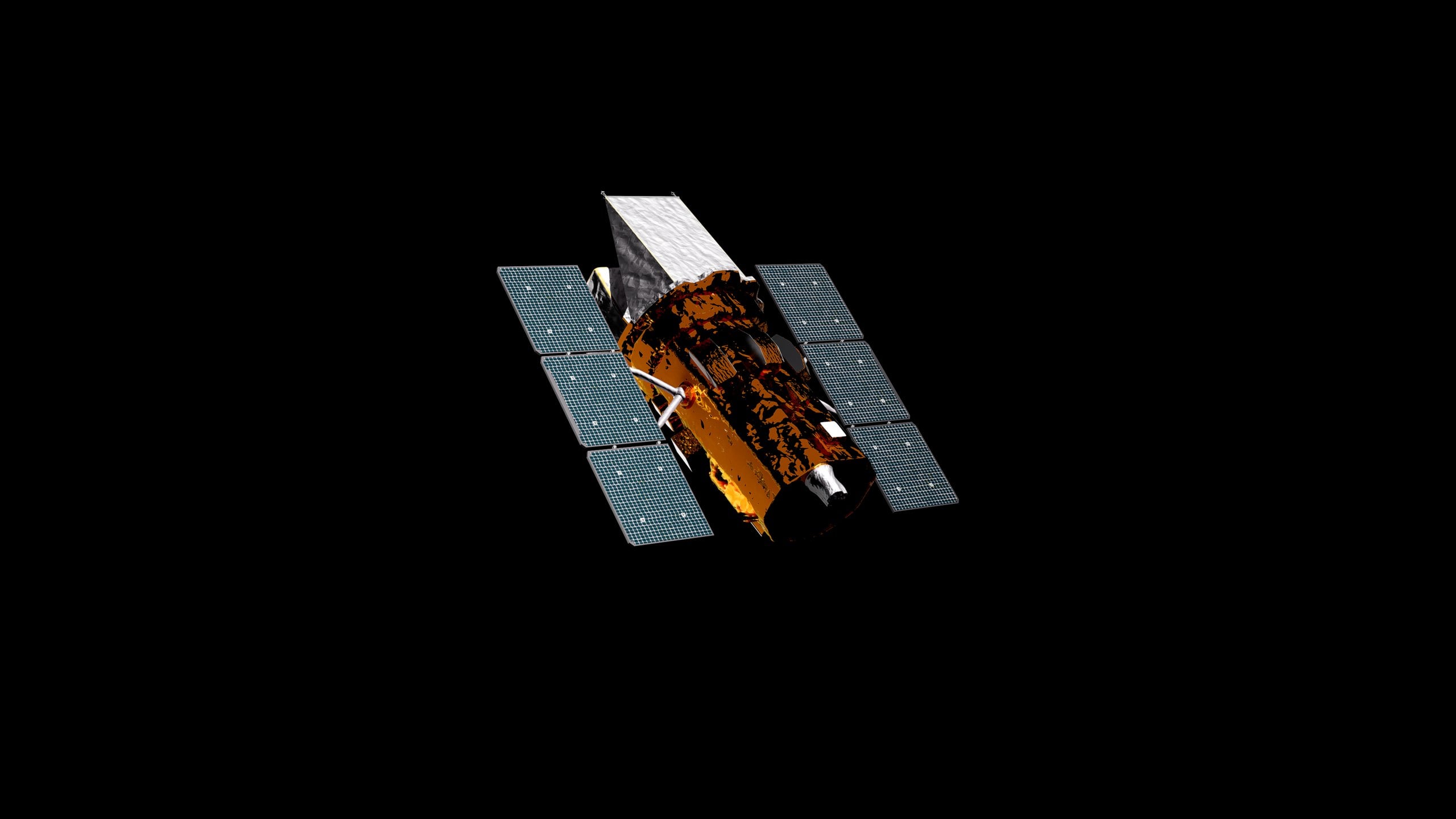
NASA ended science operations for its Neil Gehrels Swift Observatory on 23 October 2026, after the spacecraft’s orbit dropped to less than 171 miles (275 kilometers) above Earth, the agency said. The satellite launched on 20 November 2004 with a two-year primary mission and stayed productive for more than 10 times as long. Swift made its final observation on 20 October 2026 and is expected to re-enter the atmosphere in the next few weeks. Atmospheric drag at that height stops the telescopes from holding steady on their targets. Swift’s job was to detect a gamma-ray burst, work out where it was, pass the position to other observatories and then swing its own telescopes onto the spot before the afterglow faded. “This typically took Swift about a minute to do,” said S. Bradley Cenko, the mission’s principal investigator at NASA’s Goddard Space Flight Center in Greenbelt, Maryland. Eleven photons from a 0.03-second burst Speed mattered especially for short gamma-ray bursts, which reach peak brightness in less than two seconds. Before Swift, nobody could locate these bursts quickly and precisely enough to see their afterglows. In May 2005 the spacecraft turned towards GRB 050509B, a burst that lasted just 0.03 seconds. Swift got there fast enough to detect 11 X-ray photons from the fading glow. That made GRB 050509B the first short burst with a detected afterglow. The observations supported long-standing theoretical models that short bursts likely come from the merger of two neutron stars, objects with the mass of the Sun crushed down to the size of a city. The spacecraft could also be pointed by request. Its planning system let astronomers command “target-of-opportunity” observations from the ground in as little as a few minutes, or set up monitoring programmes lasting from a few minutes to months. The system could schedule up to 75 independent targets a day. Swift was conceived as a multiwavelength observatory from the start. Its first principal investigator, Neil Gehrels, led a design with co-aligned Optical/Ultraviolet and X-ray telescopes that could quickly image a burst and refine its position. The spacecraft began work the month after launch. What is left behind NASA renamed the mission in 2018 to honour Gehrels following his death. Over its career Swift observed more than 2,000 gamma-ray bursts and studied more than 1,400 supernova explosions. It also watched stars being torn apart by black holes, monitored active galaxies, carried out an all-sky X-ray survey and studied asteroids and comets. Swift data has contributed to about 7,000 published scientific papers. Shawn Domagal-Goldman, director of the Astrophysics Division at NASA Headquarters in Washington, said the agency is looking at ways to use and expand its existing fleet of space telescopes to respond rapidly to cosmic events. NASA said it will keep prioritising new options for fast reaction and use current missions to fill the gap in the meantime. The Swift archive, which NASA describes as covering nearly 22 years, holds brightness measurements of many kinds of cosmic outbursts, multiwavelength spectra and more than 1.5 million images from its Ultraviolet/Optical Telescope. The full dataset is publicly available and spans approximately 12 terabytes, the storage equivalent of about 600 high-definition movies. Sources:
- NASA Science, “NASA’s Swift Mission Ends, Leaves Behind Scientific Bonanza”: https://science.nasa.gov/missions/swift/nasas-swift-mission-ends/