Summary
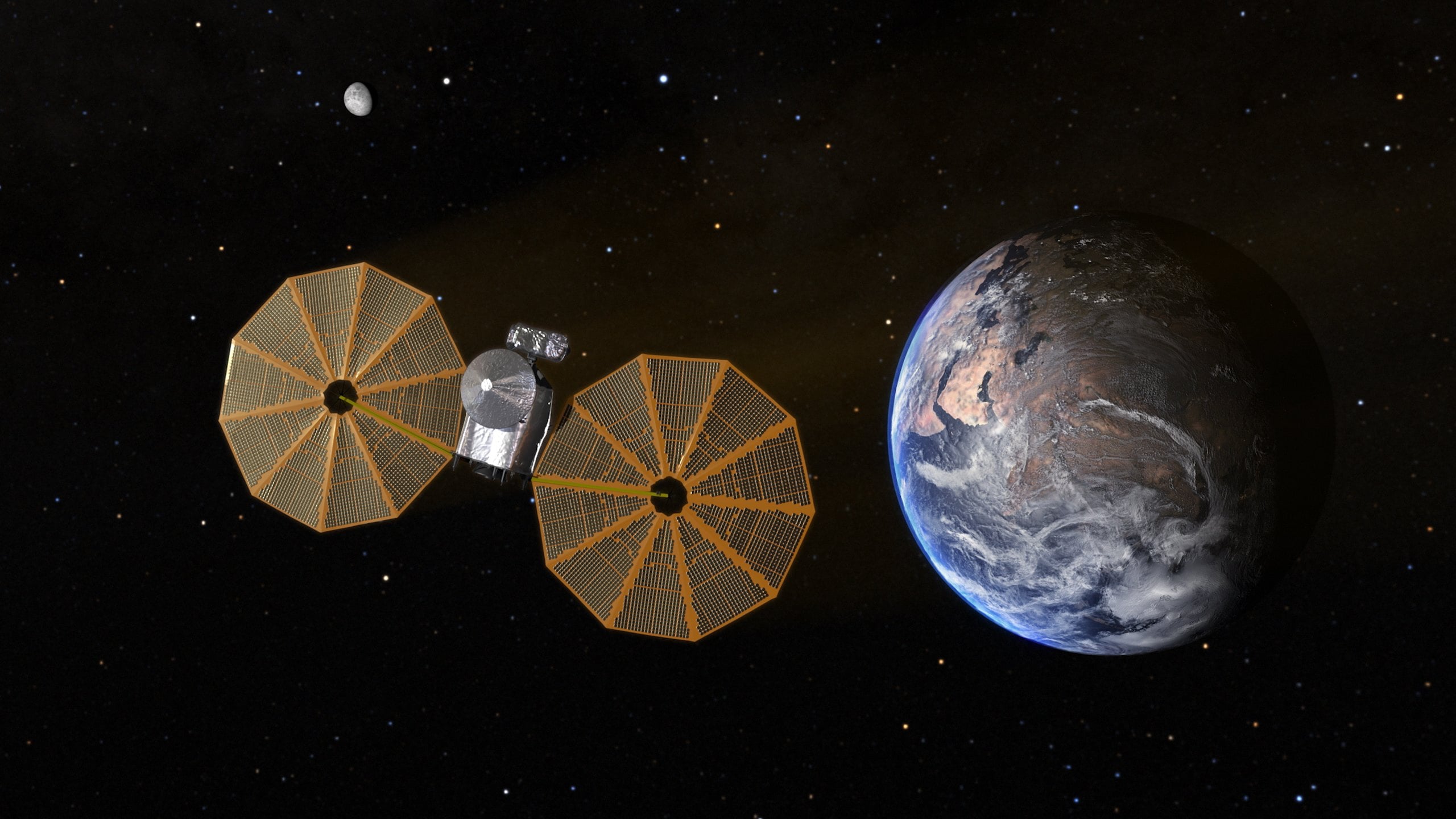
NASA said on 28 October 2026 that its Lucy spacecraft had entered the Jupiter Trojan asteroid region after travelling more than 2.2 billion miles since its launch on 16 October 2021. In a post on the mission blog, the agency called Lucy the first spacecraft to enter the region. The asteroids are not yet close enough to look like anything other than stars. Trojans in the region are separated from each other by more than 6 million miles on average, according to the post, which was written by Katherine Kretke of the Southwest Research Institute. They “will appear to Lucy as pinpricks of light moving against a field of stars until the spacecraft bears down on its chosen targets,” it said. Islands of stability Space has no well-defined boundaries, but mission engineers know Lucy is approaching Jupiter’s Lagrange point 4, known as L4, by tracking the spacecraft’s location through its radio signals and images of the surrounding stars. NASA describes L4 as one of two large and unexplored “islands of stability”, where thousands of asteroids share Jupiter’s orbit around the Sun. They are guided by the combined gravitational pull of the Sun and Jupiter. The L4 group runs ahead of Jupiter in its orbit, while a second group around Lagrange point 5 trails behind. Lucy will visit both groups. The Trojans in these clusters sit as far from Jupiter as the planet does from the Sun, about 484 million miles. That gap is why no earlier mission has gone there. Several spacecraft have visited Jupiter, and some used its gravity to travel farther out, but NASA said none had the opportunity to visit the Trojans given how far they are from the planet. Only Lucy, on a mission to explore this population, has had a reason to go. Scientists expect that studying the Trojans up close will help them refine theories of how the solar system’s planets formed 4.5 billion years ago and how they came to their present arrangement. Less than a year to the first flyby Lucy’s first encounter, with the Trojan Eurybates, is set for 11 August 2027. NASA said the spacecraft has adapted to cooling temperatures and dimming light as it cruises farther out. Its design is optimised for this part of space, more than five times farther from the Sun than Earth, and the agency said the spacecraft and its instruments continue to operate as expected. With less than a year to go, scientists are finishing plans for the few hours Lucy will spend studying Eurybates up close. After Eurybates, Lucy will fly past Polymele in September 2027, Leucus in April 2028 and Orus in November 2028. It will return to Earth in 2030 for a third and final gravity assist, which will send it toward Jupiter’s trailing group of Trojans. There it will study Patroclus and Menoetius in March 2033. NASA describes Patroclus and Menoetius as a binary pair. Sources: