Summary
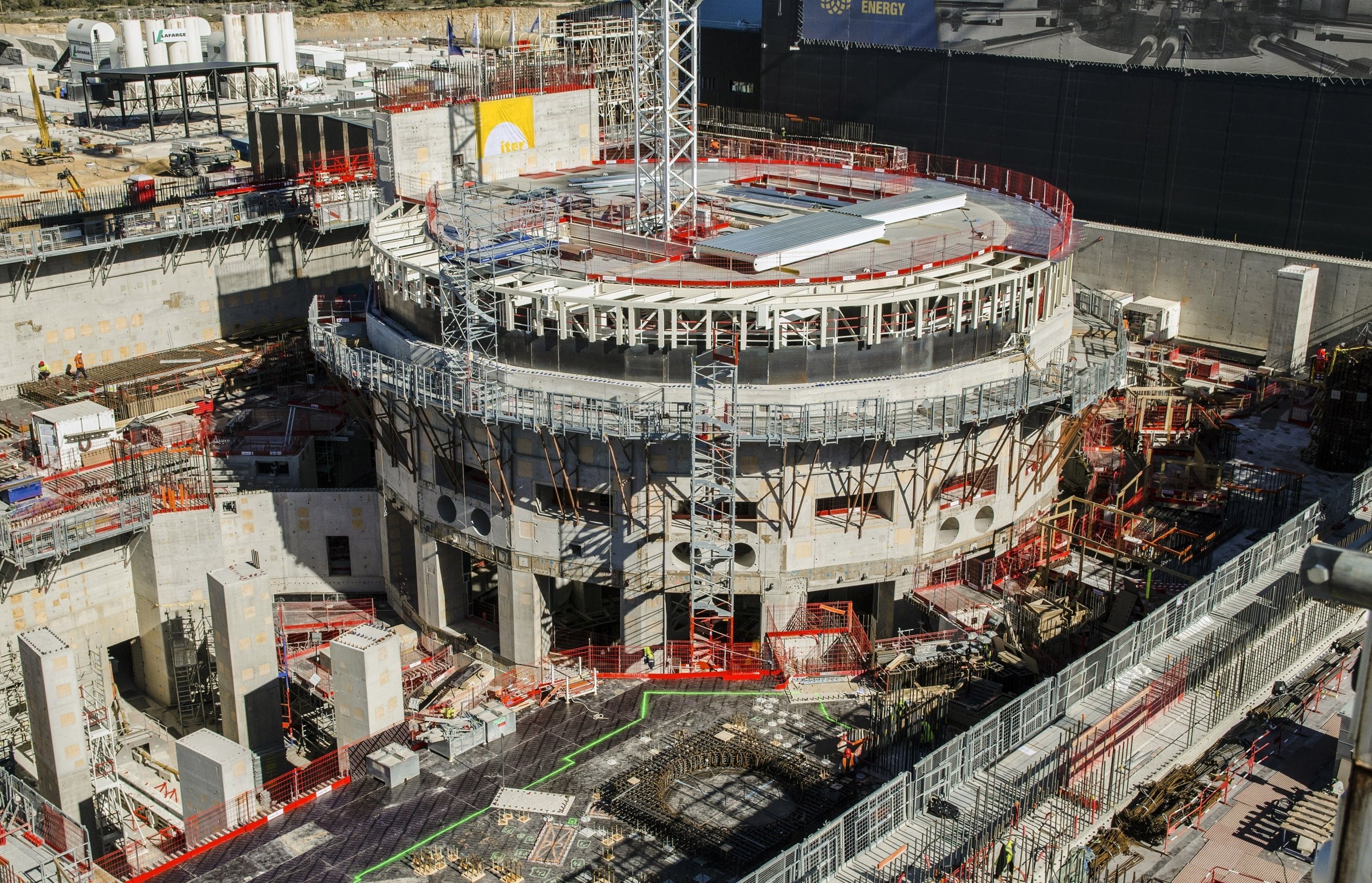
The ninth and final sector of the ITER vacuum vessel arrived at the fusion construction site in Cadarache, southern France, on Friday 2 October 2026, the ITER Organization said. Every component needed to complete the core machine is now on site. The sector came from Europe and is numbered #2. Staff, contractors and representatives of the project’s domestic agencies gathered on the worksite on Monday 5 October to mark the delivery, with the component still in its protective wrapping. ITER Director-General Pietro Barabaschi called it “a monument.” “Vacuum vessel sector #2 represents the last of our core tokamak components,” he said, listing the toroidal field coils, poloidal field coils, correction coils, central solenoid magnets, vacuum vessel sectors and thermal shield sets already delivered. The core machine, as ITER defines it, covers the cryostat, the superconducting magnets and the vacuum vessel with its thermal shield. Five sectors, 750 km of weld Europe built five of the nine sectors and the Republic of Korea built the other four. Ansaldo Energia says the European five took 750 km of welding beads and that the delivery closes a manufacturing journey that started 16 years ago. The final sector’s fabrication directly involved more than 150 professionals and at least 15 companies across Europe, according to the same release. The work was split before it was joined. Each sector is made of four segments, produced at the Westinghouse plant in Monfalcone, Italy, and at Walter Tosto in Chieti. The segments were then assembled and welded into a single sector, which travelled by sea and land to Cadarache. Sector #2 left the port of Monfalcone in mid-September 2026. The vessel itself is a double-walled stainless steel container that will hold the fusion reaction and keep air, dust and impurities out of the chamber. Superconducting magnets will sit around it so the plasma does not touch the walls. Once the nine sectors are joined, Ansaldo Energia says the assembled vessel will be 19.4 m in diameter, 11.4 m high and weigh approximately 5,200 tonnes. The component was inspected against standards set by France’s Nuclear Safety Authority. Lessons passed from Korea to Europe Europe worked with the AMW consortium of Ansaldo Nucleare, Westinghouse and Walter Tosto. Fusion for Energy Director Marc Lachaise thanked Europe’s industrial partners and credited the Korean Domestic Agency, whose experience from building four of the nine sectors was shared with the European teams. All five European sectors were delivered within the past two years. “This is an emotional moment for me and for others,” Lachaise said at the ceremony, joining remotely. “We can be proud of what we achieved.” The Ansaldo Energia release says Europe’s contribution to ITER amounts to nearly half of the project. In that release, Lachaise described the sector as “a high-tech component made in Europe, by European companies, at a time when knowledge and expertise matter in the fusion race.” Daniela Gentile, chief executive of Ansaldo Nucleare, said the delivery “represents the culmination of a great journey of commitment, innovation, and industrial collaboration and excellence.” Luca Oriani, president of New Plant Delivery at Westinghouse, said the Monfalcone teams “have worked toward this milestone for many years.” The same release says Fusion for Energy used artificial intelligence to cross-check data collected by technical teams in the factories. Machine assembly began in July 2020, when the cryostat base was lowered into the tokamak pit. In-vessel components such as the divertor and the blanket, along with plant systems and other equipment, are still to be delivered. Sources: