Summary
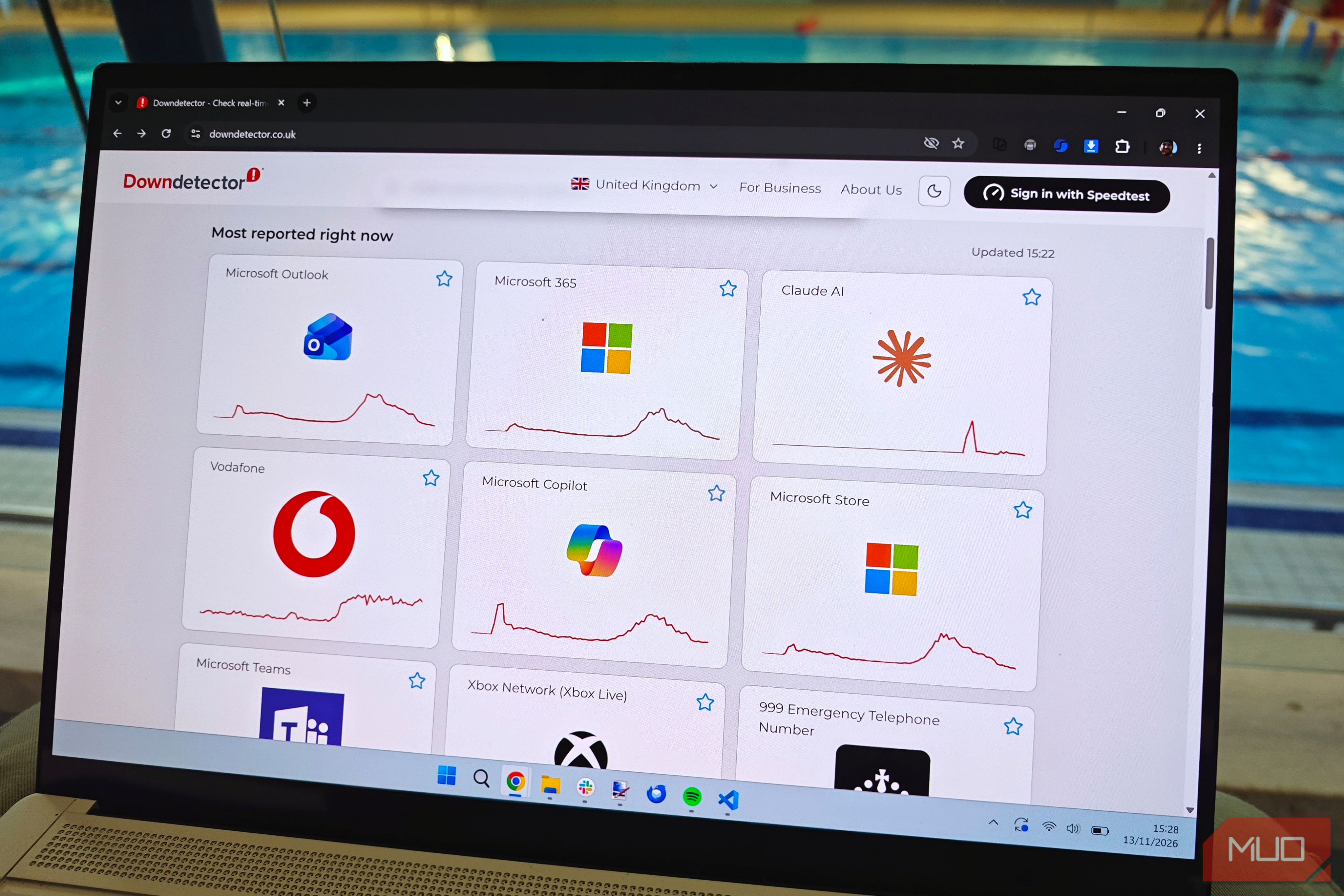
When Microsoft breaks down, we usually get a vague error message on a tracking system or information board, and everything is up and running after 20 minutes, or an hour or so, depending on the issue. We’re now emerging from around 24 hours of Microsoft disruption. It’s unprecedented downtime for one of the world’s biggest tech companies, with so many other sites, services, businesses, governments, health organizations, etc., so dependent on Microsoft to keep their lights on. This time felt different. Microsoft claims it wasn’t a cyber attack and promised to share a full incident report in due time. But the length of the outage and the severity had people wondering and connecting dots that probably didn’t need connecting, before finally confirming what many suspected all along: a network change broke everything, and much harder than it was expected. So, with Outlook, Teams, SharePoint, OneDrive, and Copilot slowly coming back to life, why did it take Microsoft so long to restore its service? Microsoft is back! What was actually broken? Around midday on 12 November, 2026, Microsoft Outlook users worldwide began reporting the unthinkable: Outlook is down. Millions of people, sites, and services around the globe were suddenly unusable, and the working internet was flooded with bittersweet lamentations concerning the sudden inability to work. Oh no, how will I get onto my 13:45 Teams call? I guess I’ll go outside instead. What’s a Google Meet, anyway? At the center of this mess was Exchange Online, the service that handles Outlook email and calendars for businesses. So much of Microsoft 365 leans on it that the damage spread fast. Outlook, Copilot, Calendar, SharePoint, Planner, and more all rapidly took blows and were forced offline. More than 24 hours later, full capacity has still not been restored, even regionally. Apps that plug into Microsoft 365 broke too, with OpenAI flagging broken connections and tools in its Microsoft connectors. Government agencies in California and courts and schools in Australia have all reported disruption. The BBC in the UK amusingly wrote that it was trying to reach companies for comment, but since most have switched full-time to email, they’ve removed phone numbers from company websites in favor of… email. An estimated 450 million people use Microsoft 365 apps globally — it’s a huge number. Why Microsoft can’t turn it off and on again Global communications networks don’t work like that Microsoft initially tried every IT department’s classic move: switch it off and on again. But, you know, on a much bigger scale. Restarting servers and rebooting the system is similar to what you’d do when your home network goes down. But it didn’t work. The fingers point to a different issue. Australian Home Affairs Minister, Tony Burke, said that the global fault was “in some ways similar to what we saw with respect to CrowdStrike, where there is an update that has gone awry,” referencing the enormous CrowdStrike outage in 2024 that took numerous sites and services offline. Burke wasn’t completely wrong. Microsoft was actively “assessing whether reverting a small number of recent configuration updates we identified could help accelerate recovery,” before finally revealing that “a core process on affected servers is becoming overwhelmed, causing capacity loss.” That’s a core part of why the recovery and restart process took so long. Each time Microsoft attempted to restart its servers, the core process identified couldn’t handle being switched on again. Essentially, every time Outlook on your laptop or phone talks to Microsoft’s servers, it runs a quick digital handshake to set up an encrypted link, a bit like showing ID at the door. Microsoft says that process became overwhelmed on affected servers, leaving them unable to handle requests. Emergency server rebuilds and fixes are still taking place across the globe, but it’s also a region-by-region effort. Recovery work in the Asia-Pacific region was well underway on Friday morning, with positive signs across Europe and North America as the continent woke up. That’s also what’s keeping the process slow. If a server fails one check, it has to start again, from the very beginning. Your emails are probably still there, if they haven’t returned to you already Remember to resend them! All of those emails you tried to send before everyone realized that Outlook was down probably haven’t vanished into the ether. You may have already received a hefty number of undelivered notifications, letting you know that it couldn’t reach the destination. That’s if you could access your emails at all, I suppose. If you’re waiting on an important email, it probably isn’t lost. Mail systems normally keep retrying an undelivered message for a set period before giving up and bouncing it back to the sender. Microsoft has stretched its window to 48 hours while it clears the backlog, so mail sent during the outage should turn up late rather than vanish. That means emails now have a much longer time to sit there while the enormous email backlog slowly clears as Microsoft’s services come back online. The long outage will probably cost Microsoft More than just money, one suspects As I was penning this article, Microsoft officially announced that it has “addressed the underlying issue” and will “continue to restore service to remaining customers and regions.” The big question now is cost. How much will Microsoft’s enormous customer base demand as compensation for 24 hours of downtime? Its Service Level Agreement shows that customers are due compensation when Exchange Online falls short of 99.9% uptime, but it’ll most likely be in the form of credits. Other, bigger partners may well seek monetary damages from Microsoft due to downstream issues with their services. For example, during the CrowdStrike outage, the company offered millions in credits to its customers, but the actual revenue loss was multiple times higher. Delta alone estimates it lost more than 92.3 billion in revenue last quarter, I’m sure people will be looking good and hard at more than credits. Oh, and free tiers don’t have a chance, by the way. You’re not paying for a service, so you don’t get to claim. But beyond that, Microsoft 365 Personal and Family can’t claim either, even if you’ve been offline the whole time. Credits are only for business customers, not the proles. So, what happens next time? There is always a next time, and each “next time” seems to impact more people, on a larger scale. By distributing services across genuinely independent participants, we can reduce dependence on a single company and design networks that continue functioning when some participants go offline. Open standards and portable data can also give businesses more freedom to move between providers and retain access to essential information. But that doesn’t come easily, which Laboon also acknowledged, saying that even decentralized services “can still be vulnerable if its access points and operators all depend on the same cloud provider or software,” and that, really, decentralized systems designed to protect against outages must be designed just as well, with “strong security and tested recovery procedures.” Ultimately, it’s up to businesses and organizations to act now, knowing that the next big one isn’t if, it’s when.