Summary
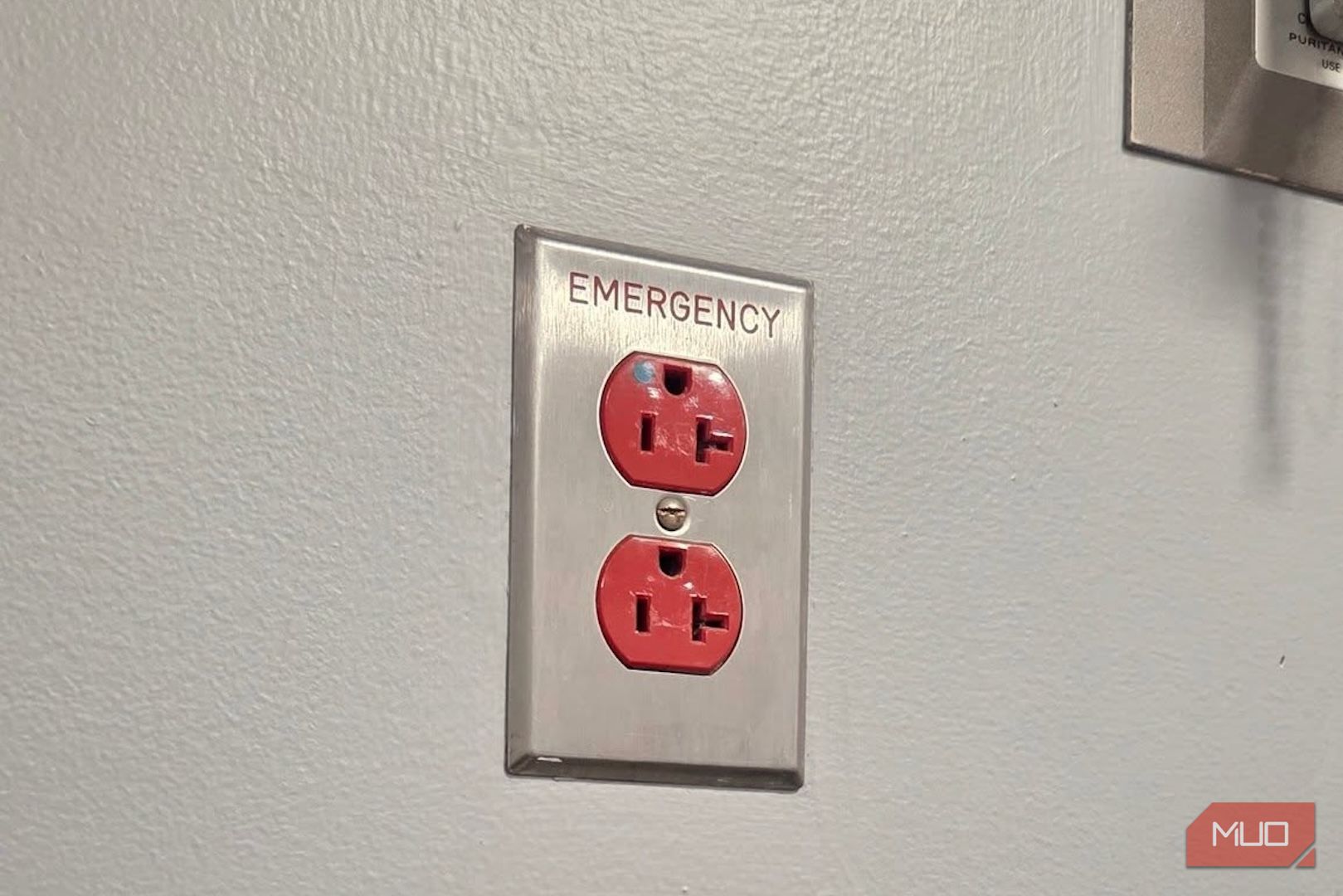
Most of us never think twice about an outlet. It’s white or ivory, it matches the wall plate, and you plug in whatever needs power. A red or orange one breaks that pattern, and the color isn’t decorative. Each one tells you something about how that outlet is wired. What a red outlet means It’s connected to backup power A red outlet almost always means the circuit behind it runs on an emergency power system, even if it’s portable. When utility power drops, a generator (or another source), a large battery system, or both take over that circuit. Regular white outlets in the same room may go dark while the red ones stay on. You’ll see them most often in hospitals. The electrical code requires outlets fed by a hospital’s emergency branches to have a distinctive color or marking so staff can spot them quickly. The code doesn’t actually say red. Red just became the industry habit, and some facilities use blue or a labeled cover plate instead. You’ll find them outside hospitals, too. Since the 2017 edition of the National Electrical Code, outlets on any building’s emergency system need the same kind of distinctive marking. Office buildings, schools, labs, and data closets often use red. At UC Riverside, for example, facilities staff tell researchers to plug lab freezers and other critical equipment into red outlets so they ride through generator tests. Can you plug your phone into a red outlet? It’ll work, but that outlet isn’t there for you Electrically, a red outlet works like any other. Your phone charger won’t know the difference. The question is whether you should be using it. Backup power has limits. A generator is sized for the equipment it’s meant to keep running, like monitors, pumps, ventilators, refrigeration, and network gear. Every extra space heater, coffee maker, or laptop pulls from that same reserve. In a hospital room, the red outlet next to the bed is where a nurse may need to plug in something important on short notice. The power isn’t guaranteed to stay on, either. Buildings shut down their emergency circuits for maintenance. Washington University in St. Louis, for instance, has posted notices that red outlets would have no power during a generator tie-in. If you’re at work and you want your desktop to survive an outage, ask facilities before claiming a red outlet as your own. What an orange outlet or orange triangle means It has its own separate ground wire Orange points to an isolated ground receptacle. On a standard outlet, the ground connection ties into the metal box and conduit around it. An isolated-ground outlet skips that and runs a separate, insulated ground wire back to the electrical panel. The goal is to reduce electrical noise that can interfere with sensitive electronics. The color is where people get tripped up. The code only requires an orange triangle on the face of the receptacle. Many isolated ground outlets are fully orange, but a white outlet with a small orange triangle counts, too. An all-orange outlet with no triangle may just be an orange outlet someone liked. You see these in server rooms, recording studios, broadcast facilities, and labs with precise test equipment. Hospitals use them in some areas, but recent code changes ban them inside a patient care vicinity, the space right around a patient’s bed. Is it safe to use an orange outlet? Yes, though it won’t make your TV look any better You can plug anything into an orange outlet that you’d plug into a white one. As one Army facilities article put it, you can use them like any other outlet. If you’ve seen orange outlets sold at a home improvement store, don’t swap one in hoping for cleaner audio from your home theater. The outlet only works as intended when an electrician runs that dedicated insulated ground wire to it. Without that wiring, you’ve just installed an orange outlet. Installed incorrectly, an isolated ground setup can create a dangerous situation, so this is a job for a licensed electrician who understands why you want one. Other outlet markings worth knowing Green dots, small letters, and buttons all mean something Red and orange aren’t the only signals on a wall plate. A few others are worth recognizing: | Marking | What it means | |---|---| | Green dot | | | TR | Tamper-resistant. Spring-loaded shutters prevent foreign objects from entering. Required in most new residential construction. | | WR | Weather-resistant. Designed to withstand moisture and outdoor conditions. | | Test / Reset | GFCI outlet. Cuts power when it detects current leakage. Common in kitchens, bathrooms, garages, and outdoors. | | No Equipment Ground | Indicates a GFCI installed on an older two-wire circuit without grounding. Code permits this replacement, but the outlet remains ungrounded. | Look before you plug in You can plug into either color without worrying about getting hurt. Before you do, think about who installed the outlet. Or better yet, find an inexpensive smart plug for your home. In a hospital room, the red one by the bed belongs to the monitors and pumps, so I’d charge my phone somewhere else. An orange outlet in an office supply closet is a different story. It’ll charge my phone just like a white one, and whoever wired it was mostly thinking about the computers that were supposed to sit there.