Summary
When setting up a smart home, you want it to work all the time. One of the biggest facets of having a smart home is making sure that your devices stay connected as much as they can. It’s a reason why Matter and Thread devices are so valuable, because they don’t need your Wi-Fi to be up and running for them to still work. Even a power outage can’t stop them from continuing with their purpose.
You want to ensure that your smart home is up and running when you need it the most. For many, that time of year is the winter. However, this is arguably the toughest time for some of your devices, due to the freezing temperatures. Some devices are more susceptible to the cold and can malfunction and stop working altogether. It’s important that you keep that in mind when you’re making your next smart home purchase.
Your video doorbell might be running low
If it’s not wired, you’re in trouble
Setting up a video doorbell to keep an eye on your home is a security must for any homeowner. It gives you peace of mind, thanks to its surveillance capabilities.
Ring doorbell cameras are some of the most well-known on the market. The different iterations of the Video Doorbell have been top sellers for years. Coupled with Ring’s impressive surveillance plans and users have been generally happy with these doorbells.
However, one thing that you must take into account is what kind of Ring doorbell you’re buying. The company sells both wired and battery-powered doorbells. Wired ones are connected to your home’s power and will continue to stay functional as long as your home’s power is running. Battery-powered ones work as long as the battery is charged enough for them to work.
If you live in a colder climate, your Ring Video Doorbell’s battery life will start to shorten. If it previously lasted three weeks on a single charge in the summer, you’ll find the battery might only last two weeks. If the weather is under 36°F, the battery will drain much faster. I recently lost power to my wired Ring Video Doorbell and the battery backup kept it running for a while, so much that I didn’t even realize it had lost power. However, after a few weeks, the battery died, and I had to take it apart and charge it.
If the weather is under 32°F, the battery won’t continue to charge, per safety precautions built into it by Ring. Because battery storage is tougher in the winter, especially in a garage or an outdoor area, the battery that powers Ring doorbells tends to see its life zapped.
Nest battery cameras can run low quickly
It doesn’t have to be just a doorbell camera
Nest is another manufacturer of top security cameras available to consumers these days. The Google product can fit into your smart home and provide numerous security features to boost your protection.
Many Nest cameras are plugged into outlets, making them powered up easily throughout the day. But in order to get the most out of them, they need to be near outlets, minimizing your ability to use them throughout your home.
For Nest battery cameras, Google also built the charging principle into its cameras, so they won’t charge under 32°F either. The Google Home app will actually display “Charging paused” if you click on the device in your app.
If it’s cold enough, even the trickle charge that a wired camera can do won’t be able to replace the lost power of the lithium-ion battery. So regardless, you’ll likely have to swap batteries eventually if you’re using a Nest battery camera.
Smart locks have us worried
Many of them run on individual batteries
There are many different kinds of smart locks on the market, as plenty of companies make deadbolt locks with some kind of security purpose. You might have one with a lithium-ion battery, which would likely be on the inside of the door and a bit protected from the elements. It doesn’t mean that they can’t be cold, as the doors themselves can get cold.
But other ones are powered by alkaline batteries, which will also be on the inside of the door. But when those doors get cold, those batteries will drain even faster than lithium-ion batteries do. Alkaline batteries don’t even come close to withstanding temperatures as well as lithium batteries do.
If the weather is under 32°F, the battery won’t continue to charge, per safety precautions built into it.
You can get lithium AA batteries to put in your smart locks to keep them running even in colder temperatures. They have a waterless makeup, allowing them to last longer in the cold than alkaline.
Alkaline batteries are the more common batteries and cost significantly cheaper. However, you probably don’t think much about your alkaline batteries because they tend to last a long time inside your home. The tough situation is when you aren’t thinking about your batteries, and they die in the smart lock.
Outdoor sensors are great for automations until they aren’t
Your outdoor lights might stop working
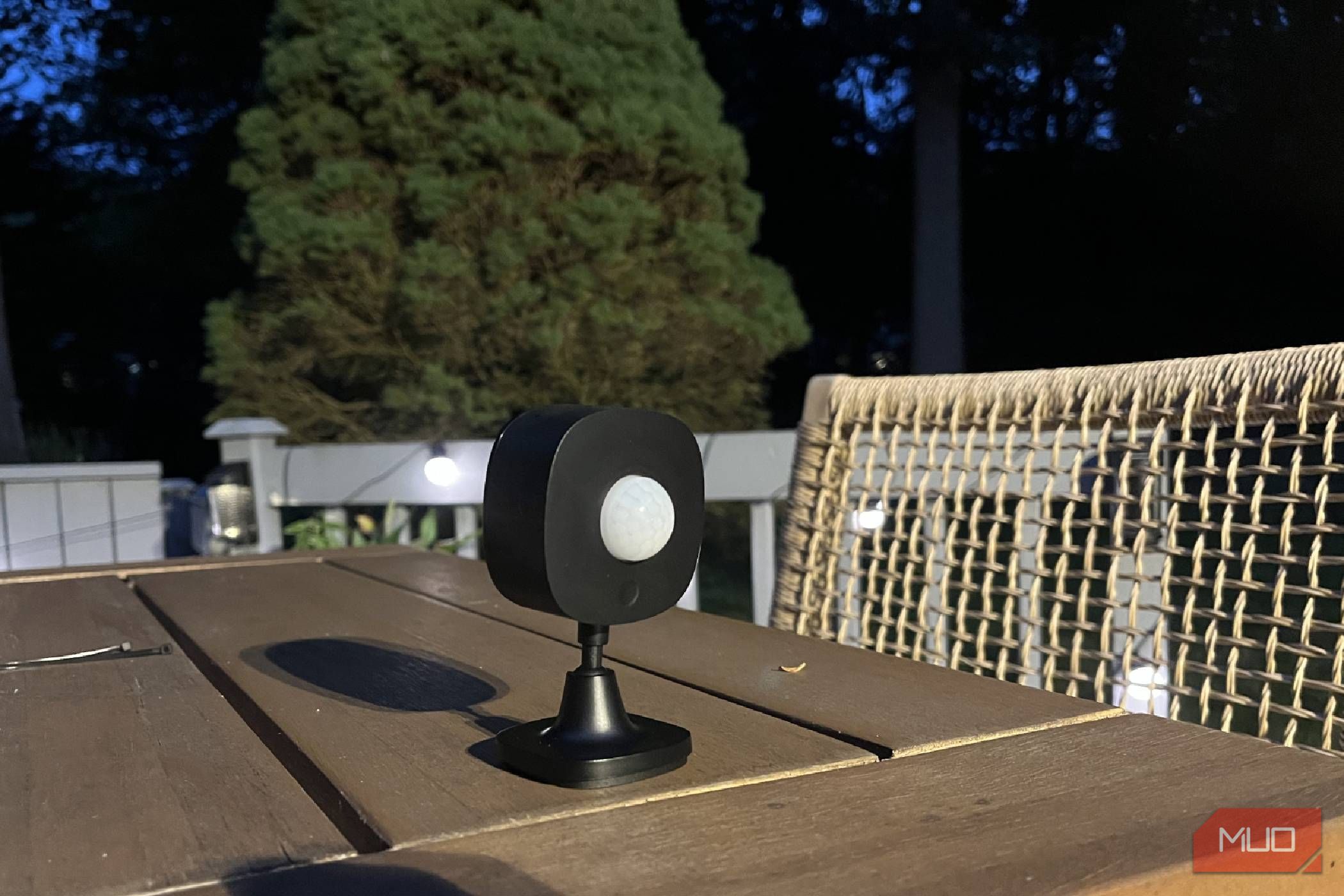
I’ve used outdoor sensors in my own home to help set up my lights on my back deck. Setting up an outdoor sensor to trigger automations from other devices is the ideal use of the device.
They require a good Wi-Fi connection, so you’ll have to make sure that your internet can reach that far. But you can use them with different devices, so it’s not just set up to work with one type and that’s it. You can use them with lights, other sensors, alarms, and more.
However, outdoor sensors are another victim to cold temperatures because of a few factors. Not only will the battery drain more quickly, whether it has alkaline or lithium-ion, but there are other components that will respond more slowly. The internal circuits will work a bit more slowly, which kind of ruins the purpose of the sensor.
The sensor is meant to pick up motion and trigger some kind of response. In colder temperatures, it can’t do that at all, or it does it more slowly.
Colder temperatures come for these devices
There’s not much you can do if the temperature drops suddenly. It’s not like you’re going to run around your home and swap them out for other devices. But if you are preparing for the colder part of the year, you might want to change out some of these devices in your home to ensure that you’re not without a smart home.
 Govee Outdoor Motion Sensor
Take your smart living experience to the next level with the Govee Outdoor Motion Sensor. This motion sensor works perfectly with your Govee Outdoor Lights and activates them upon detecting motion up to 26 feet away. It can also trigger diverse lighting effects to suit your daily routine or any special occasion. And also enable group control and safety alerts. Its IP65 waterproof rating makes the Govee Motion Sensor easy to install in the garage, backyard, or on the front door for enhanced security.