Summary
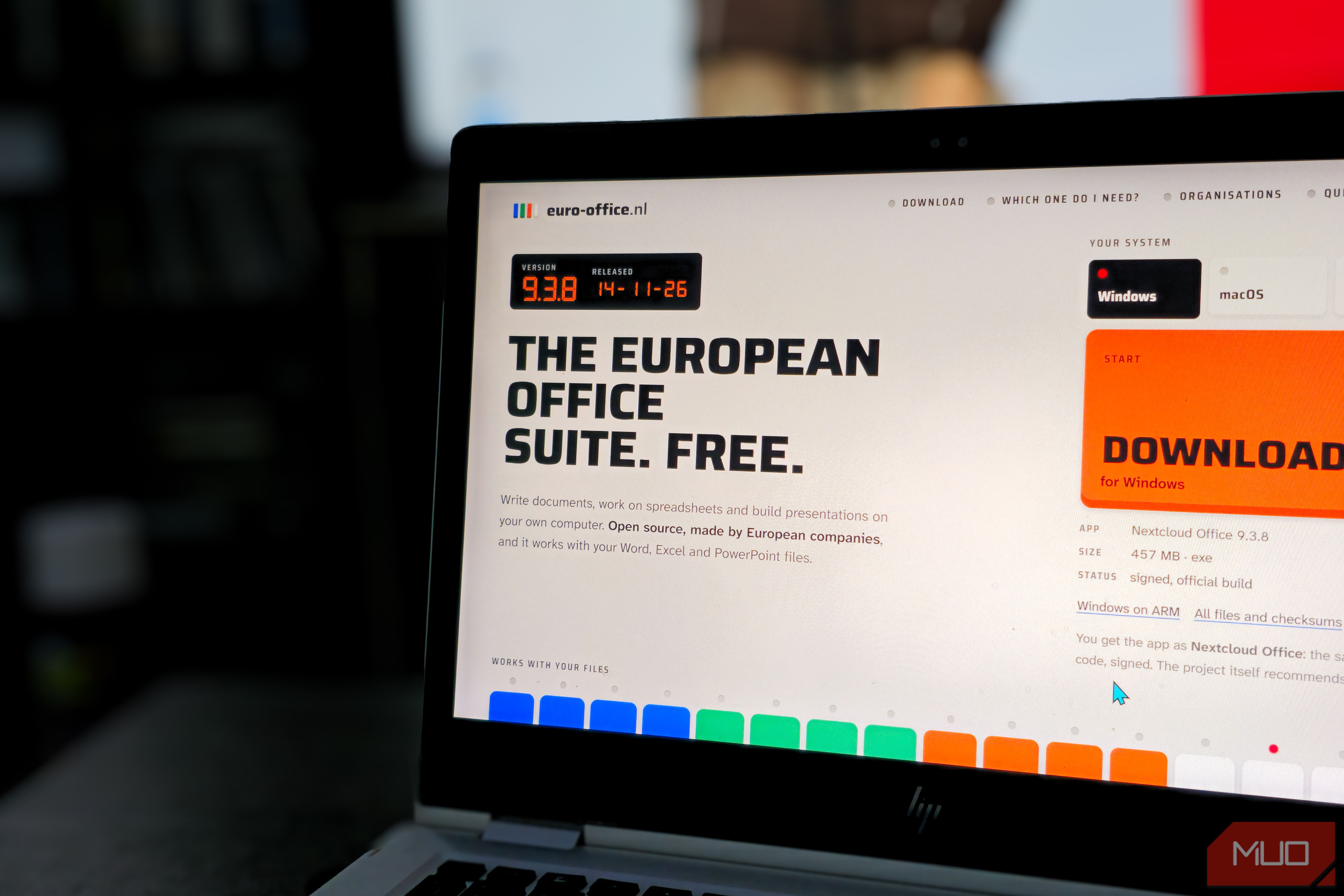
On June 4, 2026, the European Parliament switched the default search engine on its work browsers from Google to Qwant. France is also getting ready to move government employees off Zoom and Microsoft Teams. Across Europe, more and more officials are becoming less comfortable relying on just a few big U.S. tech companies to power their public offices. What really stood out to me is that anyone with a web browser or a Windows PC can use many of these same replacements. You can test out quite a few for free, even though some come with a bit of red tape. Europe’s offices are shopping for new software suppliers Governments want more control over their everyday tools The European Parliament’s move to Qwant applies to Microsoft Edge and Firefox on its computers, but staff can still pick a different search engine if they want. It’s a fairly small tweak, but for an organization with 720 lawmakers and thousands of workers, even changing the default search bar makes a statement. France took a much bigger step in January when it announced plans to roll out Visio, a government-built video chat tool, across all state departments by 2027. Major public groups like the French National Centre for Scientific Research (CNRS) are already using it. France wants greater control over where its meeting data is hosted and how the service is managed. Schools and colleges are getting in on the action, too. A deal signed in November lets schools across six German states choose a Nextcloud-based collaboration system run by IONOS. Meanwhile, over in Switzerland, a university tech provider called Switch announced on November 13 that it moved 39,500 users across 65 different organizations onto Nextcloud earlier this year. The term you’ll keep hearing is “digital sovereignty.” Really, that’s just a fancy way of saying you get to decide where your data goes, who runs the servers behind the scenes, and what happens if a tech company suddenly hikes its prices or changes its rules. At the end of the day, these are just individual organizations making their own tech choices, and big American software companies are still very much entrenched across Europe. You can put most of these replacements to work today Some are as easy to adopt as the apps you already use Not every European alternative has landed a government contract, but the same push for more software choices has produced plenty of tools that ordinary people can use. Some are ready to replace familiar apps right now, while others take a little more effort. Want to ditch Google? Fine—Qwant can take its place in your browser. Head over and search without making an account, or set it as your browser’s default. The French company says it doesn’t build profiles from your search history or sell your personal info. For everyday research, it’s an easy thing to try. You should, however, still compare results when you’re searching for something local, especially if you’re outside Europe, before you give up Google for good. Europe also has a new answer to Word, Excel, and PowerPoint, and it’s called Euro-Office. It launched in June, it’s open source, and it handles documents, spreadsheets, presentations, and PDFs. It’s built on the ONLYOFFICE codebase, so if you’ve ever looked at ONLYOFFICE for Microsoft-format files, you’ll understand why it focuses so much on DOCX, XLSX, and PPTX. On November 13, Nextcloud dropped a ready-to-go desktop app powered by Euro-Office. You can download it on Windows, Mac, or Linux, edit files saved right on your computer without Wi-Fi, and link it up to Nextcloud whenever you want to collaborate with others. For basic writing and household budgets, it is a solid free option worth checking out. Speaking of Nextcloud, it’s going after Google Drive and OneDrive. It syncs your files across your devices and adds sharing, calendars, collaborative editing, and calls through apps like Nextcloud Talk. If you’re sick of OneDrive taking over your desktop folders, you will probably like how Nextcloud handles storage. To get started, you can choose a hosting provider through Nextcloud’s sign-up page and get 2GB to 5GB of free storage. Just check where that provider stores your files. Alternatively, you can run Nextcloud on your own server, like one of our writers who hosted a Google Docs alternative using Nextcloud and ONLYOFFICE. However, signing up with a hosting provider is much easier for beginners. Then there’s Proton, which covers both email and everyday productivity. Based in Switzerland, which is actually outside the European Union, Proton gives you a Gmail replacement with Proton Mail and takes on Google Drive, Docs, and Sheets with its own versions of those apps. Proton puts privacy first, with end-to-end encryption protecting files in Drive, Docs, and Sheets. That’s a huge plus if you’re already into free privacy and security apps. The free plan offers up to 1GB for email and 5GB for Drive after you complete a few setup tasks, plus online editors for documents and spreadsheets. That’s plenty of room for important paperwork, even though you’ll run out of space fast if you try to back up a massive camera roll. Last up is Mistral’s Vibe, France’s answer to ChatGPT and Gemini. You might remember it as Le Chat before it rebranded in August 2026, and it now mixes a regular AI chatbot with coding and work tools. The free version handles everyday questions, web searches, and quick tasks just fine, but you’ll have to pay if you want more advanced AI agents doing heavy lifting for you. You can give it a spin at chat.mistral.ai. And like with any online assistant, you should scrub anything confidential from your documents before uploading them. There’s still some paperwork at the exit The alternatives come with a few catches France’s Visio comes with the biggest catch on the list. The official government version is strictly for public workers; however, anyone who gets a meeting link can still hop on a call. Luckily, the developers offer a free public demo of the open-source software behind Visio, so you can try it without needing a government login. Just don’t save anything important there, since demo accounts and content are reset after a month. You can also set up and host the software on your own server, but that takes a whole lot more tech savvy. Qwant comes with a wrinkle of its own. The company teamed up with Ecosia to build a truly European search index, yet some of its search results still pull from outside providers like Microsoft’s Bing. So just because you are using a European search page does not mean you have completely cut American tech out of the picture. It might still be running under the hood. File compatibility can also be a headache. A Word document might open with different page breaks, and you shouldn’t assume that Excel spreadsheets relying on VBA macros will work properly in Euro-Office. And if you decide to run Nextcloud on your own server, you are on the hook for keeping it updated, secure, and backed up. My advice is to start with the apps that require the lowest commitment. You can swap out your default search engine in a couple of seconds, and you can install a free office suite right alongside Word and Excel to test out your actual files. In the meantime, you can keep accepting those Microsoft Teams invites from your coworkers without missing a beat. Your next software choice doesn’t need a passport Look, I don’t expect you to move your whole workflow to a different continent overnight. What I really want to see is a little healthy competition that forces big tech companies to work harder for a spot on our phones and laptops. If a new app from across the pond can handle even one everyday task a little better, that is already a great reason to give it a shot.