Summary
Wouldn’t IMDb be amazing if you could just watch films on the site? Well, that’s sort of what you can do with a URL trick that turns any IMDb address into a watchable film.
It sounds like the ticket you’ve always wanted, and it works well enough. But the reality of this viral IMDb streaming “hack” is malware, data loss, and more, and that’s without considering the general issues of illegal streams.
What this “IMDb hack” does
And what really happens behind the scenes
I saw a social media post suggesting that adding the word “PLAY” to any IMBd URL would turn it into a video stream of that movie or show. As much as I immediately thought, “That sounds rather dodgy,” I had to give it a try.
So, I fired up a browser in a secure environment (a virtual machine running Windows 11) to protect against any potential nasties — more on this in a moment — and wouldn’t you know, it worked. And it worked how I thought it would, too.
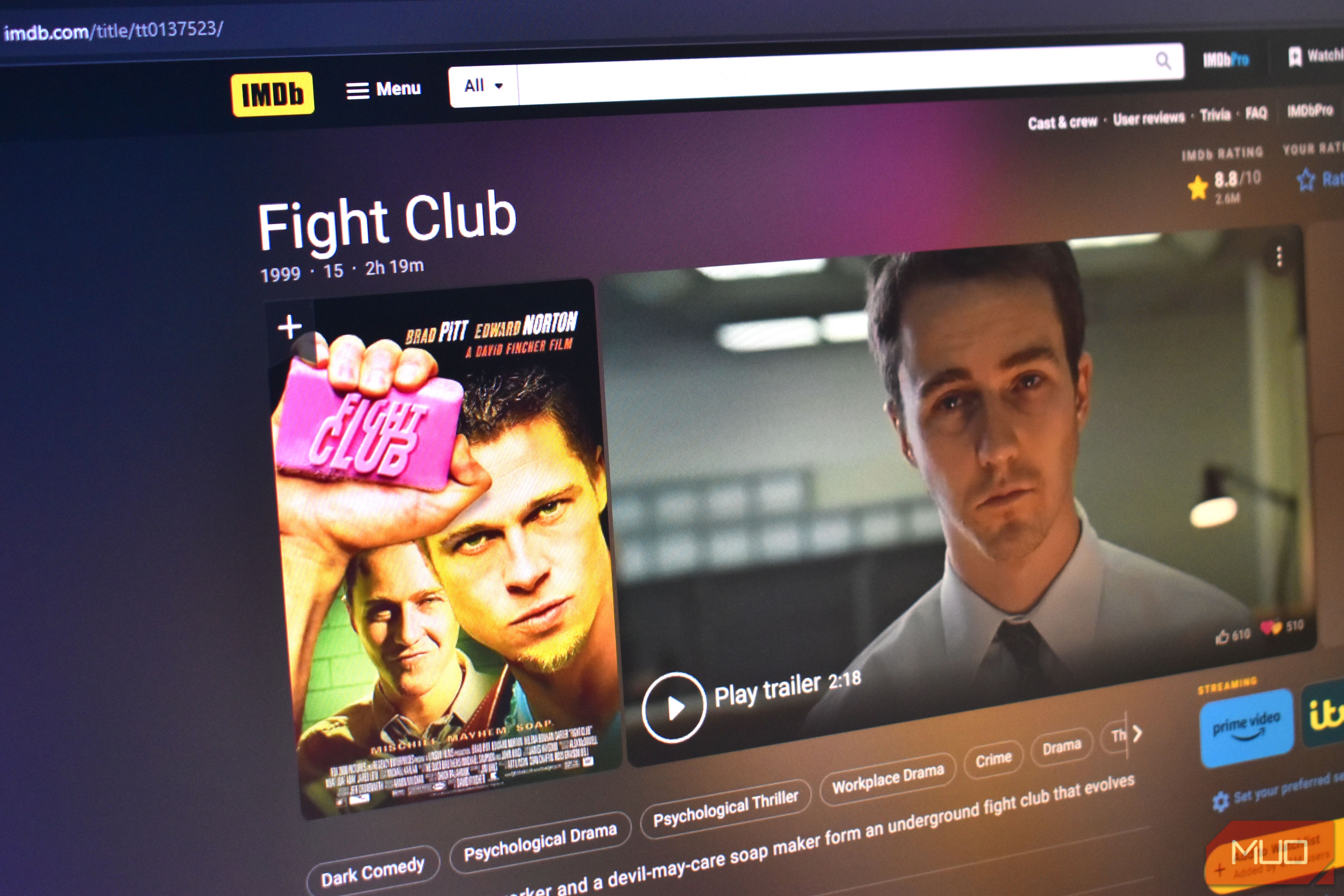
Every title on IMDb has a unique ID baked into its URL. For example, tt0137523
is Fight Club, and the claim is that modifying to playimdb.com/title/tt0137523
gives you a working video player for that film. It feels like you’re unlocking a secret media player baked into IMDb, but something else is really happening that the viral posts don’t particularly elaborate on (or really want you to notice).
Keep your eye on the URL bar as the page loads rather than the video player itself, because it changes. IMDb doesn’t host anything, so it’s actually a handoff point, and the moment you hit it, your request gets passed to an external embed from a third-party video site.
When the media player appears, you’re no longer on IMDb. You’ve been pushed over to an illegal stream for that film. Years ago, IMDb hosted a media streaming service, but it was watered down, rebranded as Amazon Freevee, and eventually merged with Prime Video. Even then, it wasn’t like you could click an IMDb URL and watch it directly.
Where you really end up
These sites are documented to spread malware
The issue for most folks isn’t that you’ll be caught watching an illegal stream. Yes, that’s illegal, and we don’t condone stealing content at MakeUseOf. It’s the other side of the situation that’s also problematic.
The IMDb hack typically takes you to a site hosted in a far-flung country, which means they have less oversight than usual. It also means they’re frequently linked to large-scale malware campaigns designed to infect your machine at the first opportunity.
These free streaming site hacks don’t exist just to supply you with free movies, you know.
A prime example came from Microsoft’s Threat Intelligence team in 2025. It found a network of fake streaming sites redirecting those hunting for free streaming sites to malvertising and eventually infostealing malware.
Dubbed Storm-0408, the attack started with the iframe embedding the media player itself. The free media site bakes malicious ads into the video frame, redirecting your browser to multiple intermediary sites before landing on GitHub repositories hosting infostealer malware, with most folks having no idea anything had happened until well after the fact.
This attack hit more than a million devices from a site very similar to the kind of sites this IMDb hack uses. That’s exactly why I launched this site in a secure environment; the potential for malware is high, especially for those using a browser without any additional security, script blocking, or otherwise.
Circling back to the other issue, stealing content is also generally illegal. The main site I saw the IMDb hack redirecting to was VidSrc, a well-known Russian-linked hosting platform, which also ties into the general source of the Storm-0408 malware. Not to mention it’s the target of major streaming platforms and producers such as Netflix, Disney, Warner Bros., Apple, Universal, and Crunchyroll, whose content frequently appears there illegally.
It tells you roughly everything you need to know about the accountability structure you’re dealing with when that redirect fires.
It’s too much risk for the sake of a free film or two
I wouldn’t use it
At the time of writing, I’m seeing reports that the hack no longer works, which is a good thing. In one sense, yes, it’s fun, you get a free movie. In the other, having your computer hacked and data lost to infostealing malware is much less fun.
The moment that redirect fires, you’re on a server that’s actively being chased around the internet by Hollywood’s legal teams, running unvetted ad infrastructure that Microsoft has specifically documented as a malware delivery mechanism. Your IP gets logged, your browser gets fingerprinted, and the ads aren’t just annoying anymore — they’ve been caught deploying infostealers that go after browser credentials and anything else they can get their hands on.
For a free rewatch of something you could rent for $4, that’s a significant trade.
 Amazon Prime Video is a premier streaming service offering thousands of movies, TV shows, and award-winning Amazon Originals. It features 4K UHD streaming, offline downloads, and customizable user profiles. Users can easily rent new releases or add premium channels like Max and Paramount+ directly to their account.