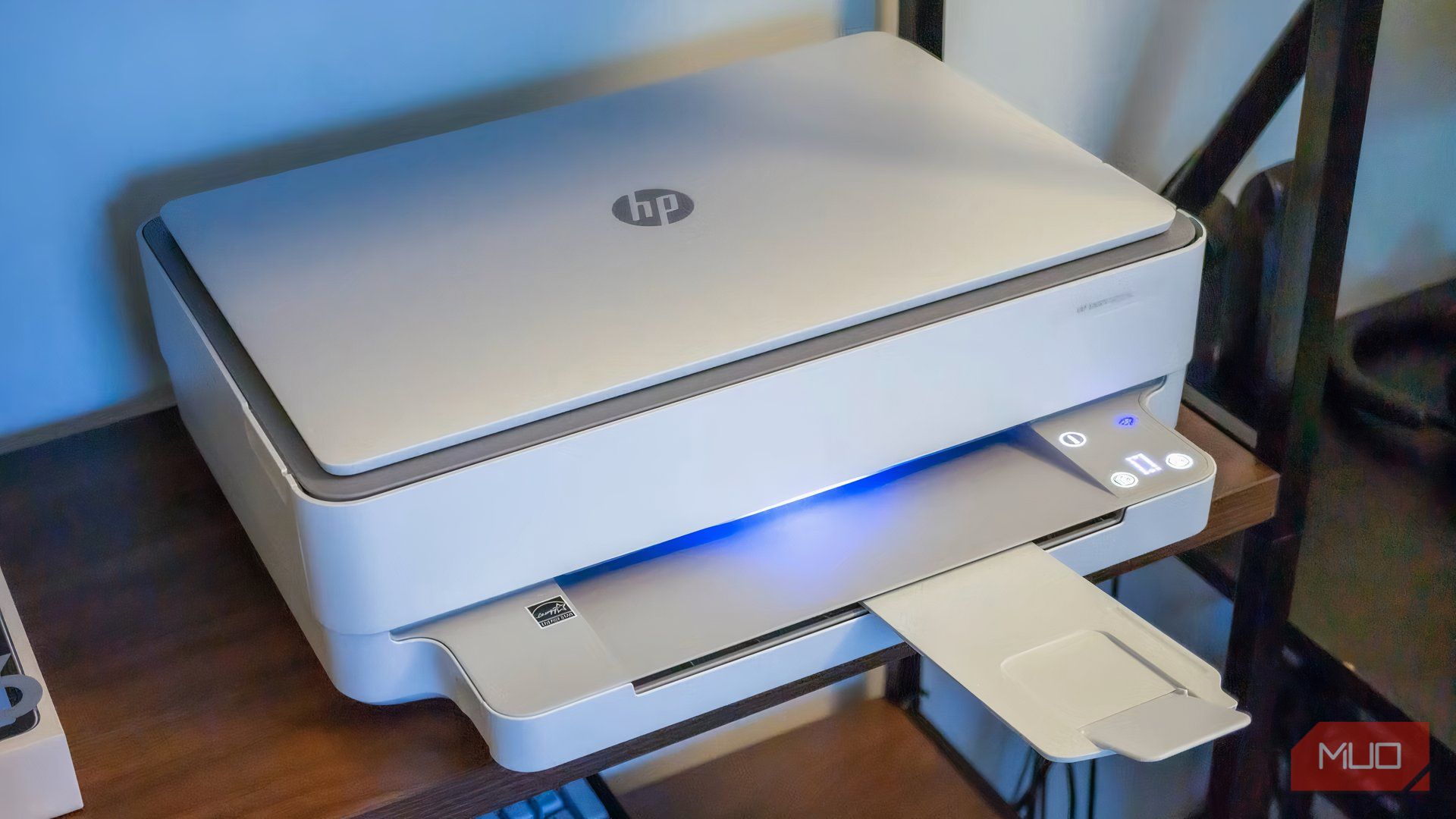
Summary
I’ve been reading a lot of my colleagues’ printer coverage lately, from the letters buried on every ink box to Bambu Lab borrowing HP’s old playbook for 3D printing. So I went back and read the actual court documents behind the story everyone references, but few people explain: HP’s decade-long habit of pushing firmware updates that made printers refuse ink they’d already been happily printing with. The legal fees the company paid pale in comparison to the earnings it got from its shenanigans, making it work for the shareholders, at least. Dynamic Security turned a hardware update into a business strategy A chip decides whether your ink counts, and HP can flip that switch after the sale HP calls it Dynamic Security. It’s an authentication system, introduced in 2016, that checks whether an installed cartridge carries an HP-made security chip. When a firmware update lands and that chip is missing, whether the cartridge is a refill, a remanufactured unit, or a compatible third-party product, the printer stops treating it as ink. Instead, it throws an error like “Cartridge Problem” or “Non-HP Chip Detected” and refuses to print. The issue that turned this into a decade of litigation is the timing. Dynamic Security doesn’t just ship on new printers. HP has pushed it through firmware updates to machines people already owned, sometimes years after purchase, according to court filings in the consolidated federal case In re HP Printer Firmware Update Litigation. A cartridge that printed fine on one day can stop working after the next day’s automatic update, with no warning that the update would change what ink the printer accepts. The lawsuits piled up, and HP kept the business model anyway Every settlement cost less than a rounding error on the ink business HP has been sued over this repeatedly, and it has settled or lost more than once. A 2018 US class action ended with a 1.35 million](https://www.theregister.com/on-prem/2022/09/13/hp-pays-135m-to-settle-dispute-over-printer-security-chip/1467433) for buyers in Belgium, Italy, Spain, and Portugal. Italy’s competition authority went further, fining HP €10 million, roughly 5,000 each, HP covered roughly 17.4 billion in net revenue for the full 2024 fiscal year, according to HP’s own SEC filings. CEO Enrique Lores put the strategy plainly at Davos in 2024, saying, “We lose money on the hardware, we make money on the supplies.” A few million dollars in settlements, spread across a decade, is a small cost of doing business when the ink itself can run 95 an ounce, according to Consumer Reports testing. What the settlement actually changed for printer owners A narrow opt-out, not a fix The one concrete win from the 2025 settlement is pretty slim. Owners of 21 specific HP printer models can now decline firmware updates that carry Dynamic Security, and those who already have it can remove it through a firmware downgrade, but only on those specific models. HP posts the current list and opt-out steps on its own support site. Everything not on that list, which is most HP printers made after December 2016, remains fair game for a future update to change what ink it accepts. Of course, you don’t need to panic over this. If you only ever buy genuine HP cartridges, Dynamic Security will never be a problem for you. It only affects you when you try to save money with a refill or a compatible brand. You do have options If your printer isn’t on that list, and you’re tired of the workarounds, the solution many folks land on isn’t fighting the firmware. It’s buying a printer built around ink tanks that don’t contain chipped cartridges, or watching projects like the open-source OpenPrinter, which doesn’t even check for inkjet authentication. The latter is, of course, a crowdfunded prototype and not a printer you can buy today, but it’s a useful reminder that none of this was a technical need on HP’s part. The company just built a chip that could turn off access to non-HP ink you paid for, and for the price of a few class-action settlements, it worked.