Summary
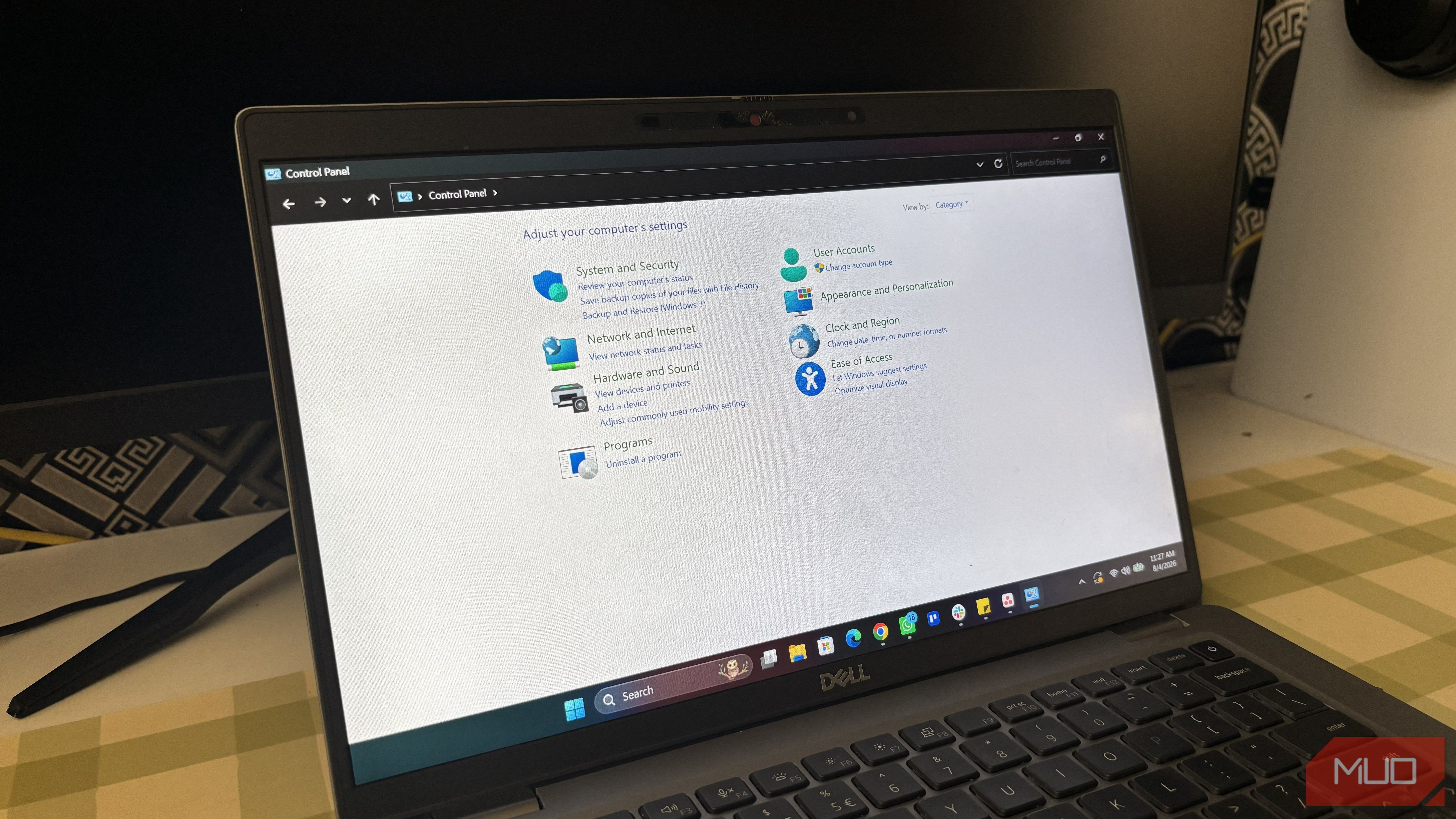
When I started using a computer about 15 years ago, one of the first things my instructor taught me was how to navigate the Control Panel. This was during the Windows XP era, and it was the only place to tweak almost every setting on your Windows PC. However, Microsoft introduced the Settings app with Windows 8 in 2012, and since then it has gradually migrated Control Panel features into the newer interface. Windows 11 has continued that effort, but replacing a tool that’s been part of Windows for roughly four decades isn’t exactly simple. In fact, earlier this year, Microsoft’s Partner Director of Design, March Rogers, explained on X that the company is still carefully migrating old Control Panel features into the Settings app because it must account for the wide range of hardware, drivers, and devices Windows supports. I understand why Microsoft is taking its time. But until the migration is complete, there are still a handful of features that force me to return to the Control Panel. Windows still hasn’t replaced network adapter settings If you need more than basic networking options, you’ll still end up here The networking page in the Windows Settings app is perfectly fine for everyday tasks like connecting to Wi-Fi, changing your IP address, or setting custom DNS servers. Once you need anything more advanced, though, the old Network Connections window in the Control Panel is still where you’ll end up. That’s because the adapter’s Properties window still has options that haven’t made their way into the Settings app. I can enable or disable IPv4 and IPv6, toggle File and Printer Sharing, manage QoS Packet Scheduler, configure virtualization protocols installed by apps like Hyper-V or VMware, and access advanced driver-specific options for my network adapter. I’ve also had to use it when troubleshooting VPN software that installs its own network protocols. Device Manager is still my first stop for hardware issues Nothing in the Settings app comes close when something stops working Every time Windows suddenly stops recognizing a device, Device Manager is one of the first tools I open. It immediately tells me whether Windows can actually detect the hardware. And if something is wrong, I can usually spot the familiar yellow warning icon, check the device’s error code, view its hardware IDs, scan for hardware changes, roll back a problematic driver, or temporarily disable and re-enable the device. Sure, the Settings app can show connected devices and let me pair Bluetooth accessories. It also has a built-in Troubleshoot feature, but let’s be real, that feature has never worked, at least in my case. Besides, it just doesn’t come close to offering the level of troubleshooting Device Manager offers. Disk Management still gives me more control over my drives Storage Settings barely scratches the surface Windows Settings does a good job of showing how much storage you’re using and which files are taking up space. That’s useful, but it’s a completely different tool from Disk Management. When I installed a new SSD in my PC a few months back, I set it up in Disk Management even before Windows could use it. It’s also where I create, delete, shrink, and extend partitions, assign drive letters, and format new volumes. I also used it once after cloning Windows to a larger SSD, when I needed to extend the C: drive to use the extra space. None of those things can be done from the Storage section in the Settings app. But hey, the Storage section has interesting features like Storage Sense and Cleanup Recommendations, so it’s still useful in some sense. Windows still sends me to Control Panel for advanced sound settings The new sound menu isn’t enough Microsoft has redesigned the Sound page several times over the years, but I still find myself opening the old Sound dialog in Control Panel whenever I need more control over my audio devices. Besides, in most cases, you might be trying to change an audio setting in the Settings app, and Windows will open the Control Panel anyway for further configuration. That’s where you can set a separate default communications device for apps like Teams and Zoom, or configure your speakers for stereo, 5.1, or 7.1 surround sound. You can also disable Exclusive Mode when troubleshooting audio issues or access recording devices that don’t always appear in the Settings app. If you’ve ever searched online for a fix for microphone or speaker problems, the chances you will be directed to the Control Panel window are pretty high. User Account Control still lives in the past One important security setting never made the move User Account Control, better known as UAC, has been part of Windows since Windows Vista. It might be annoying when it asks for permission before launching certain apps, but it also helps prevent unauthorized changes to your computer. I don’t change my UAC settings very often, but when I do, I still have to go through Control Panel. Most recently, I dropped the notification level while testing a beta build of an app that kept triggering prompts every few seconds, something that’s just not possible from the Settings app. Even if you never touch the setting yourself, it still feels odd that Microsoft hasn’t given it a proper home inside the modern Settings app. Control Panel isn’t going anywhere just yet Microsoft has made impressive progress moving Windows settings into the modern Settings app, and I don’t doubt the remaining Control Panel features will eventually follow. But until they do, calling the Control Panel “retired” feels a little premature. I still use the Settings app most of the time because it has this modern feel, yet I end up opening Control Panel whenever I need to tweak something serious. For a tool that’s supposedly on its way out, it’s still surprisingly difficult to avoid.