Summary
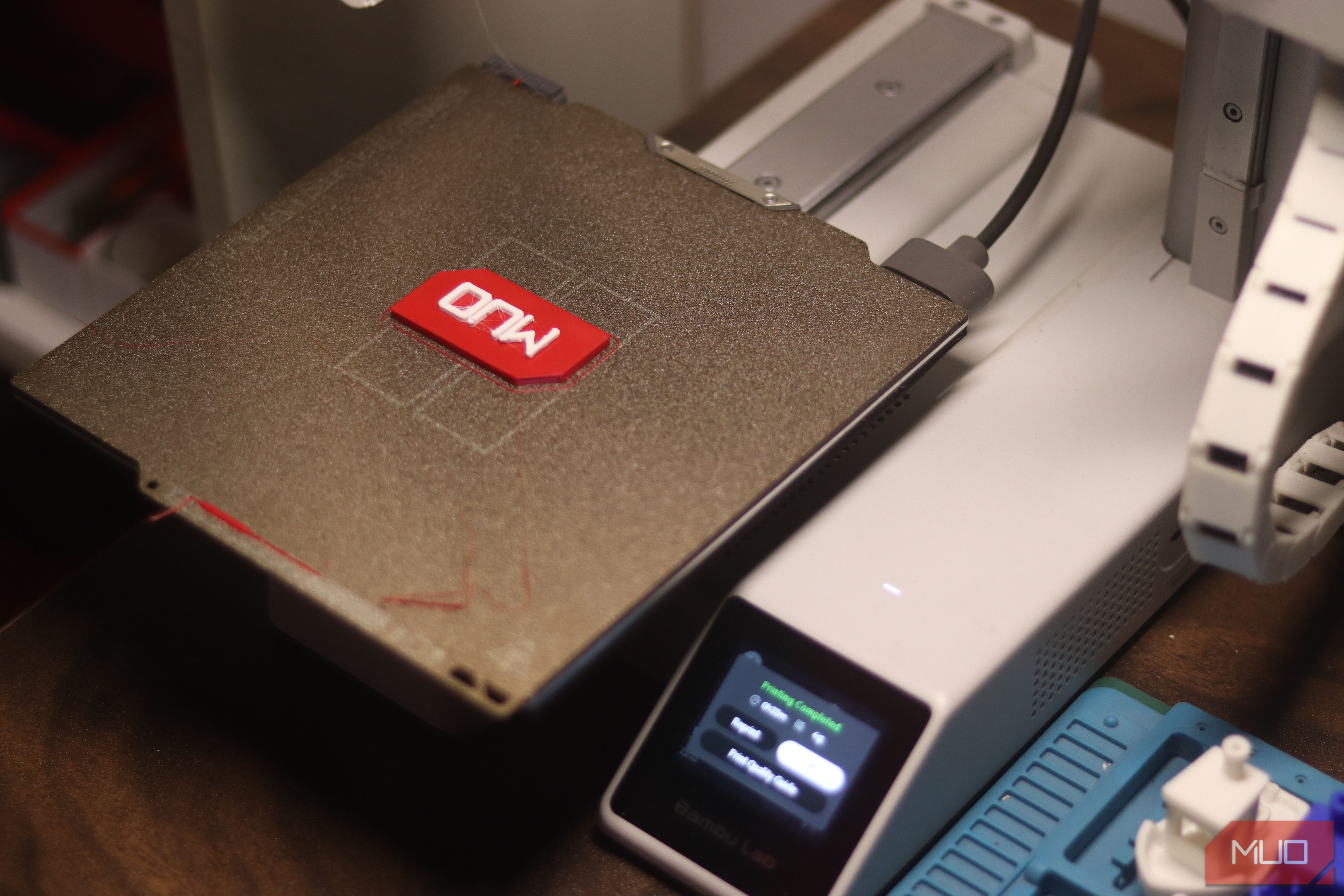
I put off buying a 3D printer for years, but when I eventually did, I did not go for the AMS systems from Bambu or Elegoo because I didn’t think I’d be printing in different colors. After all, it produces far too much waste and takes far too long to print. But when I saw slick multicolor prints on MakerWorld and 3D printing subreddits, I couldn’t help but drool. As it turns out, you don’t really need an AMS system for multicolor 3D printing. All it takes is some patience, some design work, and a little slicer trickery. It’s not automated or instant, and there are limitations, but it gets you a long way. You don’t need an AMS to print in color A well-timed filament swap gets the job done The trick relies on a pause at height or pause at layer feature that’s built into pretty much every modern slicer. You preview your sliced model layer by layer, decide where exactly you want the color transition to happen, and insert a pause command at that layer. When your printer reaches that layer, the nozzle parts itself off to the side, the print halts, and you’re free to change filament. From there, the process is rather mechanical. Most modern printers let you unload and load filament while a print is paused. So you just head to the filament screen, unload the currently loaded filament, load up the new one, and resume the print. When printing resumes, all layers above your selected layer height print in the new color. This is the most basic way to get multi-color prints with most 3D printers, and it’s exactly the same process AMSes use to get multicolor prints too. Some slicers let you get more surgical about this. If you’ve got multiple filaments selected, slicers like OrcaSlicer, Bambu Studio, or Elegoo Slicer let you add a change filament command that reduces your overhead a bit because the printer automatically unloads the previous filament and waits for you to insert a new one. On machines without a built-in pause script, you can edit the G-code directly and insert an M400 pause command at a specific line tied to a specific layer. Either way, the core idea is the same: pause the print, change material, resume. The trick has obvious limits Layer changes only take you so far This method is great for getting multicolor prints with practically zero waste and no effect on print time, but it’s got one real limitation: you can only change color or material at a specific layer height, and everything above that layer gets printed in the new color. You cannot change filament within a single layer, meaning you can create horizontal bands of color, like a two-tone vase or a sign with a different color base, but you can’t easily get a design where two colors sit side by side within the same layer, the way you would with an actual logo or portrait with fine color detail. You could technically do this by adding multiple pauses at different times where another color is required, but the process is entirely manual and will become way too cumbersome to be practical. That’s exactly why AMS systems exist. Additionally, since the process is entirely manual, you need to babysit the print. You need to know in advance exactly which layer height corresponds to the visual transition you want, which usually means slicing, previewing, note-taking, and sometimes a bit of trial and error. If you’re not standing by when the print pause triggers, your print just sits there, and depending on the plastic and ambient temperature, you risk a small blob or stringing artifacts right at the pause point from the residual pressure in the nozzle. Purging also wastes filament, and if you don’t purge enough, you get a print with visible bleed-through where the old and new colors mixed in the nozzle. An AMS is built for bigger ideas Multi-material and complex color prints need automation Automated multi-material systems like Bambu Lab’s AMS, AMS Lite, or Elegoo’s newer CANVAS systems solve exactly these problems. Both are motorized filament switching units that sit beside or on top of the printer, holding up to four spools and feeding whichever one the slicer calls for at any given moment. Because the switching is driven by the sliced G-code itself rather than a manual pause command, these systems can change colors far more often and in far more complex patterns than the manual approach ever could, including within the same layer, part by part. The AMS Lite works by retracting the outgoing filament from the hotend, cutting or pulling it back into its spool holder, then feeding in the new filament and auto-purging enough plastic to clear the old color before printing resumes, all without you touching anything. Elegoo’s CANVAS system does something similar but uses four independently motored channels feeding into a single hub above the extruder, complete with a heated blade to cut the filament and a silicone wiper to clean the nozzle between switches. Another advantage these systems have is filament backup. If you run out of filament mid-print, the system can automatically switch to another spool loaded with the same color and material, so a print doesn’t fail just because your spool ran dry. That’s something the manual pause-and-swap trick simply can’t replicate, as it has no sensor watching your filament level at all. The right choice depends on what you print Save money now or save time later Given the purge waste AMS systems produce and how much print time they can add to even seemingly simple models, they’re not always worth the extra money. If you’re making occasional two- or three-color prints, like a nameplate, a vase with a color-blocked base, or a key chain with an accent color, the manual pause method is definitely worth learning. It costs nothing beyond the spools you already have, and it teaches you a lot about how your slicer and printer interact. Before you know it, these prints will be among the boring prints that pay for your 3D printer. For anything more advanced, or actual detailed multicolor designs, portraits, layered logos, or anything with fine color separation within a single layer, an AMS-style system stops being a luxury and becomes the only realistic way to get what you want.