Summary
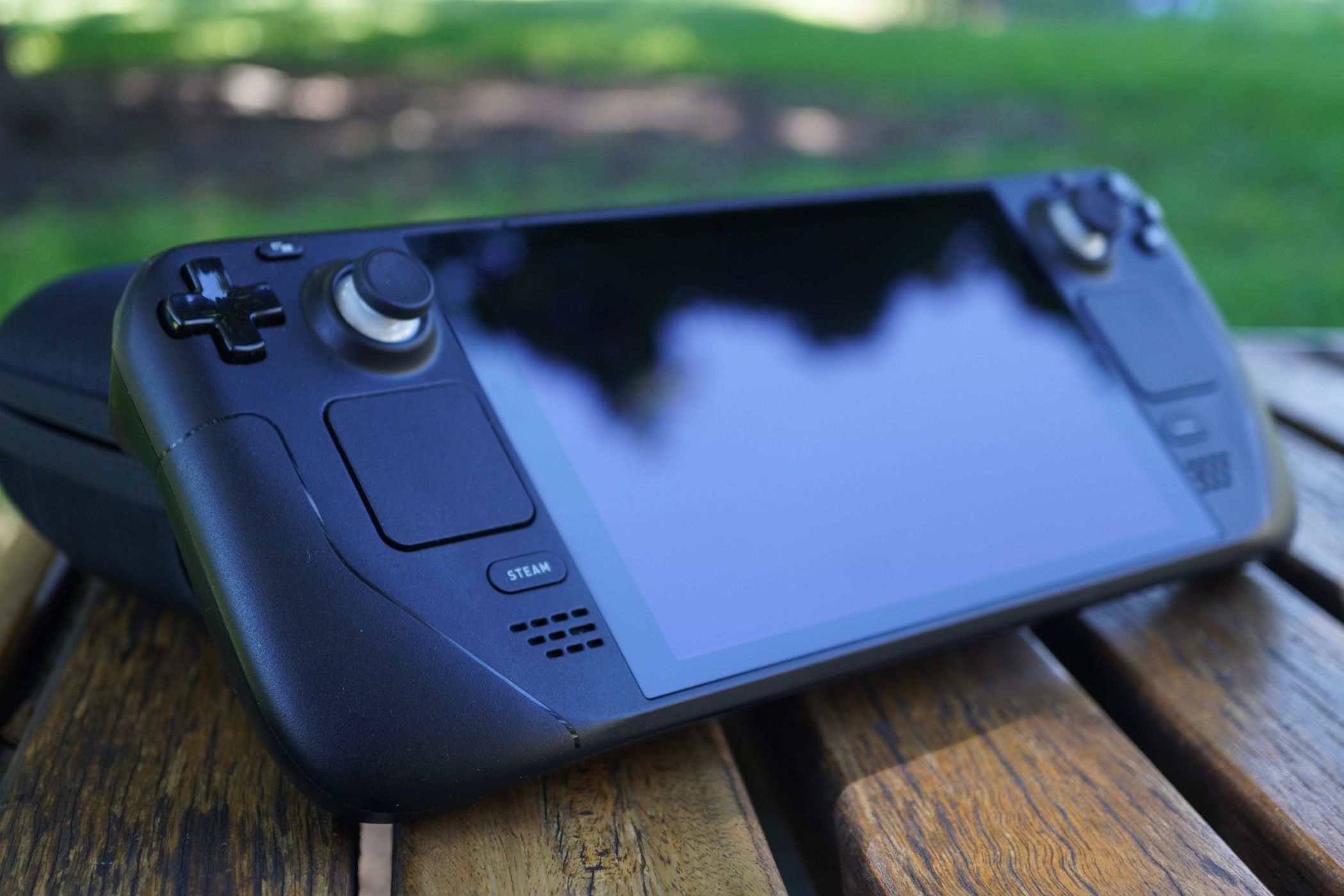
To say that the Steam Deck was revolutionary upon its release would be an understatement. While handheld gaming PCs have existed since before Valve’s own iteration, they were in no way affordable, performant, or standardized.
Valve changed things with the Steam Deck, and it’s really quite unfortunate to see it fall victim to the RAMaggeddon, which has shot up its price to 549. That being said, the RAMpocalypse hasn’t trickled down to one particular handheld, and it’s one that used to be a pretty terrible deal back in the day.
The base ROG Xbox Ally (white) is the current Steam Deck killer you should consider right now
Nearly 599 and meant to compete with the Steam Deck OLED.
Unfortunately, at the time, the Steam Deck was a much better deal overall, offering both an OLED display and software that didn’t actively get in the way of you playing games. Things have changed now, and the Steam Deck OLED costs nearly 200 cheaper, the ROG Xbox Ally just makes a whole lot more sense. For some mysterious reason, this particular handheld has yet to see any major price bumps (as of now!), and is undoubtedly one of the best deals in the handheld gaming space right now.
It also performs about the same, and the Ryzen Z2 A APU within the ROG Xbox Ally is more or less on par with the Steam Deck’s own custom processor, but can boost up to 20W, which is 5W higher than the Steam Deck OLED.
It even has the same 16GB of system RAM, along with a modest 60 Whr battery that gives it reasonably good battery life. Expect similar performance, though I’d be wary of the Windows 11 tax in real-world use cases.
The ROG Xbox Ally has a few benefits
VRR and official Windows 11 support are great to have
That’s not to say that the ROG Xbox Ally is lacking. In fact, the handheld has one major hardware advantage: a beautiful 7-inch 1080p display that can hit up to 120 Hz and delivers respectable brightness.
Most importantly, the display supports Variable Refresh Rate (VRR), which helps smooth out frames. In other words, if you happen to hover between a certain FPS range, VRR will kick in automatically and eliminate the stutter — which results in a perceived “smoothness”. If the game supports it (and can maintain a high enough frame rate), you’ll basically never run into stutters whenever the FPS dips.
This feature is entirely absent in the Steam Deck OLED, since it’s dependent on the panel itself. It makes a big difference and is especially useful on a device as limited in its capabilities as this one.
There’s also full Windows 11 support, which can be a must-have for many. It can also be connected to a USB-C docking station to transform it into a desktop, which, combined with the full Windows desktop experience, means that all apps should just work. Including games that do not run on the Deck due to missing anti-cheat support on Linux.
The Steam Deck OLED is still a better experience overall
SteamOS makes all the difference
Windows 11 on a handheld is still an objectively inferior experience. The operating system is bloated, and rarely manages to impress with its resource allocation. While Xbox’s “Gaming Mode” for Windows 11 did help quite a bit, it is still years behind SteamOS, largely because you’re still dealing with all the Windows-y quirks.
Little things like sleep/hibernation, quick resume, and updates are a real pain to get working on Windows. Especially on a handheld, which it is clearly not built for. You’ll undoubtedly need to switch to a keyboard and mouse at some point in the setup process, before everything breaks with another update again.
SteamOS does one thing right — it stays out of your way while gaming, and consumes far fewer resources as a result. The Deck also has the advantage of a larger 7.4-inch 16:10 OLED display that supports HDR. On supported games, this is a night-and-day difference, and beats the socks off the ROG Xbox Ally’s own panel, even if it has a lower 800p resolution. There’s also the haptic trackpads, which can be a deal-breaker. They’re particularly useful for older RTS and FPS games, but I wouldn’t call them essential to have at all.
Installing SteamOS completely flips the script
Windows 11 is just plain terrible for a handheld
The best part about most modern handheld gaming PCs is that they aren’t locked down. Since this is essentially a regular, custom-built x86 PC, there is nothing stopping you from installing Linux on it.
In fact, you could use the regular SteamOS image (which now has support for major third-party handhelds and select desktop PC hardware) on it without any issues. Just fire up the installer USB, and flash away. SteamOS on the ROG Xbox Ally completely changes things, and you essentially get a souped-up version of the Steam Deck LCD this way.
SteamOS makes the handheld actually usable, and things mostly just work. The biggest fix by far has to be sleep, which was quite broken on Windows. On SteamOS it works most of the time, which is how you’d want to use a handheld to work in the first place anyway.
It’s also about 5 to 10 percent more performant, which is a welcome surprise. Frame rates on SteamOS are smoother and maintain higher averages, making installation a no-brainer. It’s dead simple and definitely worth trying out.
That said, not everyone would want to remove Windows from their device. Some games absolutely require Windows to run, and in this case, dual-booting is a viable solution. Just make sure to partition your disks right, and use something other than SteamOS (like Bazzite) since it’ll wipe the entire disk otherwise.
You might want to make haste
With how unpredictable the current market has been as of late, it would be wise to make haste. If you’re looking for a gaming handheld (and can afford one), the best time to buy one is right now. Prices aren’t getting better anytime soon, and this miraculously untouched gaming handheld might soon fall victim to price hikes at any moment.
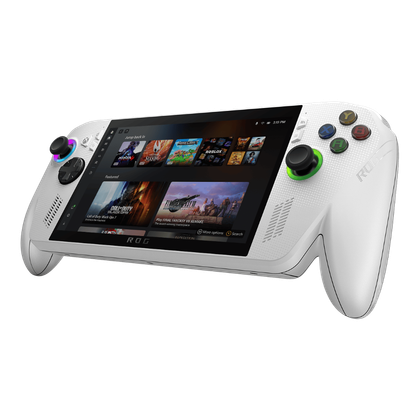 Asus ROG Xbox Ally
- Chipset
- AMD Ryzen Z2
- RAM
- 16GB RAM
- Storage
- 512GB SSD
- Operating System
- Windows 11 The Asus ROG Xbox Ally is a Windows 11 gaming handheld with an ergonomic controller design. While not the fastest handheld on the market, the Xbox Ally nails game compatibility and in-hand feel at an attractive price point. It’s a worthy successor to the original ROG Ally I own. If I was in the market for a gaming handheld today, this is the one I’d buy.