I turned Ryobi's budget tools into workshop staples by swapping in their premium batteries
6 min read
Summary
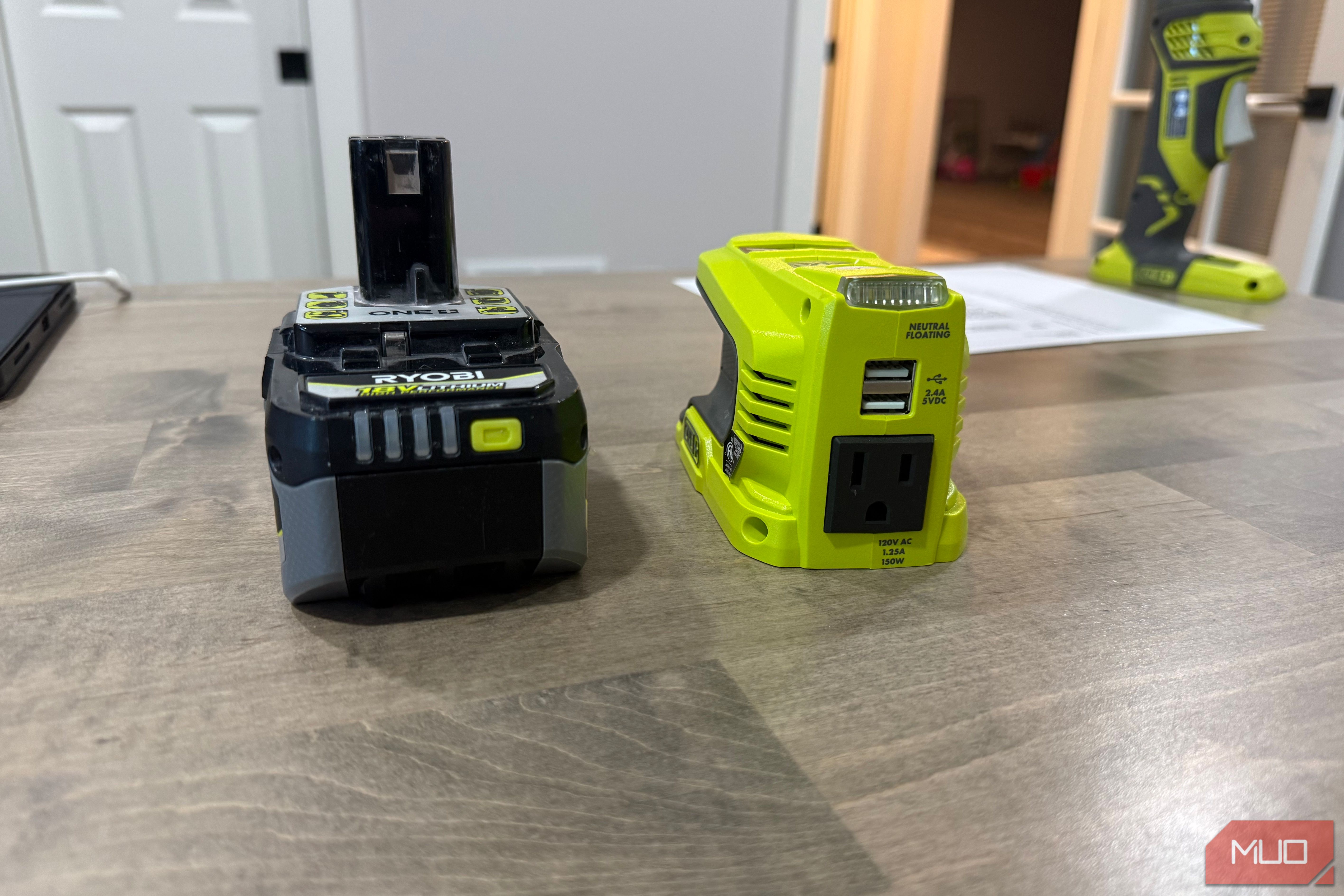
Several of my Ryobi tools sat unused for most of last year. None of them broke. They quit early, bogged down under load, or felt weak enough that I reached past them for something corded. I chalked that up to the sticker on the box, since I buy the packs and let the tools ride along and never expected much from a 60tool.ThenIstartedclippingHighPerformancebatteriesontotheminsteadofthecompactsthatcameinthekits.Sametools,samejobs,differentoutcome.Threeofthemnowliveonthebenchinsteadofinadrawer,andtheupgradecostlessthanreplacinganysingleoneofthemwouldhave.AweaktoolandastarvedtoolfeelidenticalinyourhandsFivecellscanonlyhandoversomuchcurrentAcompactONE+packisonerowoffivelithium−ioncells.Thatconstructionsetsahardceilingonhowmuchcurrentthepackcandeliveratonce,andtheceilinghasnothingtodowiththetoolboltedontopofit.Askformorethanfivecellscangiveandvoltagesags,themotorslows,andthetoolfeelscheap.Nothingisbroken.Thepackranoutofroom.HighPerformancepacks,thetealones,changetwothings.Thecellsarehigheroutput,andRyobiaddselectronicsitcallsIntelliCellthatletthepackandabrushlesstoolnegotiateforroughly30MyheatgunstoppeddyinghalfwaythroughajobSustaineddrawpunishesacompactfasterthanasawdoesAsawpullshardinbursts,withthebladeoutofthematerialhalfthetime.Aheatgunpullshardwithoutpause.Theelementdrawscurrentforaslongasthetriggerisdown,whichmakesthe[ONE+heatgun](https://www.homedepot.com/p/RYOBI−ONE−18V−Cordless−Heat−Gun−Tool−Only−P3150/306925921)themostdemandingthinginmycollectiondespiteweighing1.4pounds.Ryobiadmitsasmuchinthespecsheet.Thetoolhits875°Finunder10secondsandcarriesaratingofupto20minutesofruntime,andthatruntimefigureismeasuredona6.0AhHighPerformancepack.Ryobipublishesnoequivalentnumberfora2.0Ahcompact.Strippingoldpaintofftrimwithone,Igotpartwaythrough,waitedonacharger,andcamebacktofinish.Thegunneverfeltunderpoweredwhileitran.Itsimplystoppedrunning.Onthe6.0AhHPpack,thatsamestretchoftrimgoesinonesitting.Nothingaboutthetoolchanged.Themulti−toolturnedintothegrouttoolLongcutsareoneuninterruptedpullonthepackMyoscillatingmulti−toolrunsupto20,000oscillationsperminuteonabrushedmotor,thecheapanddurablecombinationRyobiusesacrossmostofitsbudgetlineup.Shortworksuitsacompactpackfine.Drywallcutouts,trimmingashim,cuttingastubbornnail,noneofthoseholdthebladeinthemateriallongenoughtomatter.Groutisadifferentjobentirely.Clearingarunofitmeanskeepingthebladeburiedforminutesatastretchwiththespeeddialnearthetop,whichisonelonguninterrupteddraw.Acompactsagsunderthat.Thebladeslows,thecutstartstowander,andthenaturalresponseistoleanharder,whichonlymakesthesagworse.A4.0AhHPpackholdsthespeedthroughthewholepass.ThebaretoolsitsnearthebottomoftheONE+catalogonprice,anditwentfromadrawertooltothefirstthingIgrabfortileworkwithoutcostingmeanotherdollarintools.TheinverterbecameanactualoutletWithapowersource,runtimeistheentireproductEveryothertoolheredoesworkofitsown.The[150Wpowerinverter](https://www.homedepot.com/p/RYOBI−ONE−Plus−18V−150−Watt−Portable−Battery−Inverter−Power−Source−Tool−Only−PCLBG07B/337561721)onlydeliverswatt−hours,sothepackunderneathisnotanaccessory.Itistheproduct.Thearithmeticisshort.An18Vpackat2.0Ahstoresabout36watt−hours.At6.0Ah,roughly108.Feedingalaptoppulling45W,thatisthegapbetweenabout45minutesandalittleover2hours,beforeconversionlossestaketheircut.Iboughttheinverterforpoweroutagesandbarelytouchedit.Onacompactitbehavedlikeanovelty,goodforaphonetop−upandnotmuchelse.Ona6.0AhHPpackitrunsalaptopandachargerthroughanoutagelongenoughtobeworthhaving,anditpowerssmallelectronicsanywhereonthepropertywithoutanextensioncord.Theunitlistsat99 and has landed at $49, which puts it among the cheap Ryobi tools that punch above their price.
The tools a better pack could not save
Some ceilings are mechanical instead of electrical
Batteries fix one specific problem, so it helps to recognize the tools that have a different one. My HP track saw rocks on its rail, and the wobble shows up on any cut that has to look right. That is a tolerance issue between the shoe and the rail. Every pack I own produces the same slightly wavy edge.
The handheld spot cleaner has its own hard ceiling. It moves 17 CFM of airflow and 17 IOW of suction, and both numbers come from the motor and the housing rather than from what is clipped underneath. A bigger pack buys more minutes at exactly the suction it always had. When a Ryobi tool needs a step up in tier rather than a step up in battery, current has nothing to offer.
Ryobi ONE+ 18V Battery
Battery Type(s)
Lithium-Ion
What’s Included
2 Batteries
The question I ask before I blame the tool
Continuous load points at the battery, mechanical failure points at the tool
The test takes a second. If a tool holds a motor or a heating element under steady load, a High Performance pack will change how it behaves. If it disappoints at something mechanical, cutting straight, pulling suction, or holding a tolerance, the battery was never involved.
That one distinction saved three tools I already owned. HP packs list at 129forthe4.0Ahand159 for the 6.0Ah, and both drop to roughly half that often enough to plan around. One pack, moved from tool to tool, is the cheapest upgrade available in the ONE+ system.
 Ryobi ONE+ 18V Battery