Summary
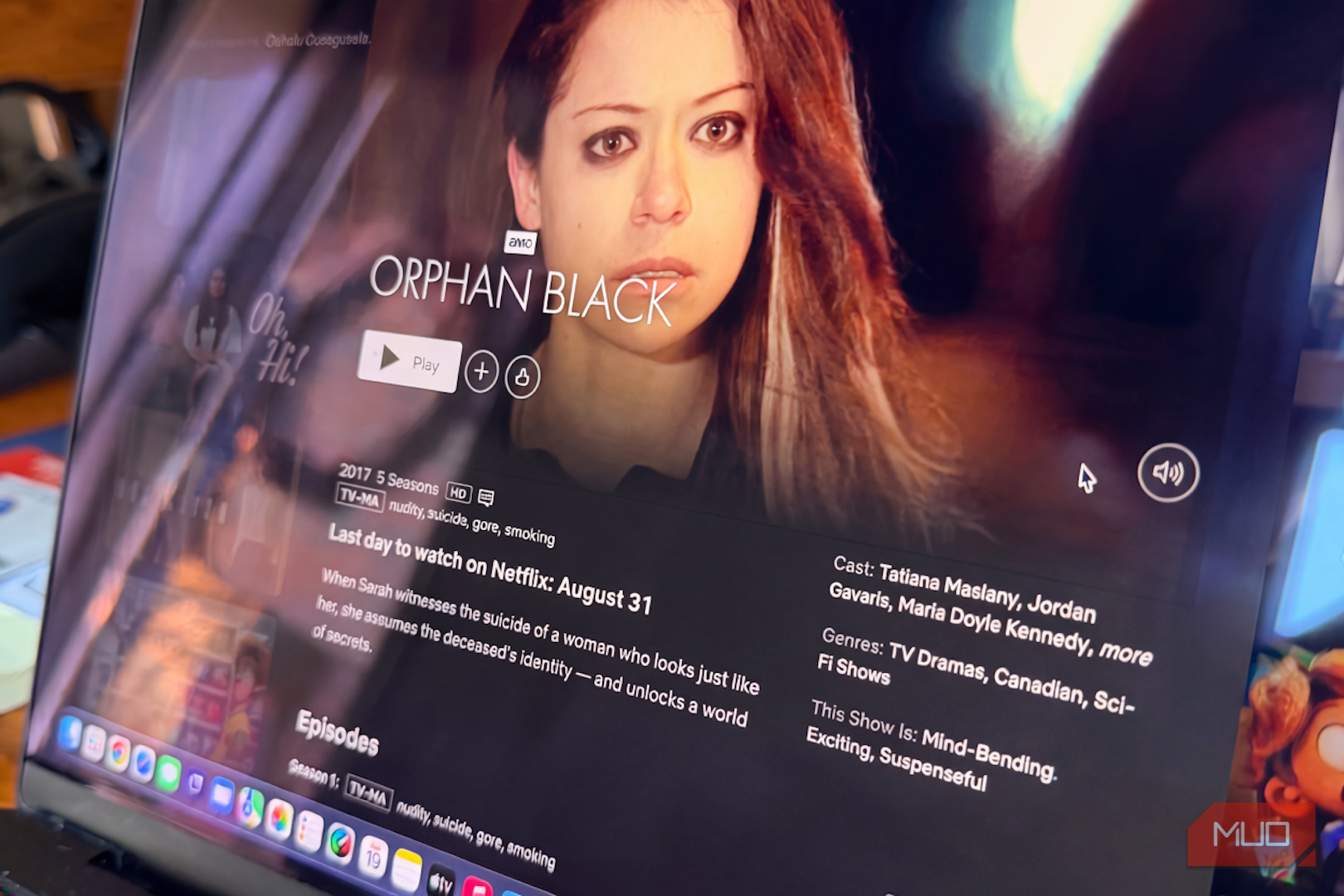
I keep coming back to Orphan Black, and every time I try to explain why, I end up sounding like I’m describing three different shows stapled together. That’s the point. The BBC America series ran from 2013 to 2017, and if you’ve never watched it, or if it’s been long enough that the details have gone fuzzy, it’s currently sitting on Netflix right next to the crazy The Last House, waiting to wreck your sleep schedule for a week. The premise sounds almost quaint by 2026 standards, honestly. A grifter watches a woman who looks exactly like her jump in front of a train, then steals the dead woman’s identity because she needs the money. That’s episode one, more or less. What you don’t know yet, watching that cold open, is that you’re a few seasons away from cult indoctrination, a corporate eugenics program, a military twin project, and something like a dozen women all played by the same actress — sometimes in the same shot, sometimes pretending to be each other, pretending to be a third person. None of that is a warning. It’s the reason to watch. Why you should watch Orphan Black on Netflix One con artist, one dead ringer, and a decade of consequences People describe Orphan Black as “the clone show,” and that undersells it. It’s a character study that happens to be dressed up as a conspiracy thriller, and unlike a lot of shows built that way, the conspiracy itself is genuinely worth following instead of something you sit through to get back to the people you actually care about. Sarah Manning is the entry point. She’s broke, raising a kid she’s not remotely ready for, running from an ex-boyfriend who wants his stolen drugs back. When she takes over dead-ringer Beth Childs’s identity, she’s doing it to clean out Beth’s bank account — she has no idea yet that she’s about to fall into a cloning conspiracy. It’s a small, selfish reason to lie, and the show is better for not needing a bigger one. Tatiana Maslany, currently being seen on Apple TV’s Maximum Pleasure, is why it all works. She ends up playing somewhere around a dozen distinct clones by the end, more if you count the one-off appearances. Alison spends the show trying to control every variable in her life she can reach, and part of the fun is watching that grip loosen a little more each season. Cosima’s a grad-student scientist who treats her own biology like a lab problem — right up until her diagnosis makes that impossible to stay clinical about, and she keeps trying anyway. Then there’s Helena. She shows up as a trained killer raised inside a religious cult, genuinely unsettling in those first appearances — feral, unpredictable, someone you’re not supposed to trust. It takes the show two full seasons to turn her into the emotional center of the whole thing, and it does it so gradually you don’t notice until she already is. Two episodes in, I’d stopped clocking Maslany’s face. By the time Helena showed up, it wasn’t an actress playing four parts anymore. It was just four women. How weird does Orphan Black actually get? A monastic order, a eugenics program, and a dance party you won’t see coming Season one plays it relatively straight. There’s a corporation behind the clones, there’s a shadowy handler, there’s a mystery to solve. It’s tense and well-made, but it’s recognizable as the kind of prestige-adjacent thriller cable networks were churning out in the early 2010s. Then the show starts piling on pieces nobody asked for. First, it’s a monastic order that’s been tracking the clones for religious reasons — I did not expect to be writing that sentence when this started as a show about a con artist ripping off a dead woman’s bank account. Dyad, the biotech company pulling the strings, turns out to be running something closer to a decades-long eugenics project than a pharmaceutical business, and by season three they’ve added a parallel set of male clones raised inside a black-ops military program, because apparently the board wasn’t crowded enough yet. People die. Some of them come back, sort of, reframed rather than resurrected, and the show doesn’t really stop to explain itself. At one point, four clones end up at the same dance party. It is not the strangest scene in that stretch of episodes. Not close. I won’t defend the plotting, because it doesn’t hold up under close scrutiny. A storyline in season two just disappears and comes back a year later, with no acknowledgment, like it was on hold the whole time. The mythology has holes if you look closely. Season three is where that starts to matter — if you want your sci-fi as tightly plotted as Breaking Bad, this isn’t going to give you that, and it’s better to know that going in than to fight it for six episodes. Why Orphan Black’s chaos never feels cheap The clones stay family even when the plot stops making sense So why does a show this willing to throw new conspiracies at the wall still feel worth watching front to back? It comes down to what the writers refused to sacrifice, even as everything around it got more baroque. Sarah, Alison, Cosima, and Helena stay sisters through all of it, real family, even when the plot hands them plenty of reasons to go their separate ways. By season two, Cosima is sick, and there’s a clock running on her now, but that only lands because you’ve already put in the hours watching her be stubborn and funny and scared underneath the science-nerd act. Helena’s the bigger swing of the two. She opens the show hunting Sarah down for the people who raised her. Getting from there to family takes the better part of two seasons, scene by scene, and I couldn’t tell you the exact moment it happened. I just noticed one day that it had. There’s also something to be said for how straight-faced the show stays about all of it. Nobody winks at the camera. Nobody cracks a joke to let the audience off the hook for how ridiculous a monastic clone-tracking cult sounds on paper. The show plays every reveal like it’s the most serious thing that’s ever happened to these people, and that commitment is doing more work than you’d think — a lighter touch, a knowing wink, and half these scenes fall apart. It would’ve been easy to lean into camp. Instead, it just kept building, dead serious, straight through to the end. Tatiana Maslany’s performance is reason enough to watch How one actress became a dozen different women Strip out the conspiracy plotting entirely, and the show is still worth watching just for the acting. Maslany isn’t doing a voice and a slightly different haircut for each clone — she’s built out a whole different way of standing, sitting, taking up space, for every single one of them. There’s a scene where Alison and Cosima are talking in the same shot, and I had to remind myself it was one actress. It doesn’t read as a trick. It reads like two people who happen to share a face. The recognition came eventually — an Emmy for lead actress in a drama — though honestly, by the time she won, she’d already been doing career-best work for a couple of seasons that nobody outside the fandom seemed to notice. If you pay attention to acting as a craft, watch this. Five seasons, dozens of characters, all of them fully lived-in on what was still, underneath everything, a cable TV budget. What Orphan Black is really about, underneath the sci-fi A show obsessed with who gets to control your own body For a show that gets this pulpy, Orphan Black is doing more thematic work than it usually gets credit for. Every clone is fighting some version of the same battle: who gets to control what happens to her own body. Alison’s storyline is about a woman who’s spent her life performing normalcy because she’s terrified of what happens if anyone looks too closely at her. Cosima’s arc turns her own cells into a research subject she has to fight to keep authority over, even as the people funding her treatment claim they only want to help. Rachel Duncan, raised inside the corporation as a kind of showpiece clone, spends her arc discovering that being treated as special isn’t the same as being treated as a person. It never comes across as a lecture, either. You get it inside a chase scene, a lab break-in, a custody dispute — which is probably why none of it feels preachy watching it back now, a decade later. The show found one real, uncomfortable question, about who gets to make decisions over your own body, and it just kept coming back to it through every new plot turn instead of answering it once and moving on. Where to stream Orphan Black, and how to get through it All five seasons are streaming on Netflix through August 31, which makes this a relatively easy Netflix binge if you’ve got a free week. Ten-episode seasons, hour-long episodes, and a plot dense enough that you’ll want to pay attention rather than have it on in the background. My honest advice: go in expecting the back half of the show to ask a lot of you. Don’t fight it when a new organization or splinter conspiracy shows up out of nowhere. Focus on the clones and their relationships to each other, because that’s the through-line that never wobbles even when the surrounding plot does. If you can make that adjustment, what looks like a mess from the outside turns into one of the more rewarding sci-fi thrillers Netflix has quietly picked up. It’s rare to find a show this willing to escalate past the point of good sense and still land its ending. Orphan Black manages it because it never forgets what actually made you care in the first place. Not the conspiracy. The clones. Just don’t watch it on your phone, or any show on Netflix for that matter.