Summary
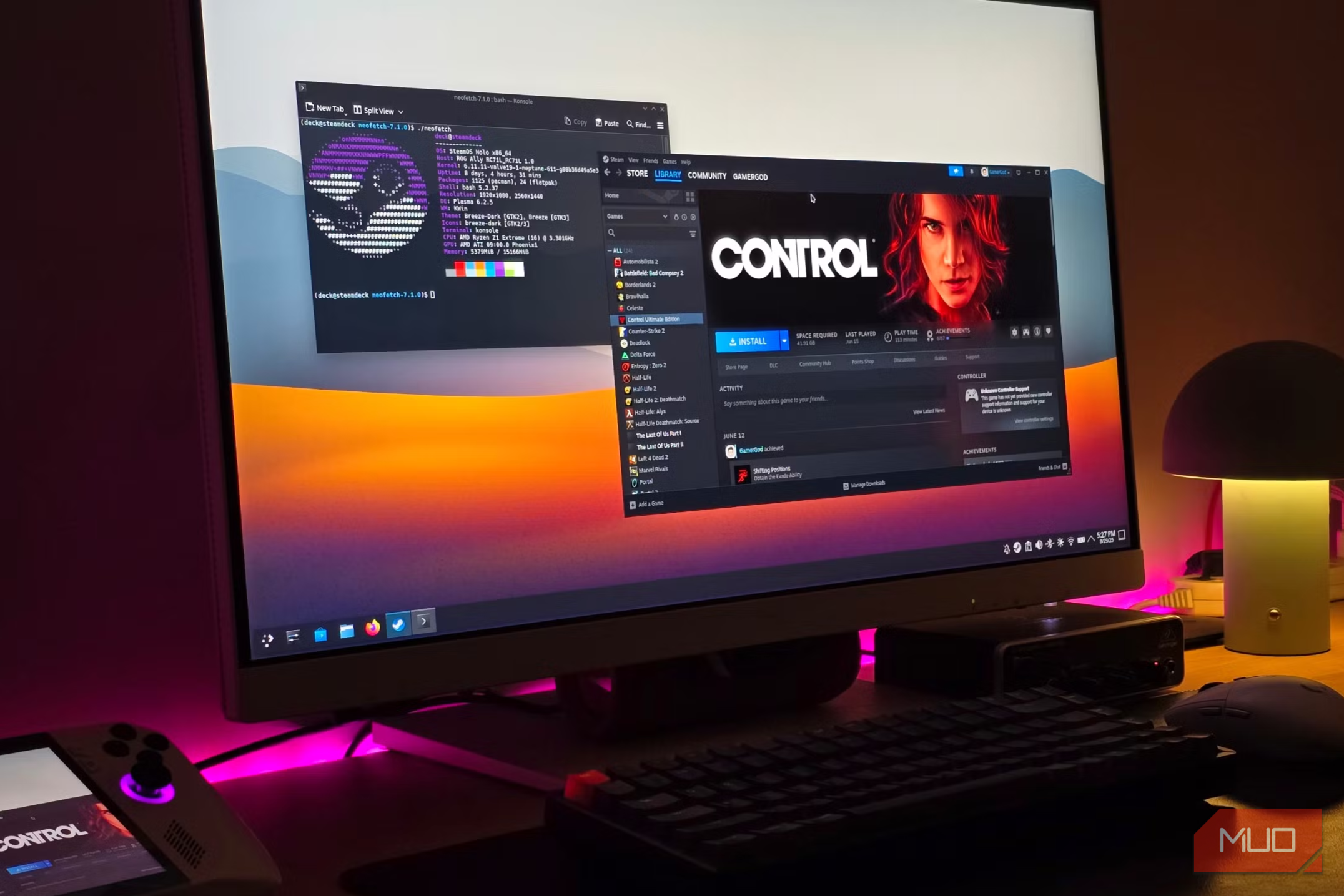
I love getting into the nitty-gritty of things. Linux lets me do what I want, however I want — and I don’t have to bother with any artificial OS-level limitations. Setting things up manually is frustrating but often fun, and most certainly educational. That said, there are times when I do yearn for something a bit less prone to breakage. Immutable distributions seemed like the perfect answer then, and you’d be right, for a few select use cases. It’s also a great option for your first Linux distribution, or as a gaming HTPC, thanks to Proton. Immutable operating systems are some of the most well-supported distros out there Great documentation and software support Immutable distributions aren’t exactly new, but they’ve seen strong growth in popularity. The idea is simple: you have a “fixed” operating system that leaves certain core components untouched. This includes the core file system under the “/” or root directory within an installation. Everything else can be altered to your liking. This “lockdown” also makes the root file system read-only, preventing any ill-advised user from accidentally splitting the OS wide open and causing BSODs (yes, Linux has those now! But they’re technically kernel panics) that can be a headache to deal with. And it’s not like immutable operating systems are a strange, alien species. Some of the best Linux distributions happen to be immutable by nature — including the likes of Valve’s own SteamOS and its many community-driven alternatives, like Bazzite. This also means that several users have documented their findings with these distros, leaving behind important cookie crumbs for you to make a trail out of. In other words, the distros are quite well documented, especially in the case of Bazzite, which has its own wiki, which many will find essential once they try to do something a bit more advanced than just basic web browsing or gaming. Immutable/Atomic distributions also have the distinct advantage of not using a traditional package manager. Instead, they rely on universal alternatives like Flatpak or Distrobox, which have their own sandboxed systems. Flatpak has almost every app you can think of, and it being set as the default is very much appreciated, especially for a newcomer. It’s not easy to break this kind of operating system Full control has its drawbacks sometimes As much as I love Arch, it has its drawbacks. Being a rolling release, Arch pushes updates quite frequently, and many of these have a very real chance of carrying regressions or some compatibility changes that break everything else in turn. It’s also ridiculously tiring to set up for each install, and I’d rather have an automated installer do the thing for me with a few select presets. Something Atomic, like Bazzite doesn’t have any of these disadvantages. The OS is dead simple to get up and running and rarely breaks, so it’s reliable and solid. If things do go south, however, you can always roll back to the previous, backed-up “image” of the installation to get a working computer again. Admittedly, while NixOS does much of the same, it is in no way an easy recommendation. Going immutable can have disadvantages Some things just aren’t built for immutable OSes By far the biggest issue with immutable operating systems has to be when dealing with certain more “advanced” use cases. If you try something a bit more complicated (such as altering the system files for installing a driver for an obscure card), it usually doesn’t work properly. It might install and work fine on the first try, but almost always gets erased after a system update. This also means that testing out bleeding-edge features on these distributions is a very “controlled” affair, and you really can’t mix-and-match things to your liking. Flatpak isn’t perfect either, and combined with the Atomic image updating system, it just makes it eat up a sizable chunk of storage space. Admittedly, while there are workarounds, you’d have to be looking out for them with intent to know about them in the first place. System-wide updates are also left at the discretion of the maintainers themselves, so you can’t do things like install a custom kernel or Mesa version as easily. It might sound like a bit too much, but trust me, you’ll quickly outgrow the limitations of an immutable system. Perfect for HTPCs and gaming systems, or as a first-timer’s distro All things considered though, an immutable distribution is a no-brainer for those just dipping their toes into the never-ending stream of Linux distributions. It’s a safe, easy pick that rarely goes wrong and doesn’t overwhelm the user with too much information and technicalities. Even if it does go horribly wrong, there are easy ways to reverse it, and most things do get patched out with updates quite quickly these days. This makes it perfect as an HTPC operating system where you need minimal interaction with the heart of the software. Bazzite has been my go-to choice for living room gaming PCs, and it just makes a lot more sense. It’s perfectly stable and snappy, and supports everything you’d ever need in such a PC. It also performs quite well, making it ideal for the task.