Summary
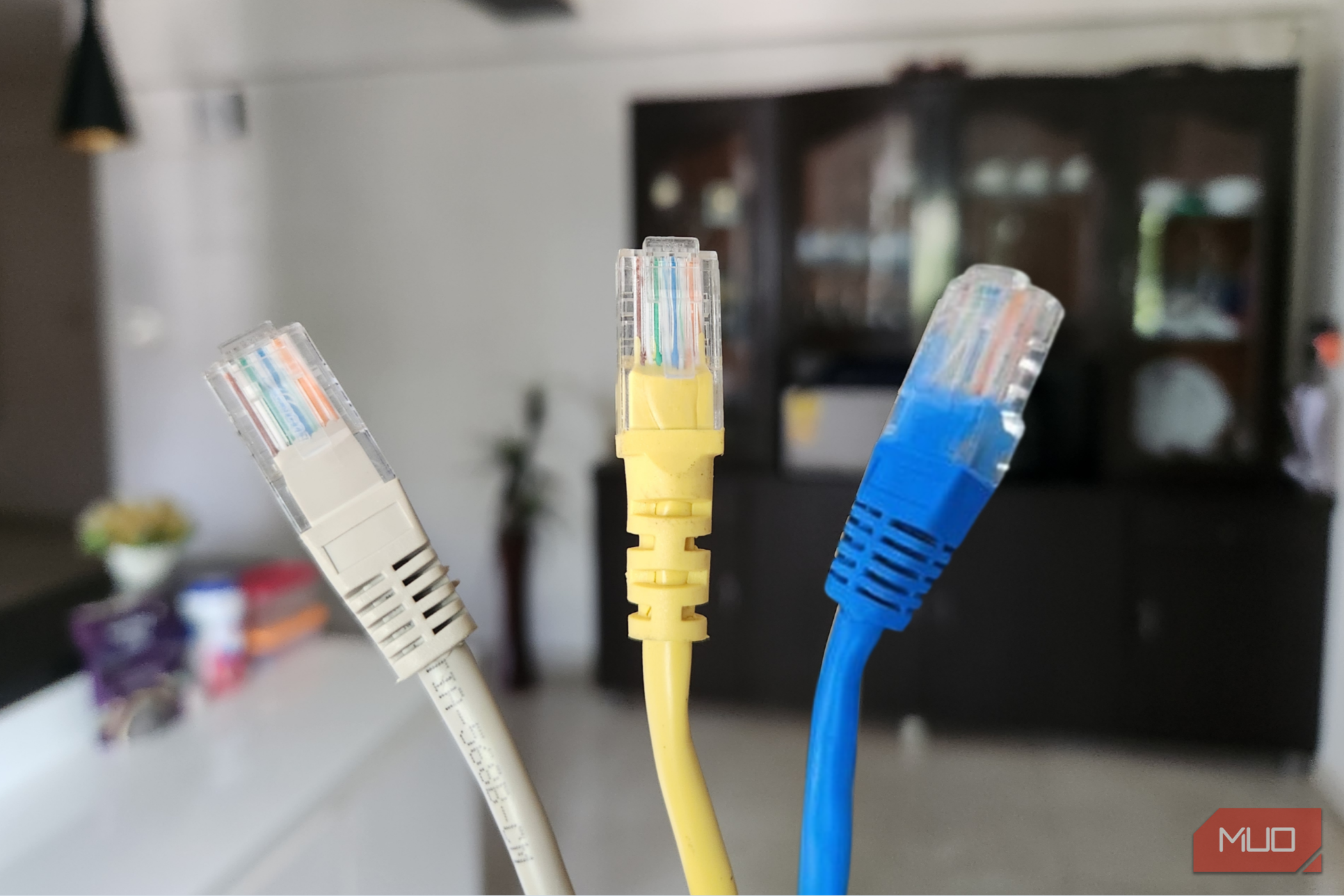
I’ve called the clear plastic plug at the end of an Ethernet cable “RJ45” for as long as I’ve had any reason to name it. So do most router makers, cable sellers, and networking guides. If you look a little closer at the terminology, though, the name starts to fall apart. The connector used for ordinary twisted-pair Ethernet is more precisely described as an eight-position, eight-contact modular connector, commonly abbreviated as 8P8C. The registered-jack standard that gave us the RJ45 name came from a different corner of telecom history, and Ethernet ended up inheriting the label even though the match was never exact. RJ45 came from the phone network The real thing had a key The first clue is in the initials. RJ stands for Registered Jack, a naming system that grew out of the Bell System’s Universal Service Ordering Code and later appeared in U.S. telephone regulations. An RJ designation described a standardized network interface and its wiring arrangement, not just the shape of the plastic connector. The historical standard behind today’s nickname was RJ45S. Old FCC Part 68 documentation [PDF] describes it as a “miniature 8-position keyed jack” intended for programmed data equipment. Its pin assignments were nothing like modern Ethernet. The telephone tip-and-ring pair used positions 4 and 5, while positions 7 and 8 connected to a programming resistor. FCC rules from the period state that this resistor set the modem’s transmit level based on line loss, delivering an optimal -12 dBm signal at the central office. The connector itself was different as well. RJ45S used a keyed design, and that small physical difference makes the naming mix-up even more obvious. A modern unkeyed 8P8C plug can fit into an old keyed RJ45 jack, but a keyed RJ45 plug will not fit into a standard Ethernet jack unless you remove the key. They look closely related, but they are not simply two official names for the same connector. Registered Jack designations bundled the physical interface and its electrical wiring into one telecom standard. Ethernet later adopted a very similar modular form factor, then put it to work with entirely different wiring and a completely different purpose. Ethernet adopted its unkeyed cousin and kept the nickname Eight positions, eight contacts, one stubborn name The connector on a typical Ethernet patch cable is more accurately described as 8P8C, short for eight positions and eight contacts. That tells you the physical interface, but not what protocol it carries or how those eight conductors are wired. Even the cable behind that plug can vary, with permanent runs and flexible patch cords commonly using different conductor types despite terminating in connectors that look essentially identical. For Ethernet, the conductor arrangement is usually T568A or T568B. Both are standardized pin-and-pair assignments for balanced twisted-pair cabling that specify the functions of the colored wire pairs in an Ethernet cable between the two schemes. The eight contacts haven’t always meant eight conductors carrying Ethernet traffic, either. 10BASE-T and 100BASE-TX use only two pairs, while 1000BASE-T puts all four pairs to work, as do faster four-pair BASE-T standards. ANSI/TIA-568.2-E, published in October 2024 and still current in 2026, covers balanced twisted-pair cabling and the components built around it. TIA’s cabling standards also , rather than making the plug itself a different type of connector each time the cable category changes. This modular interface also has much older Ethernet roots than a modern Cat 6 cable might suggest. An IEEE historical presentation [PDF] traces the familiar eight-position connector from AT&T StarLAN in 1986 through 10BASE-T, which became a standard in 1990. Ethernet speeds have climbed enormously since then, while the same basic modular interface has remained. The wrong name won anyway I’m still going to call it RJ45 “RJ45” may be historically imprecise, but the industry has embraced the term so thoroughly that insisting on 8P8C in everyday conversation can be more pedantic than helpful. Current product catalogs make that pretty obvious. TE Connectivity describes parts as both RJ45 and 8P8C in the same documentation, while CommScope lists eight-position, eight-contact modular plugs and still labels the interface RJ45. This usage goes far beyond sketchy marketplace listings, as major cabling manufacturers use RJ45 simply because everyone already knows what it means. The connector has also managed to stick around through generations of much faster cabling. TIA’s Category 8 system retained the familiar eight-position modular interface for backward compatibility. On the IEC side, IEC 60603-7-81 covers the eight-way shielded connectors commonly used for Category 8.1, with transmission requirements reaching up to 2,000 MHz. Ethernet has gotten much faster over the decades, and that little plastic clip has somehow refused to budge. RJ45 is probably here to stay So now I know the connector I’ve spent years calling RJ45 has a more accurate physical name, a telecom ancestor wired for a completely different job, and a nickname that survived mostly because everyone kept using it. I’ll probably still ask for RJ45 plugs the next time I need a pack. Trying to correct the entire networking industry feels like a pretty ambitious hill to die on.