Summary
There’s nothing quite like unboxing a slick new iPhone. You spend a lot, and everything from the actual hardware to the packaging it comes in suggests luxury. One thing you won’t find in that crisp, white box anymore, however, is a wall charger. Apple used to include these along with a cable (first Lightning, then USB-C) and even a pair of wired EarPods. But now, neither the charger (nor the EarPods) are there anymore. But that’s not necessarily a bad thing.
If I were to search through my house today, the number of USB-C cables I have lying around, from short and long ones, black and white, braided and not, is astronomical. So much so that when I unbox something new, I’ll usually toss the USB-C cable, still wrapped up, in a drawer somewhere until I need a spare. That little charging block used to be the same. I have accumulated so many of them since my first iPhone, the iPhone 4. And while there used to be some kind of prestige in plugging it into an outlet and connecting your phone, the single USB-A outlet and ultra-slow charging doesn’t cut it anymore, even as a backup.
The power block isn’t needed
No one really uses it
Apple stopped including the wall charger in the box of new iPhones with the iPhone 12, which was released back in October 2020. At first, there was pushback because we felt shortchanged. That’s especially since typically when brands remove accessories, you expect that a lowered price would be a happy byproduct. That wasn’t the case with Apple.
Nonetheless, in hindsight, it was a good move for a few reasons. Top of the list is that no one actually uses this block. I have a power strip in my living room where I plug in several devices, as well as multi-outlet power blocks. Into those blocks go cables for my phone, smartwatch, a smart TV remote, you name it. In the kitchen is a multi-outlet block plugged in to once again maximize outlets. A single 5W cube charger doesn’t serve much purpose.
You might think, well, it’s good for travel. But it isn’t. When I consider what charger to bring, this tiny Apple wall charger makes little sense as an option to throw into my backpack. Instead, one of the tech gadgets I never travel without is a multi-outlet portable charging block. It has more power and expands a single outlet into two, three, four, or even more USB-A and USB-C ports. Considering how many affordable options are available now, this free one in the box would just be a throwaway or paperweight.
It’s helpful to the environment
That’s the supposed real reason
The reason Apple gave for removing the charging block is a little more practical. It wasn’t above saving money, per se (not for the customer since the price never went down anyway), it was part of Apple’s environmental initiatives. Removing the charging block reduces carbon emissions and electronic waste, both from the charger itself and from the smaller phone box. It’s not just thinner; it’s close to being about half the size.
As noted, Apple also removed the wired EarPods that used to come with the iPhone for the same reason. It doesn’t hurt, however, that this also pushes sales of wireless AirPods. In any case, if you’re upgrading from an older iPhone today, how many pairs of spare EarPods do you really need? With both gone from the box, you can focus on just the iPhone when you open the box and marvel at its beauty. As for charging, use virtually any USB-C outlet, charging block, or portable charger you have lying around. These days, most of us have many.
What charger can you use with iPhone?
Pretty much any one that you have
When considering which cable and power adapter your iPhone needs, technically any USB-C charging block or power strip will work with the latest iPhones (Apple switched from Lightning to USB-C with the iPhone 15). So will any USB-C charging cable, though you still get an official Apple one in the box (for now). To maximize charging, use a charger that supports the fastest charging speed your iPhone supports. The iPhone 15, 15 Plus, 15 Pro, and 15 Pro Max support up to 27W wired charging. The entire iPhone 16 line supports up to 30W, with an Apple MagSafe charger that you’ll need to buy separately. The iPhone 17 Pro charges at up to 40W.
Note that if the charger charges faster than the iPhone supports, that’s fine: it will only supply as much power as the device can handle. But if you have a newer iPhone with a faster charging rate, maximize it instead of using an old charger that slowly charges your phone. I’d recommend multi-outlet chargers with both USB-C and USB-A ports and have one for home and one for travel. And for now, keep those USB-C cables in a shoebox because it’s only a matter of time before brands like Apple stop including them, too.
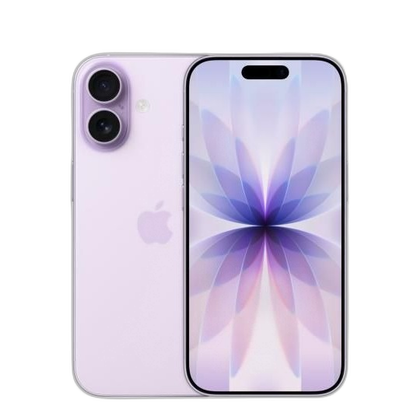 Apple iPhone 17
- Brand
- Apple
- Display
- 6.3 inches
- Storage
- 256 GB, 512 GB The Apple iPhone 17 supports fast charging and has a USB-C port, and it makes no sense to include that old tiny charging cube in the box anymore. It’s a base level model that provides upgrades like Apple Intelligence and more.