Summary
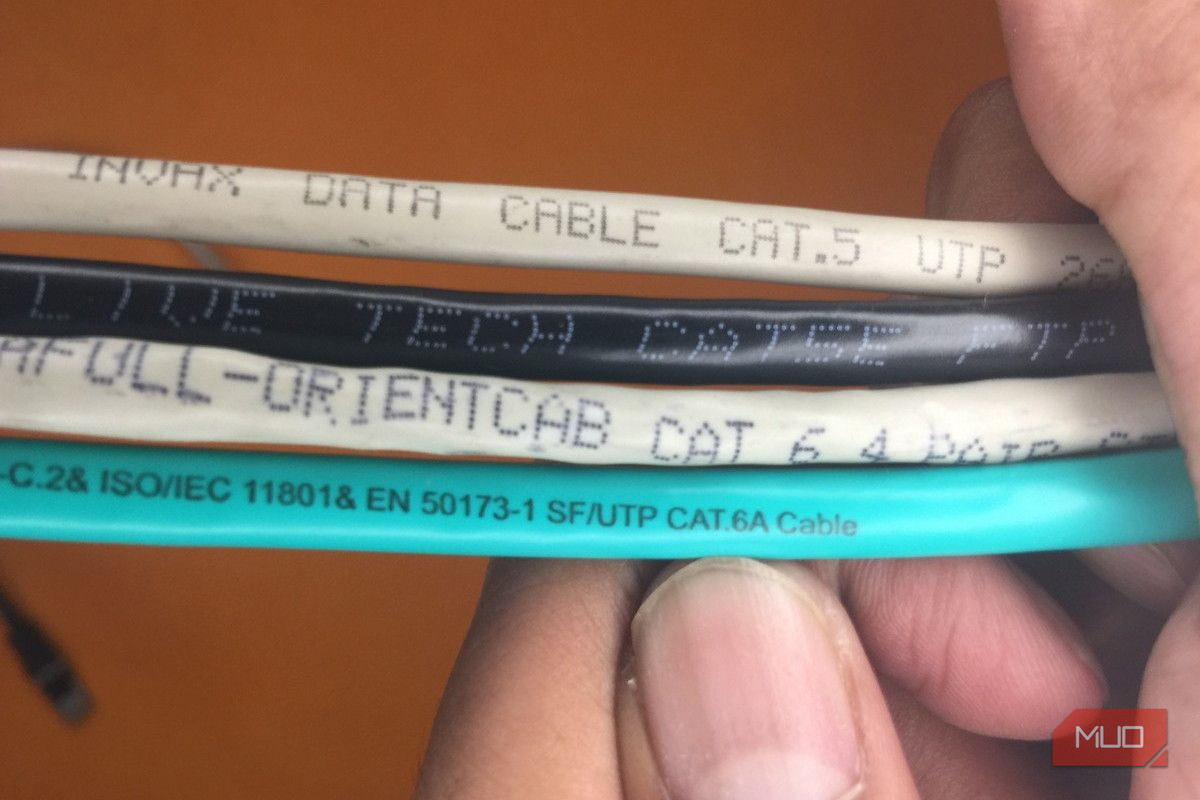
Most people planning an in-wall Ethernet run put all their energy into one question: CAT5e, CAT6, or CAT6A. I’ve been there, and I’ve already made the case for the CAT rating I’d run through my walls today. Yet when I actually bought a spool for my basement, the marking that decided whether that cable belonged inside a wall had nothing to do with the CAT rating. The decision came down to a short code printed on the jacket: CM, CMR, or CMP. That’s the fire rating. It controls where a cable is allowed to run, and what it does if a fire ever reaches it. Get the CAT rating wrong and you give up some speed. Get the letter wrong and you’ve sealed a problem into the wall that only a drywall saw can reach. The letter next to the CAT number is the one that governs your walls CM, CMR, and CMP describe fire performance, not speed Every guide tells you to read the category printed on the jacket, and that advice is sound. I’ve pushed it myself. The CAT rating sets your speed ceiling, and a slow cable buried in a wall is a real headache. But a second marking sits next to it, and it has nothing to do with speed. It decides which spaces the cable is legally cleared for. Those letters are the CM, CMR, and CMP ratings, laid out in Article 800 of the National Electrical Code. Each one grades how the jacket holds up to flame and smoke. You can buy CAT6 in all three. CM is the entry-level grade for ordinary indoor runs. CMR, riser cable, is built so flame can’t climb it between floors. The top grade, CMP, is plenum cable for a building’s air-handling spaces. It’s the slowest to burn and the lightest on smoke. Substitution only runs one way. A higher rating can always fill in for a lower one, so CMP works wherever CMR belongs and CMR wherever CM does. You can’t flip it, though. Why the jacket outranks the number once it’s behind drywall The one part of the run you can’t take back When I ran cable through our basement, I bought a 1,000-foot spool of CAT6 and crimped the ends myself. It has solid bare copper, 23 AWG, and is rated to 10 gigabit at 550MHz. Printed along that same jacket was one more marking: CMR. The CAT6 part gets all the attention. The CMR part is why I never worried about what was sitting inside the walls. That letter carries more weight than the number for a simple reason. Almost everything else on my network is a five-second swap: patch cables, the switch, the router, the access points. The run stapled to the framing behind finished drywall is not. A weak CAT rating costs throughput you may never notice on a home connection. A weak jacket is a safety problem. Unrated cable can feed a fire instead of slowing it, and the PVC in a bargain jacket can give off thick, toxic smoke. One mistake slows a download; the other puts smoke inside your walls. How to pick the right letter for a home run Riser covers most houses; plenum covers the part people forget For most in-wall runs in a house, CMR is the letter to look for. It costs a little more than plain CM and covers far more situations, including any run that climbs into an attic or passes between floors. Riser is what most residential structured cabling uses, which is why a spool of bulk cable at the home center is commonly stamped CMR by default. That was the easy call, and it’s the one I made. The spot people miss is the plenum. If any part of a run travels through a space your HVAC system uses to move air, that section needs CMP, and riser cable is not allowed there. Twelve years working around heating and cooling systems taught me which cavities actually carry air, and it isn’t always obvious from the drywall. A dropped ceiling only counts as a plenum when the building uses it for return air, so plenty of them don’t qualify. When you’re unsure, the local inspector has the final word. In a single-story home with no plenum in the path, CM will pass, but riser is cheap insurance worth buying. The rating is only half of getting an in-wall run right Buy for the wall, not the desk The jacket rating shares the wall with a few other decisions people rush past. Solid copper beats stranded for a permanent run, which is why bulk in-wall spools use it and why the cable I bought is solid to the core. Distance and interference matter too, so I made a point of keeping every run away from electrical lines while I fished the cable through the joists. And since opening a wall twice is nobody’s idea of fun, pulling a spare line while the drywall is already off pays for itself later. What sets the jacket apart is the math. Every one of those other choices is fixable with some effort. The rating is the cheapest of the bunch to get right, since it’s printed on the cable in the store, and the most expensive to fix once it’s sealed away. Read it before it disappears behind the wall. Read the letter before the drywall goes up The CAT debate is worth having, and I’ll keep having it, but you can usually work around a category you outgrow. Swap the patch cables, upgrade the gear, and a gigabit house keeps up just fine. The fire letter doesn’t give you that second chance. It’s the one spec the wall makes permanent, and it costs nothing to read. So give the jacket a look before the drywall goes back up. Find the CM, CMR, or CMP stamp, check it against where the cable actually runs, and that part’s settled. The CAT number you can argue about for years.