Summary
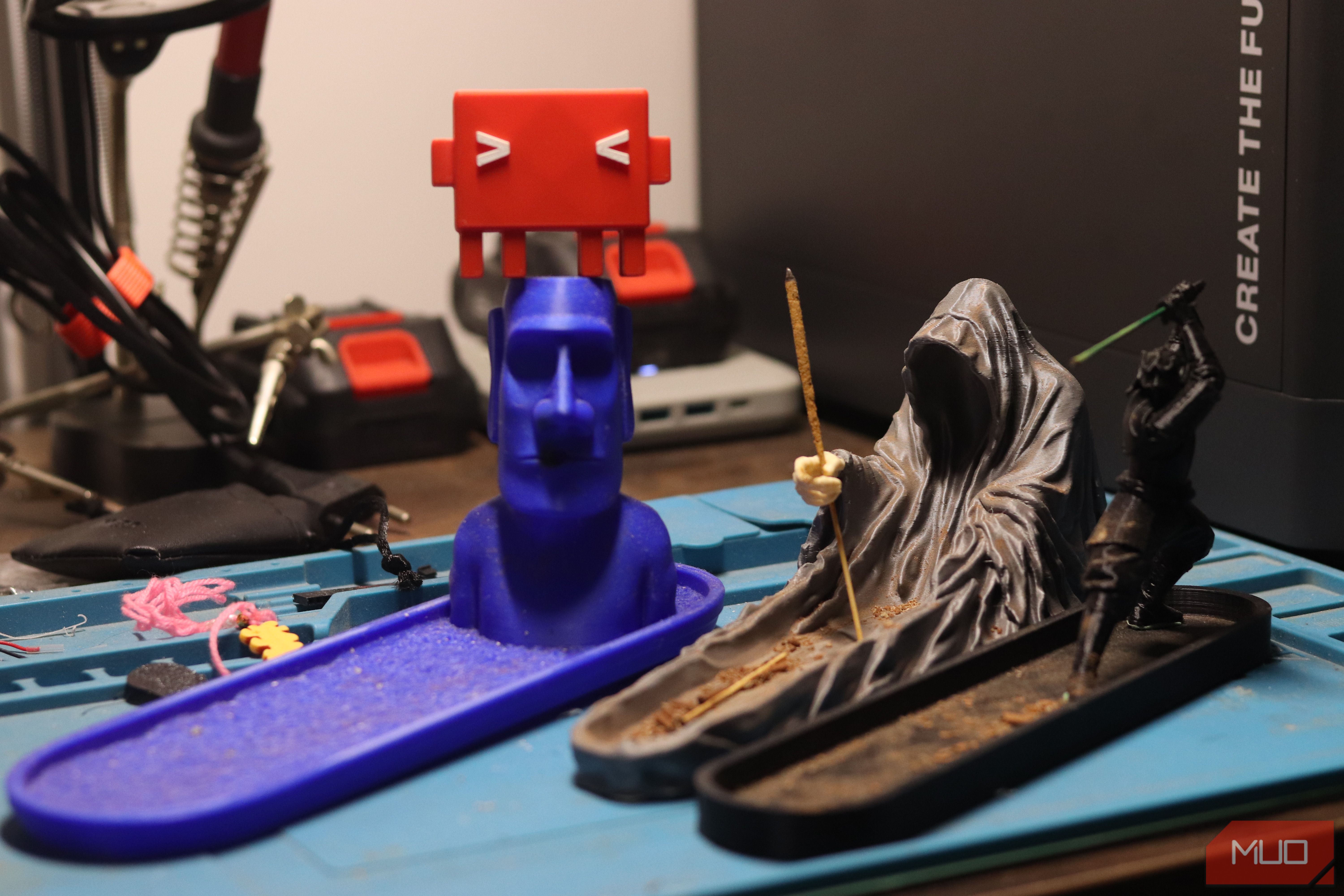
When I finally pulled the trigger on a 3D printer after putting it off for years, I had a whole list of practical justifications ready to go. I was going to print cable organizers, replacement parts for broken appliances, custom mounts for a bunch of gadgets, and even custom PCBs for quick prototyping. And sure, I’ve done all of that. But if I’m being honest, the projects that actually made me fall in love with this machine were the completely unnecessary ones. The dumb, pointless prints turned out to be the real reason I don’t regret the purchase one bit. A toilet paper holder that judges everyone who walks in Zero practical purpose, guaranteed laugh every time Makerworld is the Pinterest of 3D printing, and an extremely addictive site to scroll. So one day, as I was killing time scrolling down a rabbit hole, I came across a toilet paper holder that was reading a book, and I could not resist it, for no apparent reason. It took a few hours to print, came out in one piece, and now sits in my bathroom looking mildly judgemental every time someone walks in. It serves zero practical purpose apart from holding toilet paper, which a hook could do just as well, but it makes literally everyone who visits stop and laugh. That reaction alone justifies the filament cost. There’s something deeply satisfying about spending money on a machine and then using it to make a joke nobody asked for. Seven hours of PETG to stop sweeping up plastic BBs Once a week for ten minutes, worth every gram of filament I’ve got a few cheap, low-quality BB guns lying around my homelab that I play with from time to time, but I never quite had a target to use them with. After a quick search on Makerworld, I now have a simple target that takes a standard cardboard target, the one you see in shooting ranges, and collects the plastic BB pellets for you. It might sound practical on paper, until you realize that it took seven hours out of a brand new spool of PETG filament to print. I use it probably once a week for barely 10 minutes, but now I don’t have to sweep my office floors looking for tiny orange balls that love to creep themselves into corners, never to be found again. A desk full of incense holders nobody asked for Each one was really an excuse to test new settings One of the reasons why I bought my 3D printer was so that I could print items that would solve my very particular desk clutter problem. Almost three months later, my desk has now become a graveyard of half-finished prototypes for things nobody needed, and the incense holders were the worst offenders. I’ve printed one shaped like a samurai, one shaped like a spooky ghost figure, and one that’s a Moai statue. I don’t even burn incense that often, but each one became an excuse to try new settings, new filament colors, and new print orientations. They’re basically functional decorations that taught me more about materials and cooling than any calibration cube ever would. Useful prints end. Ridiculous ones never quite do No finish line means no reason to stop tinkering The thing about printing useful stuff is that once you make the thing you need, you’re done. Chances are you’ll find a model ready to go on Makerworld or Printables along with all the print settings dialled in for the perfect print. You download the model, slice it, print it, and you’re done. There’s no reason to keep experimenting once the problem is solved. The ridiculous projects are different because they take time to finish, and there’s no definite finish line. You can always make the toilet paper holder weirder, the target more satisfying, the incense holder more elaborate. That open-ended tinkering is exactly what makes a 3D printer worth having, because it turns the machine into a creative outlet instead of just a tool that occasionally spits out spare parts. Not to mention these prints make for great gifts for your loved ones. There’s also a genuine skill-building angle hiding behind all this goofiness. Every silly project is an opportunity to learn CAD skills by playing with the file to make it match my needs better, try out new printer settings, materials, colors, orientations, and a bunch of other aspects that make 3D printing what it is. I’ve picked up knowledge about tolerances and clearances, bridging and support removal, how print-in-place designs work, and that’s just casual playing around. None of that knowledge came from printing another boring bracket that was measured half a dozen times before ever being sent to the slicer. The real ROI isn’t the money you saved It’s the dumb idea you want to print at 11 PM on a Tuesday If you’re on the fence about buying a 3D printer, don’t just think about the practical problems it’ll solve around the house. Think about the dumb ideas you’ll want to bring to life at 11 PM on a random Tuesday. Those are the projects that’ll actually keep you engaged with the hobby long enough to get good at it. My printer has saved me money on replacement parts, sure. But it’s the random silly prints that make my flatmates and friends who come over ask what else I was planning to make, and even request their own silly prints. That curiosity is worth more than any practical print job.