Summary
Nearly every guide that tells you to change your DNS leads with the same premise: switch up those digits, and you’ll receive faster internet speeds.
Often, it’s not wrong. Most folks are chugging along reasonably happy on their ISP’s default DNS — but it could be much better. I’ve run enough DNS tests in the past few years to know the difference it makes to speed.
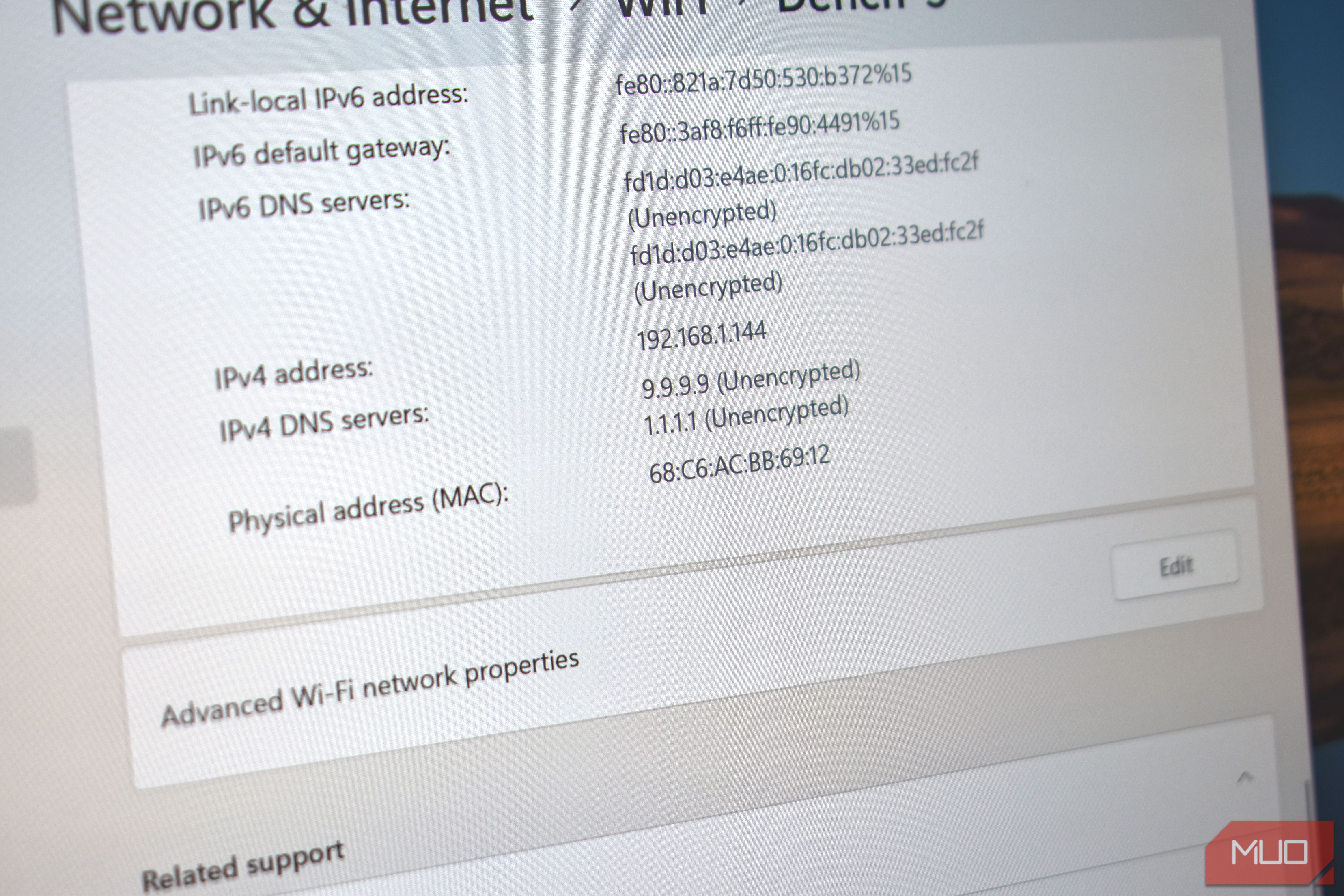
That said, I’ve run enough DNS tests to know that speed isn’t the only consideration when it comes to choosing a new DNS provider. So when I say I swapped Cloudflare’s 1.1.1.1 for Quad9’s 9.9.9.9, you’d reasonably assume speed drove it, but it was something else.
My own numbers said Cloudflare was quicker, and I switched regardless.
My testing found Cloudflare was faster than Quad9
The numbers don’t lie (for me)
The big caveat when it comes to DNS testing is that we’re talking about a difference of milliseconds. The difference in speed between most DNS providers, at the top end of testing, is effectively imperceptible to the human eye.
In that, while my home-network testing results across ten cold-cache runs showed Cloudflare averaging 8ms and Quad9 16ms, it’s not really the astounding, twice-as-fast win it really seems.
DNS resolves a domain name once, at the start of a connection, and your device caches the answer after that. You don’t pay the lookup cost on every click. You pay it once per domain your machine hasn’t seen recently, and eight milliseconds of it at that. So, in that, Cloudflare chalks one up in the speed column, but it’s not something I could claim to specifically notice.
An enormous drop from the 100ms range to sub ~10ms range, sure. But the difference between 8 and 16ms? Not likely.
Quad9 blocks malware by default
Cloudflare can do this too, but you need a different address
As said, speed isn’t everything when it comes to DNS. One of Quad9’s best default features is that it blocks malware and phishing sites by default, pulling from a list of around 20-25 intelligence sources to keep its lists constantly updated.
There is a strong chance that a connection using Quad9 will block an incoming malware or phishing domain before you connect, keeping you safe without much extra effort. What’s great about using Quad9 for its malware blocking is that it simply stops you from connecting to the address, full stop, and that’s the default option. You could also try the Quad9 Blocked Domain Tester to be sure!
In fairness to Cloudflare, it does have a dedicated malware-blocking DNS resolver. I’ve written previously about how changing a single digit in your DNS can filter malware, and that stands true today. The biggest difference is that Quad9 enables malware filtering by default, but you have to look for it with Cloudflare.
Given most folks set a DNS provider and then promptly forget it for the rest of time, having that protection in place to begin with is well-worthwhile.
Where are your queries heading to?
Location, location, location
Another important consideration is where each company is based. Similar to how the best no-log VPNs are based in countries with strict privacy laws, the same rules largely apply to DNS… but not for the same reasons.
First of all, I’m not saying that Cloudflare isn’t trustworthy. It’s had big-four firms examine its anonymous data claims multiple times and passed with flying colors. It’s more anonymous than many other services can hope to provide, and I’m not claiming that Cloudflare is backdooring your privacy. It simply isn’t; the company purges any logs within 24 hours, claims it can specifically back.
But it does operate under US jurisdiction, which comes with all of the normal scrutiny from TLA security agencies that you’d expect.
On the other hand, Quad9 is a non-profit that operates out of Zurich, Switzerland, a company known for its extensive and rigorous data-protection laws, all sitting outside the reach of the US. In 2021, Quad9 revealed that the Swiss Federal Court blocked a German court order to reveal a domain, showing that privacy is in play.
A nonprofit with no advertising arm and no data to monetize is simply a different kind of custodian than a commercial CDN, however well audited that CDN happens to be.
 Quad9
Quad9
- OS
- Any
- Individual pricing
- Free
- Developer(s)
- Quad9
- GENRE
- DNS Provider Quad9 is a free, global DNS service that protects your devices from cyber threats. It blocks access to malicious websites spreading malware and scams. Based in Switzerland, Quad9 ensures strict privacy by never logging or selling your personal IP address, while keeping your internet fast, secure, and easy to use. Switch to Quad9 for malware protection and privacy Those speed results are so marginal that they don’t really figure into the equation, either way. But don’t take my word for it, because ultimately, your connection is different to mine, and what works well for me could be completely different for you. There are several different ways to test your DNS, and giving them all a try is worthwhile to hone in on the best DNS provider for your home network.