Summary
Summary
- The iPhone Duo hides its FaceTime camera beneath the inner display, eliminating the need for a notch or punch-hole cutout.
- ZTE, Xiaomi, and Samsung used under-display cameras years ago, but poor image quality and visible screen compromises kept the technology niche.
- Apple could revive the feature as it did with fingerprint scanning, provided its implementation finally solves the problems Android manufacturers encountered.
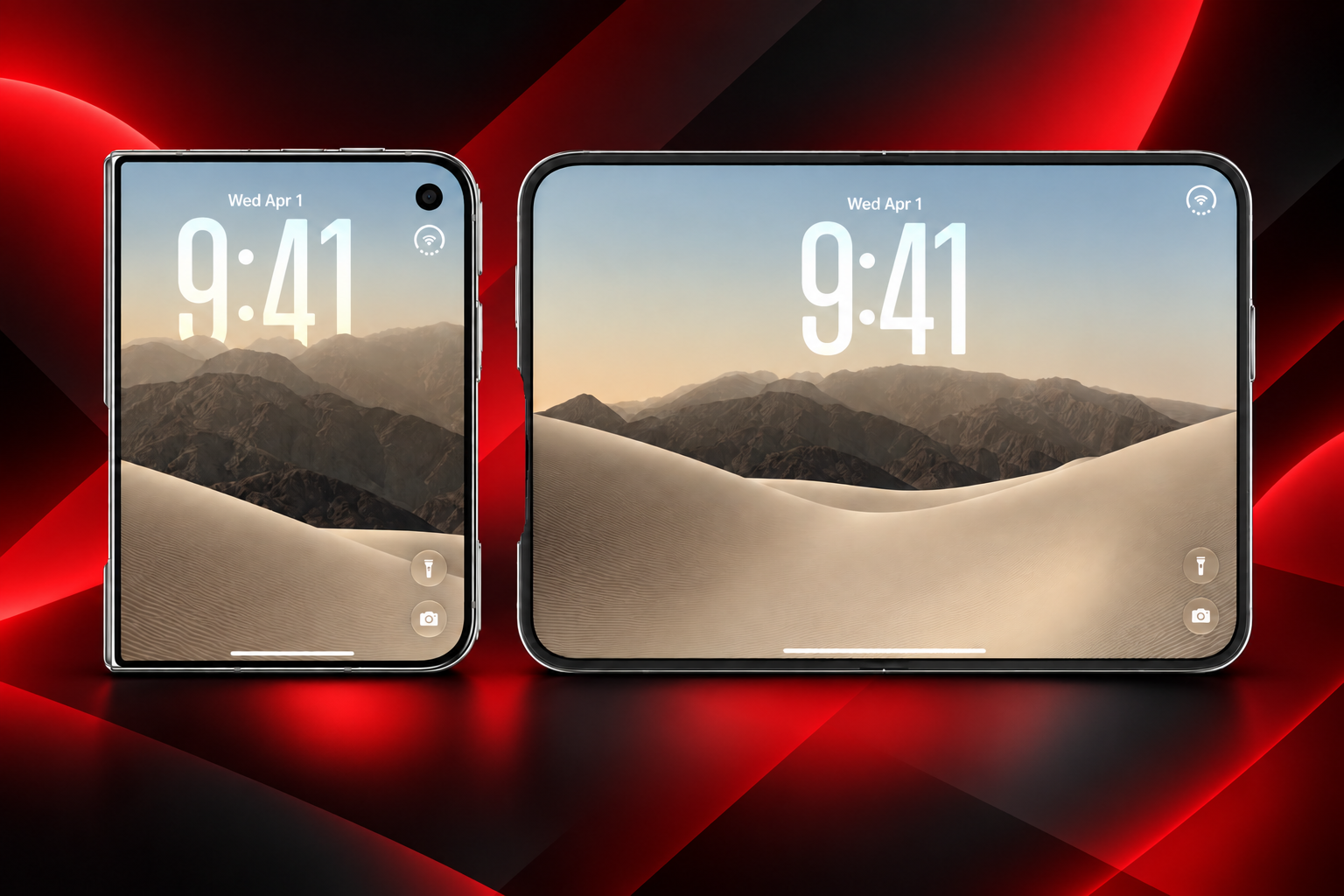
Apple just revealed what a lot of tech enthusiasts were waiting for — the foldable iPhone. Dubbed the “iPhone Duo,” Apple’s latest device opens into a 7.6-inch display, with a selfie camera (or ‘FaceTime camera,’ as Apple likes to call it) hidden underneath it. There is no notch (Again, according to Apple’s lingo, the ‘Dynamic Island’) interrupting the inner screen.
Apple’s new CEO, John Ternus, kicked off his first Apple keynote with a bang. He unveiled the Duo before handing the design presentation over to Molly Anderson, vice president of Industrial Design, and Steve Lemay, vice president of Human Interface Design. The hidden FaceTime camera appeared during their segment. You can watch the entire announcement through Apple’s keynote page if you missed it.
Apple is reviving an Android feature from 2020
The invisible camera came with some very visible compromises
While it is a first for an Apple product, the company didn’t invent the under-display camera. ZTE got there first with the Axon 20 5G in 2020, which we covered as the world’s first commercially available phone with an under-screen selfie camera. Its successor, the ZTE Axon 30, hid the lens more convincingly, while the Xiaomi Mix 4 and Samsung Galaxy Z Fold 3 brought their own versions in 2021.
The technology hides the lens behind a normal-looking patch of pixels while still allowing light through when the camera is needed. In the Android phones we tested, those pixels would often block and scatter some of that light before it reached the sensor, producing a soft haze and weaker low-light shots. Reducing the pixel density above the lens helped the camera see, but could leave a faint, lower-resolution patch on the display.
That trade-off kept the feature out of mainstream slab flagships. Samsung was the biggest holdout, using a low-resolution under-display camera inside the Galaxy Z Fold 3 through Z Fold 6. However, even it returned to a conventional punch-hole camera with the Z Fold 7 for noticeably better image quality. We’ll have to see whether Apple has any tricks up its sleeve to pull it off more seamlessly.
This is not the first time Apple has revived a feature long after niche Android phones introduced it. Back in 2011, Motorola offered a fingerprint reader with the Atrix, roughly two years before the iPhone 5s introduced Touch ID. Thanks to Apple’s more polished implementation, fingerprint-scanning technology took off and became a standard flagship feature. If the Duo’s hidden camera looks invisible without making its owner look like a watercolor painting, Android brands may suddenly remember the technology they left behind. That would be a very Apple kind of resurrection.
 iPhone Duo
 - Brand
- Apple
- SoC
- A20 Pro chip
- Display
- 7.6-inch inner display; 5.4-inch outer display
- Storage
- 256GB, 512GB, 1TB, or 2TB
- Battery
- Up to 31 hours
- Colors
- Star White, Night Sky