Summary
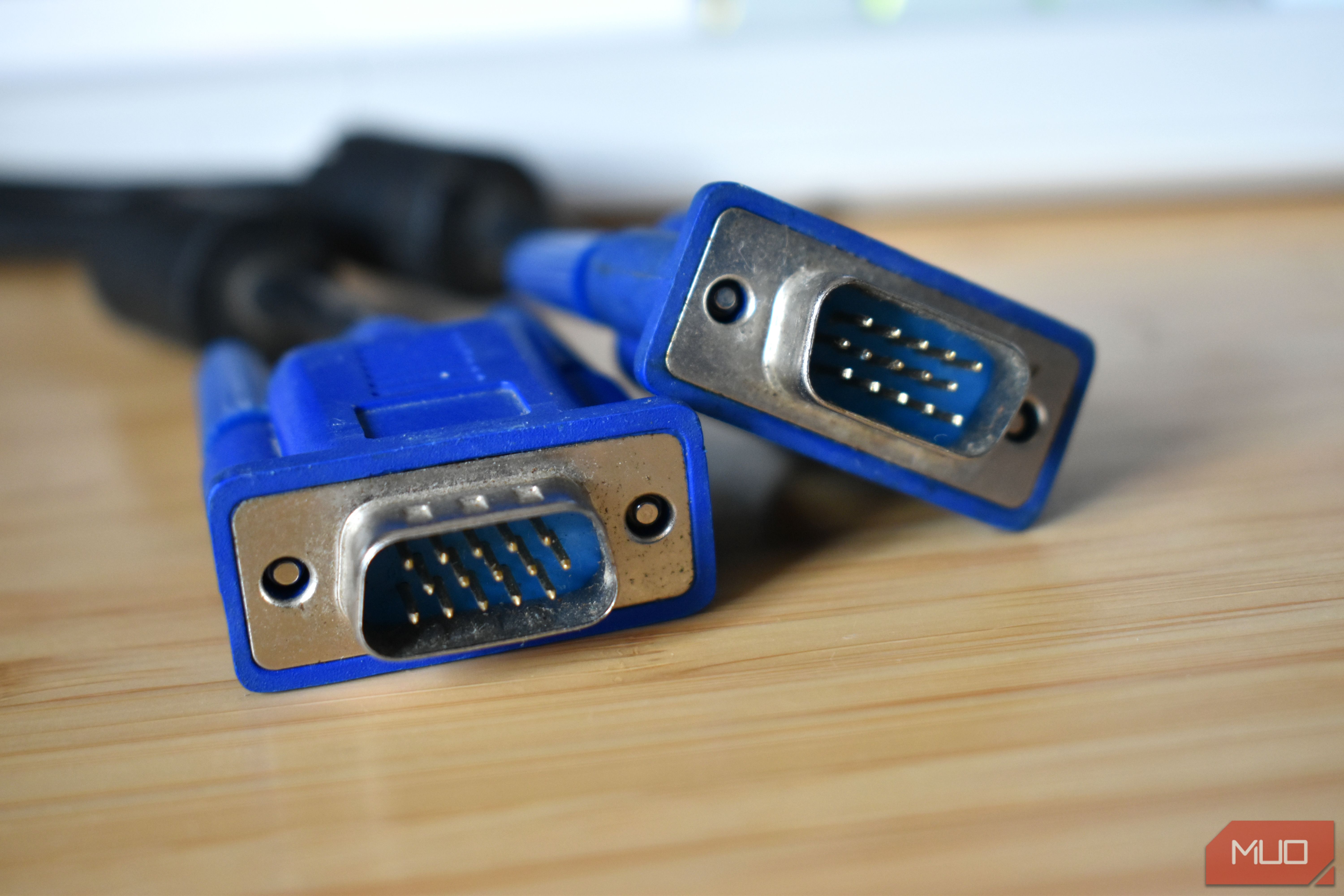
Since the 1970s, personal PCs have changed dramatically, going from massive machines to small form-factor devices, and connectivity has changed just as much. Motherboards once equipped with a plethora of ports have largely disappeared, since USB has standardized most connectivity. Display technology is similar: the evolution progresses through CGA, EGA, VGA, DVI, HDMI, DisplayPort, and USB-C, but one connector has outlasted even its successors. It’s the VGA cable, first released in 1987 and still common in most PC spaces; fast-forward 39 years, and it’s stuck around for good reason. What VGA got right from day one A licensing- and handshake-free design built for compatibility IBM manufactured the 15-pin D-sub connector, and its simplicity made it so reliable that it’s still used today. The connector carried RGB colors independently, and at the time that was a major advancement, moving from bulky cable connectors to a single, compact connector instead of RGB/BNC cable bundles that used five separate cables. Since VGA sends RGB signals and separate horizontal and vertical signals, it doesn’t require a handshake between the monitor and the video card to start sending an image, so it has no connection requirements and works across most systems. Furthermore, it had no licensing fee, which made it easier to manufacture, unlike Apple’s FireWire cables, which were supposed to be a USB rival but failed because of royalties imposed by the tech giant. Even though VGA was designed for a smaller resolution at the time (only 640×480), the analog signal could operate across different timings and resolutions, which is why it could push far beyond that and had room for hardware improvement, lasting decades. 1080p, or 1920×1080, is the practical resolution ceiling for most VGA setups, although some configurations can push it to 2048×1536; 1080p is fine for the most part, even by today’s standards. Why DVI, HDMI, and DisplayPort couldn’t replace VGA outright Each successor traded simplicity for features VGA never needed DVI was released in 1999 and developed by multiple tech giants like IBM, Intel, Fujitsu, and more. However, it still didn’t match VGA’s market momentum, even though it was superior in quality. There were multiple reasons why, starting with the fact that the connector was bulkier than VGA, which was a regression. The transition to DVI wasn’t straightforward either, and DVI had three variants: DVI-D, the digital-only variant; DVI-A, the analog cable; and DVI-I, which could carry both analog and digital signals. While this was meant to make DVI flexible across newer and older systems, it backfired by making the concept more confusing and complicated than VGA. Even though DVI wasn’t inherently bad, it had a shorter window to settle its position, since VGA had already solidified its place with millions of PCs using the cable. HDMI was released shortly after in 2002, ironing out everything wrong with DVI in the first place. HDMI, a bulky cable with hidden pins that carries both audio and video, became the standard for consoles and most computers; DisplayPort followed next, offering more bandwidth and higher refresh rates, and became the new standard for PCs. While both connectors continued to evolve and improve, USB-C also debuted as a small form-factor cable that could carry audio and video, in addition to power. Despite these newer connectors and standards being better in every imaginable way, VGA remains prevalent because of its legacy and deep entrenchment across millions of systems. The industries and devices still running on VGA From POS terminals to classroom projectors, VGA still gets the job done VGA ports are still found on newer budget or business-class boards for compatibility, similar to PS/2 ports. Although VGA ports are rarely used in personal computing anymore, they’re still widespread in industrial settings where computers haven’t been upgraded for years, or in POS environments. After all, who needs a brand-new PC with HDMI at the grocery store checkouts? Beyond computers, VGA ports still appear on projectors in schools for the same compatibility reasons, and because they don’t need high-end hardware for presenting lectures and because the hardware there lasts for ages. VGA’s 1080p ceiling is still practical and covers most of what these devices need. VGA days are numbered, but not gone yet Every piece of hardware has a lifecycle, and we are approaching the end of VGA cables, but expect a few more years before the surprising 39+ year run ends. However, those few years might even stretch further, given how much memory prices have driven computer prices to a never-before-seen high, giving the environments where VGA is used another excuse to keep using it.