Summary
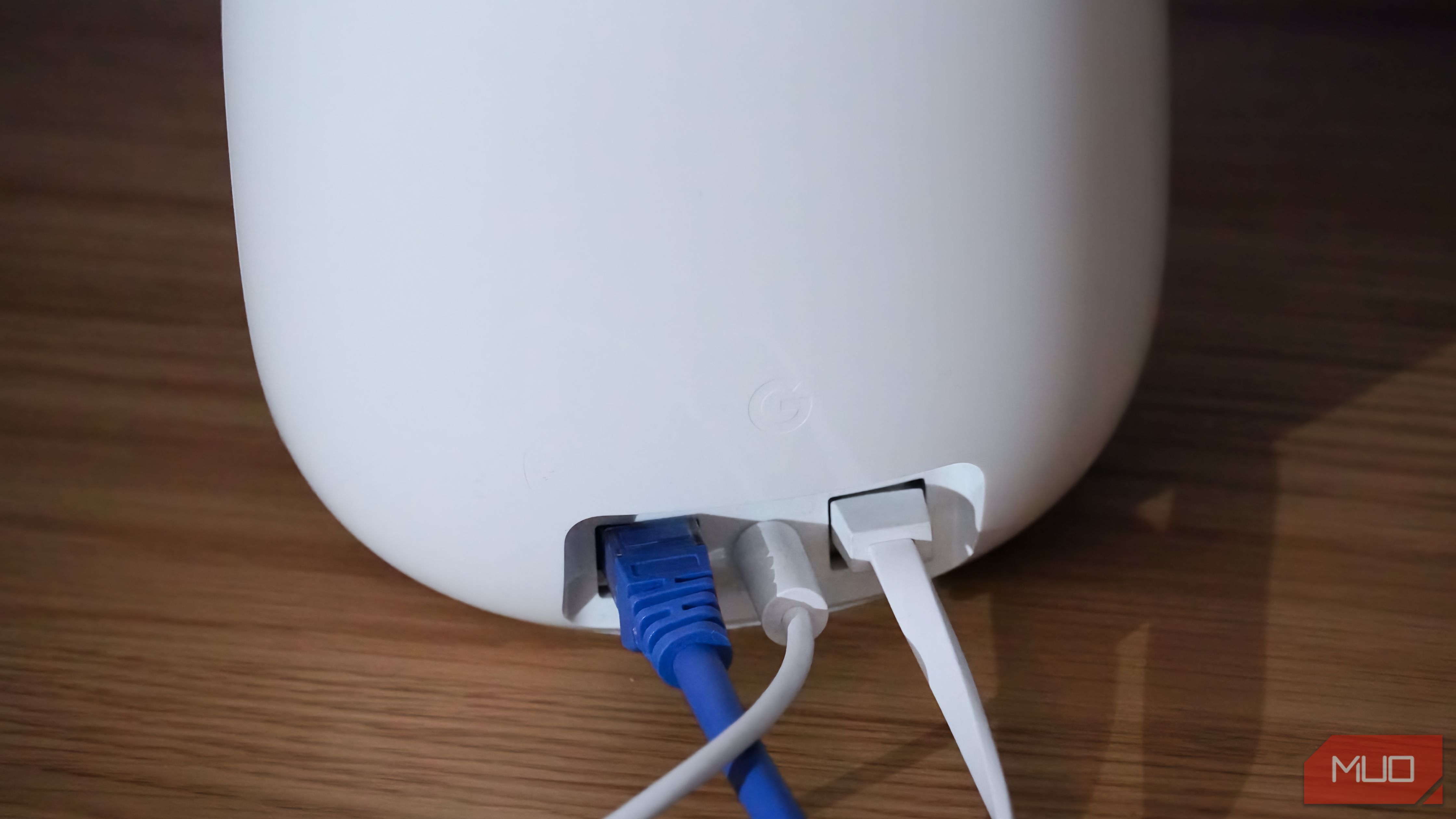
When you notice your home internet speeds aren’t meeting your household’s needs, the easiest thing to do is call up your internet service provider (ISP) and upgrade to a faster plan. If your networking gear is the bottleneck, throwing money at a more expensive plan won’t make websites load faster or help videos play without buffering. Your router, modem, and the cables connecting them are just as important as your plan’s maximum speeds. After years of slow internet speeds, I upgraded to a 1-Gigabit plan as soon as I could. Frankly, if higher-speed plans were available in my area, I’d probably upgrade to those too. Until then, Gigabit speeds power my home network, with a Google Nest Wi-Fi Pro router and unmanaged switches routing Ethernet cables to my wired devices. I originally set up my networking gear using whatever Ethernet cables I had lying around, including unbranded cords that came with cheap equipment — until I learned the value of investing in quality cables. I used a mix of random Ethernet cables for too long Flat, unbranded Ethernet cables were putting my network stability at risk It’s easy to simply use the Ethernet cables provided by your ISP, lying around in your apartment, or hidden behind the walls of your home. However, not all Ethernet cables are the same. These cables are split into different categories, which refer to their performance capabilities. For example, a CAT 5 Ethernet label stands for Category 5, and this tells you a cable is rated for at least 100Mbps speeds at distances of up to 100 meters. Contrary to popular belief, the CAT rating of an Ethernet cable isn’t as important as you may think. For shorter runs and typical home use, you can get strong performance far beyond the old CAT 5 standard’s official 100Mbps speed rating. Although newer versions exist, CAT 5, CAT 5e, and CAT 6 are more than capable of handling the average home network’s needs. Instead, the pain point arises when you use Ethernet cables that are unlabeled, use subpar materials, or have compromising form factors. The quality of the cable can matter more than its official CAT rating, which is why it’s important to know where your Ethernet cables came from and what materials were used to make them. The best round Ethernet cables use copper conductors twisted into specific pairs, and the differing rates of the twists combat issues like crosstalk and interference. But some Ethernet cables use copper-clad aluminum (CCA) instead of pure copper to cut costs. Similarly, flat Ethernet cables — while tiny and convenient — aren’t as resistant to electromagnetic interference or crosstalk. They’re not as durable, either. So, the Ethernet cables used to link devices in your network really do matter. You don’t need to splurge for CAT 8 cables designed for 40Gbps speeds, or pay hundreds for “premium” Ethernet cables. That said, you do need to avoid unbranded Ethernet cables, CCA Ethernet cables, and flat Ethernet cables (unless the situation particularly calls them). It’s easy to spot flat Ethernet cables, but to the untrained eye, identifying the CAT version or internal materials of an unlabeled and non-compliant cable can be tricky. I upgraded my router and modem, but forgot about cables The weak point in my networking setup wasn’t my gear or internet plan I spent plenty of time setting up my Wi-Fi 6E network on my Nest Wi-Fi Pro router, and added an unmanaged Gigabit Ethernet switch to connect more wired devices. A wired connection links critical devices such as my computer, streaming box, AV receiver, and gaming console to that 1-Gigabit network. I just didn’t spend enough time evaluating the quality of the Ethernet cables connecting them. I was using a flat, unbranded Ethernet cable that came with a travel router. An unlabeled Ethernet cable that, for all I know, could’ve been made out of CCA instead of pure copper. A random Ethernet cable that was sitting next to an ISP-supplied router when I moved into my apartment. I didn’t know the history behind any of the cables I deployed on my home network, but I trusted them anyway. I wouldn’t use a random USB-C charge cable that came in the box with a cheap accessory, so why would I use a similarly unknown Ethernet cable? That’s why I decided to give the Ethernet cables in my home the same treatment I already gave my internet plan and networking gear. I didn’t overpay for premium cables with snake oil marketing claims. Instead, I went with affordable yet trusted cables. The ones I invested in were from Best Buy Essentials, where you can get a 25-foot CAT 6 Ethernet cable for only $10. It’s the perfect blend of performance, price, and build quality. They’re labeled, so if I deploy them in my home and come back to them in a few years, I’ll know that they’re certified CAT cables. A new cable could save you from upgrading your plan But you don’t need to splurge on expensive cables or newer CAT standards The bottom line is simple: if the Ethernet cables in your home have a CAT rating high enough to make the most of your internet plan, you know where they came from, and you know what they’re made of, you don’t need to upgrade. There’s no need to overpay for expensive cables if the ones you have are getting the job done. On the flip side, if unlabeled cables, flat cables, or CCA cables are mixed into your networking setup, they can be the bottleneck holding top speed back. Before upgrading your router or internet plan, check your cables. I’m content with my 1-Gigabit internet plan and my Wi-Fi 6E router — Wi-Fi 7 doesn’t tempt me in the slightest. Instead of making those upgrades that would’ve been pointless in my setup, I’m glad I took the time to weed out the Ethernet cables that could be prone to signal degradation, crosstalk, or electromagnetic interference.