XR glasses gave me the laptop upgrade I thought I needed a headset for
7 min read
Summary
I’ve used an Apple Vision Pro headset for two and a half years, and to be frank, it hasn’t delivered the 3,500experienceIexpected.AftermyveryfirstVisionProdemo,IhadhighhopesthattheVRheadsetcouldbecomeanintegralpartofmycomputingworkflow.Asatechjournalist,I′moftenawayfrommydesk.WhenI′moutintheworldtestingnewgadgetsorcoveringlauncheventsontheground,Ileavemyfine−tuneddesksetupbehindforabasiclaptop.IthoughttheVisionProheadsetwouldhelpmematchmyat−homeproductivityfromanywhereintheworld,butthathasn′tbeenthecase.Infact,Idon′tbringVisionProwithmeonmosttrips.It′sstillthebestscreenformoviesandTVshowsI′veeverseen,butitisn′tacomputingworkhorse.ThebulkandhassleofpackingVisionProinmycarry−onbagoutweighedthebenefits,soIreturnedtousingmysmalllaptopscreenonceagain.Thatis,untilItriedmodernsmartdisplayglasses.Theseglassesaren′tperfect,andI′mgoingtodiveintoalltheirflaws,butthey′vefitintomymobileworkflowbetterthanaheadseteverdid.VisionProletmedownasavirtualmonitorThedisplaysstillaren′tassharpasI′dlike,andtheFOVislimitedFirst,let′sunpackwhytheVisionProwassounderwhelmingasalaptopdisplay.Theissuesactuallystartwith[theheadset′spassthroughfeature](https://www.makeuseof.com/apple−vision−pro−headset−explained/).Appletoutedthequalityofthetwohigh−resolutionmaincamerasusedforpassthroughvideo.Thecamerasrecordyourenvironment,sendthelivefeedtotheVisionPro′srealitycoprocessor,andtheprocessedversioneventuallymakesitthroughtotheheadset′sdisplays.Ideally,thepassthroughvideoqualityisconvincingenoughthatyouforgetyou′rewearingaheadset,andyourspatialwindowslooklikethey′reliterallyfloatinginspace.VisionPro′spassthroughvideoworksbestinsuperblightingconditions,likeanAppleStorewithtonsofartificiallight.Taketheheadsethome,though,andyou′llnoticegrainyandlow−resolutionpassthroughvideo.I′vefoundthatthispoorpassthroughvideoquality,pairedwiththelimitedfieldofview(FOV)andlargelightseal,ruinstheMacVirtualDisplayeffect.It′sobviousinallbutthebestconditionsthatyou′rewearingaheadsetandarenottrulyimmersedinyourenvironment.Forthoseunfamiliar,MacVirtualDisplayistheVisionProfeaturethatletsyouusetheheadsetasavirtualdisplayforyourMac.It′sentirelywireless,whichispartoftheproblem.UnlessyoupayforanAppleDeveloperProgrammembershipandapriceyDeveloperStrap,youwon′thaveaUSB−CportontheheadsettoconnectdirectlytoyourMac.ThislimitsthequalityandresponsivenessofMacVirtualDisplay,andyou′llnoticethelatencyintypicaluse.Butthebiggestissueistheresolution.AppleVisionProsupportsMacVirtualDisplaystreamingupto5KforApplesiliconmachinesandupto3KforsupportedIntelmodels.Thisdoesn′taccountforpixeldensity,though.VRheadsetsandsmartdisplayglassescanbeevaluatedwithpixelsperdegree(PPD),aspecificationthattellsyouhowmanypixelsfilladegreeoftheviewer′sfieldofview.Apple′sVisionProheadsethasaPPDofroughly34.ComparethattomyMacBookProscreen,withapixeldensityof254pixelsperinch(PPI)andatypicalviewingdistanceof1.5feet,andthedifferenceisstark.Underthesestandardconditions,theMacBookProscreenhasaPPDofabout85,whichismorethandoublethatofmyVisionProheadset.Technicalspecsaside,thismeansthatmyVisionProheadsetoffersmorescreenspacethanmylaptop,butitisn′tnearlyassharp.IfoundmyselfwonderingwhyIwasluggingaroundaVRheadsetjusttogetalower−qualityviewingexperiencethanmylaptopitself.XRglassesofferedtheperfecttrade−offWorseresolutionandFOV,butmuchbetterdesignandcomfortSmartdisplayglasseshavethesameproblemasmyVisionProheadset.Whiletheirdisplayresolutionlooksalrightonpaper,theyaren′tnearlyassharpafteraccountingforperceivedviewingdistances.Infact,thesharpnessoftextonapairofsmartglasseswillbeworsethanaheadset.However,[XRandARglassesgetenoughright](https://www.makeuseof.com/rayneo−air−2s−review/)thatI′mwillingtoacceptthesharpnesstrade−off.Itstartswiththeprice—evenpremiumdisplayglasseswithhighresolutionscanbehadforwellunder1,000. I paid more than triple that for my Vision Pro.
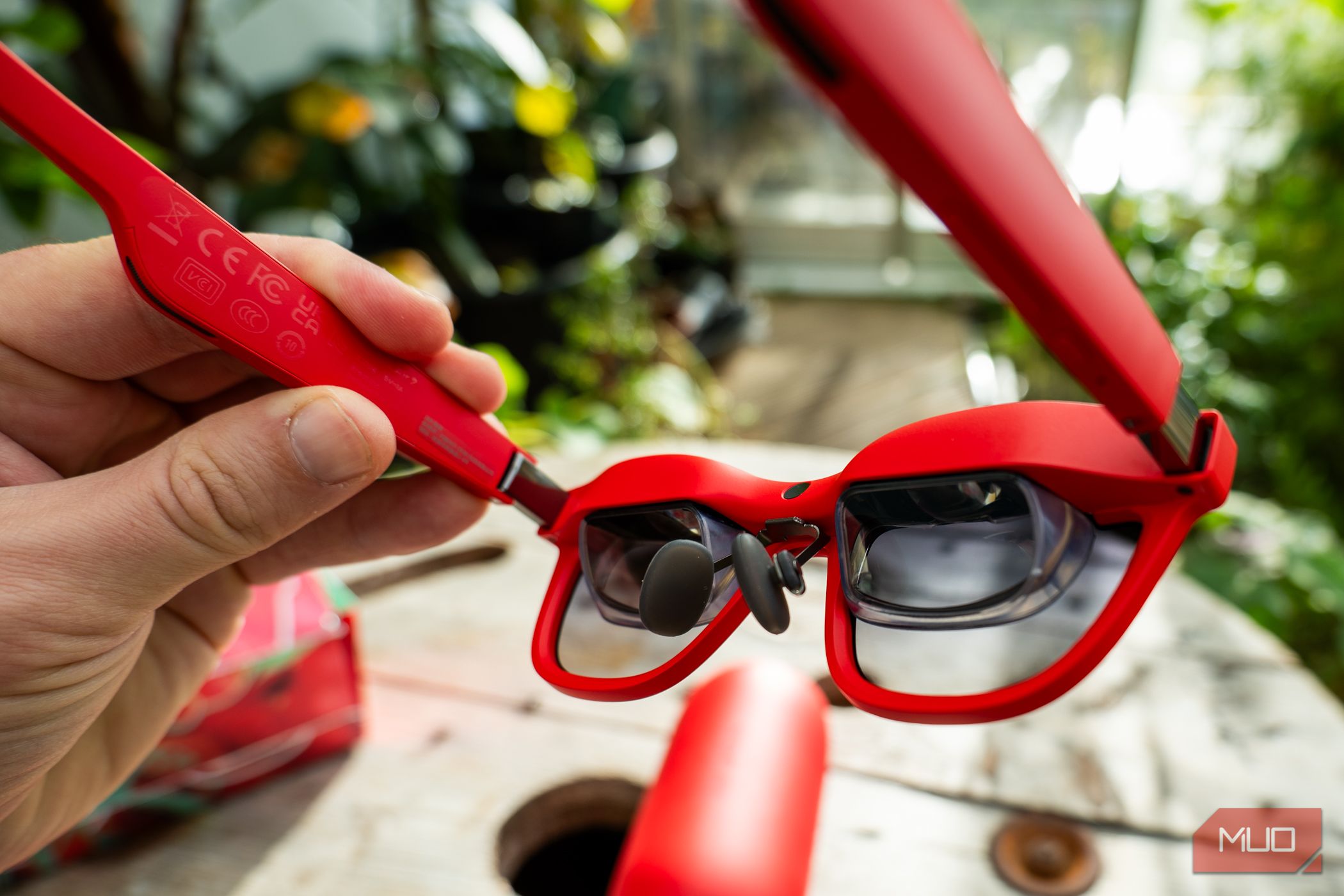
And yet, these display glasses manage to solve a few of my major gripes with Mac Virtual Display on Apple Vision Pro. They’re typically connected to your source device with a USB-C cable, which offers lower latency and better reliability. They don’t attempt to deliver passthrough video. Instead, their cameras are merely used for depth-of-field tracking and spatial positioning. Aside from the small frame of the glasses, I retain my complete peripheral vision. And with transparent lenses, I can look past the virtual screen with my own eyes.
The form factor can’t be understated, either. I can fit a pair of display glasses and their USB-C cable comfortably in my pocket. I’ve used them in cars, on trains, and while flying at 30,000 feet in the sky. They’ve become my companion in hotel rooms, and really anywhere I need to get work done. I never mastered the art of taking Vision Pro with me in the same way. The headset is too large, and too fragile, to fit comfortably in my bag. I couldn’t pull it out in an airplane economy seat without elbowing my neighbors, so it stayed stowed away until I reached my destination.
That somewhat defeats the purpose of having a portable wearable screen. In the end, I found myself consistently choosing to bring a pair of display glasses with me on trips for work instead of my pricey Vision Pro headset.
Nothing beats a traditional monitor in sharpness
If resolution and perceived pixel density are priorities, skip wearable screens
I won’t overlook the flaws of smart display glasses. Their sharpness really isn’t that great, and while text is legible on many mainstream models, that’s the best I can say about it. You should know that resolution is a compromise when picking smart glasses over a headset, especially when premium options like the Vision Pro are in the mix. However, I’ve written this entire article using a pair of Viture Beast display glasses. They can be used for work, if you value the perks and accept the trade-offs.
The takeaway here should be that nothing beats a traditional monitor. After factoring in the perceived distance of virtual screens, they’re not as sharp as they appear on paper. If you have a modern phone, laptop, or monitor, you already have a screen sharper than the best glasses and headsets in terms of PPD.
I’ve used many headsets and smart glasses, and I’ve come to the conclusion that headsets compromise too much while lacking in portability and price. Smart glasses, by comparison, help me get work done while being smaller, lighter, and more comfortable.