Summary
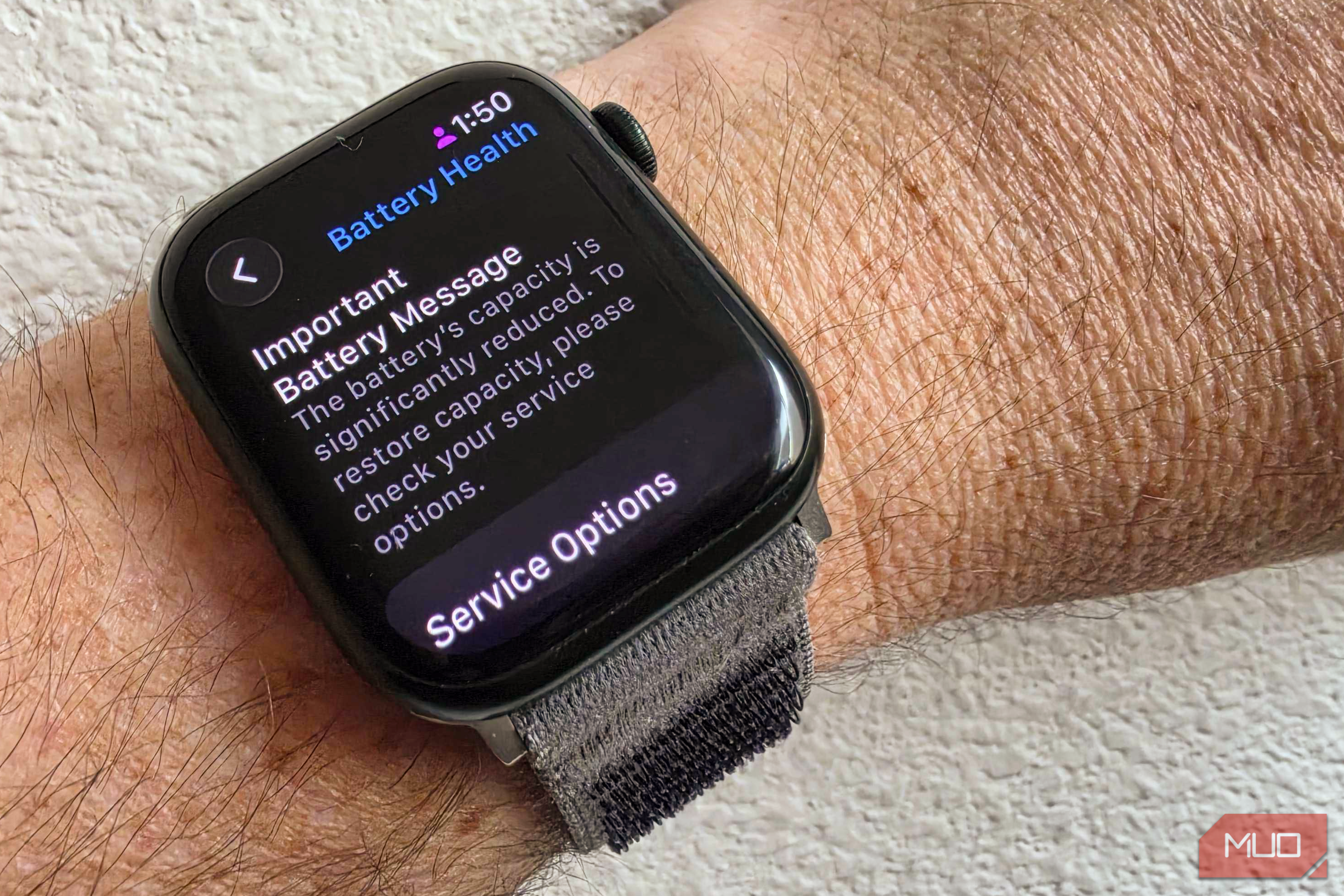
I’ve got an older Series 7 Apple Watch, and I noticed it just didn’t seem to stay charged as long as it used to. When I opened up the Battery Health Setting on the watch itself, I got some bad news. “Important Battery Message,” it said. “The battery’s capacity is significantly reduced. To restore capacity, please check your service options.” Ultimately, I ordered a new Series 12 Apple Watch, but in the spirit of making older devices last longer in these uncertain economic times, I looked around for some potential settings and apps I could disable, aside from turning the Always On display off and choosing battery-friendly watchfaces. Over three days and charge/use cycles, I toggled off six background features (Noise, Blood Oxygen, Sleep, Walkie-Talkie, and two heart notifications), then isolated Always-On Display on its own. Spolier alert: the background toggles made almost no difference. Turning off the always-on screen added four to five hours to my runtime. Here’s how it played out. Check Battery Health before you touch anything What “Service recommended” means Before testing any settings, check Settings > Battery > Battery Health on the watch. It’s good to check your battery usage and battery health on the watch before doing much else. Apple says batteries are consumable components that chemically age, and recommends considering service “if you need to charge your battery more and more frequently.” Apple’s battery service page says a battery is designed to retain up to 80% of capacity at 1,000 charge cycles. A replacement for my Series 7 battery would run about $99, so it’s not terrible. One thing that might help your Apple Watch keep from further degrading is Apple’s Optimized Battery Charging. This feature learns your charging habits and delays topping off past 80% to slow aging. It’s on by default on all models; Series 9 and later watches can’t disable it, but Series 7 owners can still toggle it off in Settings > Battery. I tested six background features first, and it barely mattered I toggled six things, starting with background sensors My first test of battery length came out with a 19 hour, 26 minute day of battery; starting at 100% around 2 pm, and finding a dead watch by 9:15 am the next day. Then I went after the toggles.
- The first thing I turned off was the Noise app, which keeps an ear out for any loud sounds in your immediate environment. It goes off all the time at rehearsal and shows I go to. Good thing I wear earplugs, then. You can toggle this one off on your iPhone with the Watch app > Noise > Environmental Sound Measurements. This app periodically samples sound through the mic all day, whether you ever check it.
- Next up, I disabled the Blood Oxygen sensor on my watch itself at Settings > Blood Oxygen > Blood Oxygen Measurements. Toggle that to OFF. This one takes background readings on its own, including while you sleep, so it should, in theory, help battery life.
- Sleep tracking was next on my Apple Watch at Settings > Sleep > Sleep Tracking > Off. Sleep tracking uses overnight sensing to log your sleep, which means the watch is working while you’re not touching it.
Then I disabled the Walkie-Talkie app, which always seemed like a good idea but never really took off for me. It’s being removed in watchOS 27, too, so maybe it never took off for lots of people. Its background availability alone seemed worth testing for its effect on your battery. You can toggle it off in the app itself or via Control Center on your watch. - I turned off Irregular Rhythm Notifications, too, as i don’t have a history of heart issues, then added High and Low Heart Rate Notifications to the OFF list. Your watch periodically checks your heartbeat for AFib signs whenever you’re still, all day long, making it a prime candidate for disabling. Hop into the watch Settings > Heart > Irregular Rhythm, OFF. High Heart Rate Notifications and Low Heart Rate Notifications are in the same spot. Then I charged my Apple Watch up again and let it ride, from about 2:30 pm until the next day, when it was dead at 9:30 am or so, giving me 18 hours and 52 minutes, a little less, but no real difference. What actually worked Turn off Always-On Display Obviously, turning off all those toggles was kind of too clever. What really worked was turning off Always-On Display. I wore the watch from 100% at 2:30 pm or so, and then it lasted till around 1:45 pm the next day, giving me 23 hours of battery life: much more than previously. Turn yours off at Settings > Display & Brightness > Always On, OFF. That’s basically the advertised battery life of a new Series 12 watch, so if I were being frugal, that alone would give me a usable amount of time. But then that’s really not using the watch much, just telling time and checking the date, sleeping, and none of the more advanced features a new Series 12 can provide. If I were needing to make this work on my Series 7 Apple Watch, I’d keep Always On Display off and would be happy. The real fix isn’t a setting Honestly, if Battery health says your battery needs service, no combination of toggles is going to save it, nor will it make it feel like a brand new watch. My Series 7 isn’t eligible for watchOS 27, either, so I opted for a new Apple Watch. If that’s not in your budget, try replacing the battery for $99 and see how that works for you.