Summary
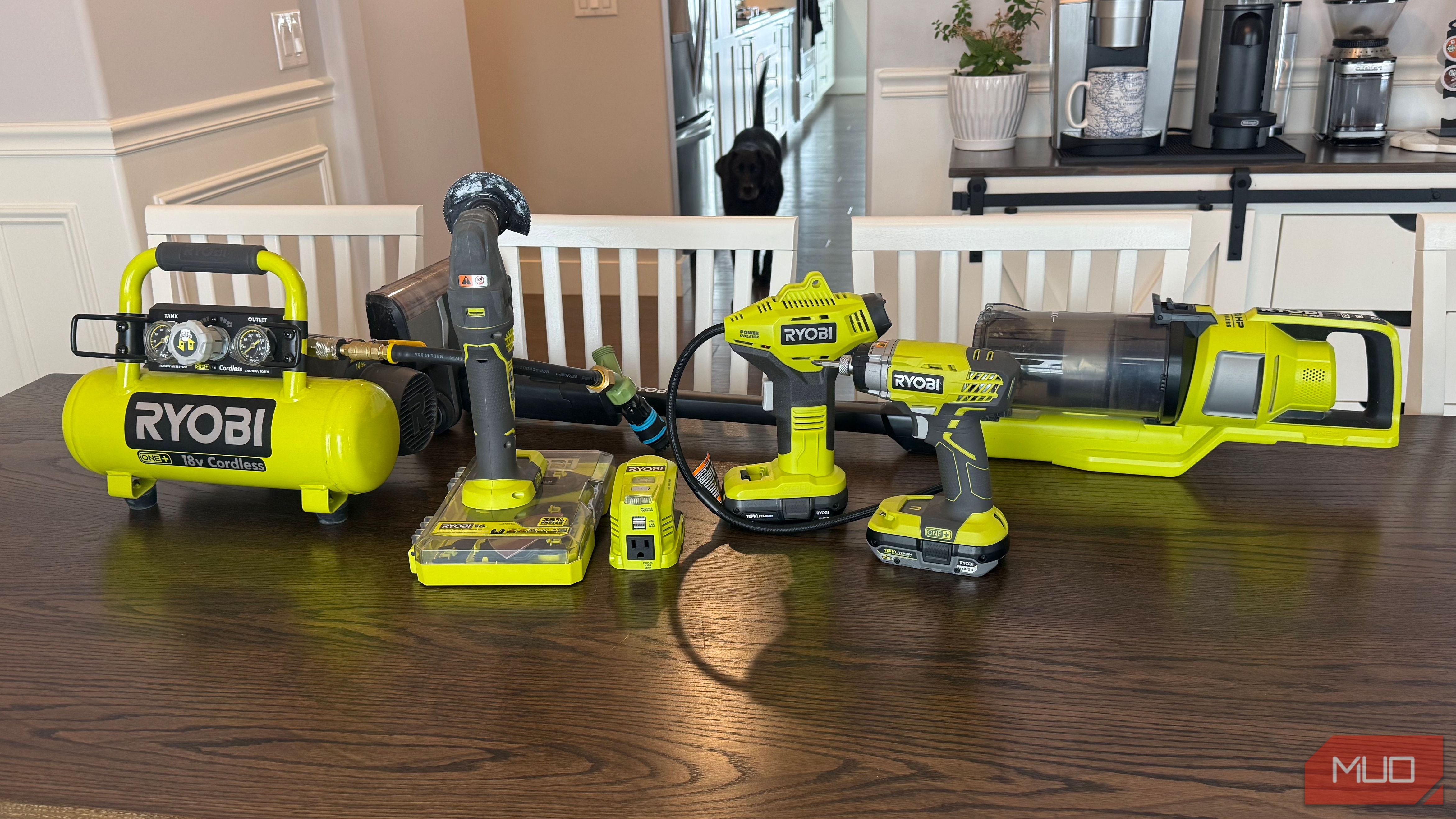
More than 20 Ryobi ONE+ tools hang in my garage, and a single 18V pack runs every one of them. The drill, the impact driver, the circular saw, the sander, the tire inflator, even a small power inverter all clip onto batteries I’ve been buying for years. I built my whole workshop around that platform, and grabbing green is usually a reflex. There’s exactly one tool where it isn’t: the table saw. Not because Ryobi’s version is broken, but because a table saw demands the one thing Ryobi engineers around a homeowner price. That gap happens to be the entire reason the tool exists. So when I finally add one to the shop, it won’t wear the green badge. Why a table saw isn’t like the rest of my green tools The fence does the work your hands can’t On a circular saw or a drill, I’m the guide. I line up the blade, follow the pencil line, and correct by feel the second I drift. A table saw reverses that deal. The blade stays put, and the fence sets the distance, so the cut is only as good as the fence’s ability to lock parallel to the blade and hold there, board after board. Run 30 rip cuts, and you want 30 identical pieces. That repeatability is the whole reason to own one instead of freehanding with a circular saw and a straightedge. A fence that reads square but sits a hair out of parallel will burn edges, pinch the blade, and throw material back at you. On a table saw, precision and safety are the same thing. Where Ryobi’s table saw actually lands Fine for plywood, short of furniture Ryobi’s table saws, the corded 8-1/4-inch model and the ONE+ cordless version, are built for someone who breaks down a few sheets of plywood a couple of times a year. They pair a brushed motor with modest rip capacity and a fence that clamps down well enough for rough work. Crosscutting 2x4s or ripping OSB, where a sixteenth of an inch means nothing, is plenty of saw for the money. Aim it at work that has to look right, though, and the ceiling arrives fast. I found out exactly where Ryobi’s precision runs dry when the HP track saw taught me which tools deserve a bigger budget: solid for framing, frustrating the moment a cut had to land clean in a visible joint. A table saw does that second job full time. Cabinet faces, drawer boxes, any seam a thumb will find, and a homeowner-grade fence starts costing you lumber. What I’d run instead, and why I’d pay up A rack-and-pinion fence earns the extra money When I buy a table saw, the money goes toward the fence, not the name on the side. DeWalt’s jobsite saws are the obvious step up, and the reason is mechanical. Their rack-and-pinion fence rides on geared rails, so it tracks parallel as you slide and lock it, rather than racking out of square the way a single-clamp fence can. That one choice separates a saw you fight from a saw you trust. Plan on roughly 379 for the compact 8-1/4-inch DeWalt, and more for the 10-inch model with wider rip capacity. If safety outranks price for you, SawStop is the direction I’d look instead: its blade brake fires the instant it senses skin, turning what could be a trip to the ER into a nicked knuckle. Either route, I’d buy corded. A table saw lives on a stand and pulls real amperage, so battery convenience matters far less here than on a tool I haul around the yard. The rest of my shop stays green One exception doesn’t undo the platform None of this is me cooling on Ryobi. The platform still wins everywhere the fence problem doesn’t apply, which is nearly everywhere I work. My impact driver, circular saw, and sander have all earned their hooks, and there’s a short list of Ryobi tools I’d pick over pricier Milwaukee gear without hesitating. One battery format covers 300-plus tools, and a pack from 1996 still clicks into a saw built this year. That consistency is why I keep buying in. The table saw is just the spot where Ryobi’s whole mission, an affordable tool anyone can own, collides with the one job that won’t bend on accuracy. Anyone stocking a first shop can lean on the Ryobi tools actually worth buying for years before this gap ever surfaces. The one green gap I’m fine living with A platform this deep earns some loyalty, and Ryobi gets plenty of mine. Loyalty shouldn’t outvote the job in front of the tool, though. The table saw is the single place where spending more buys something I can measure in every pass: a fence that lands parallel on the first cut and the hundredth. Until Ryobi builds one that competes on that alone, my green collection stops at the door where the table saw goes. Everything else in the garage can stay exactly the color it already is.