Summary
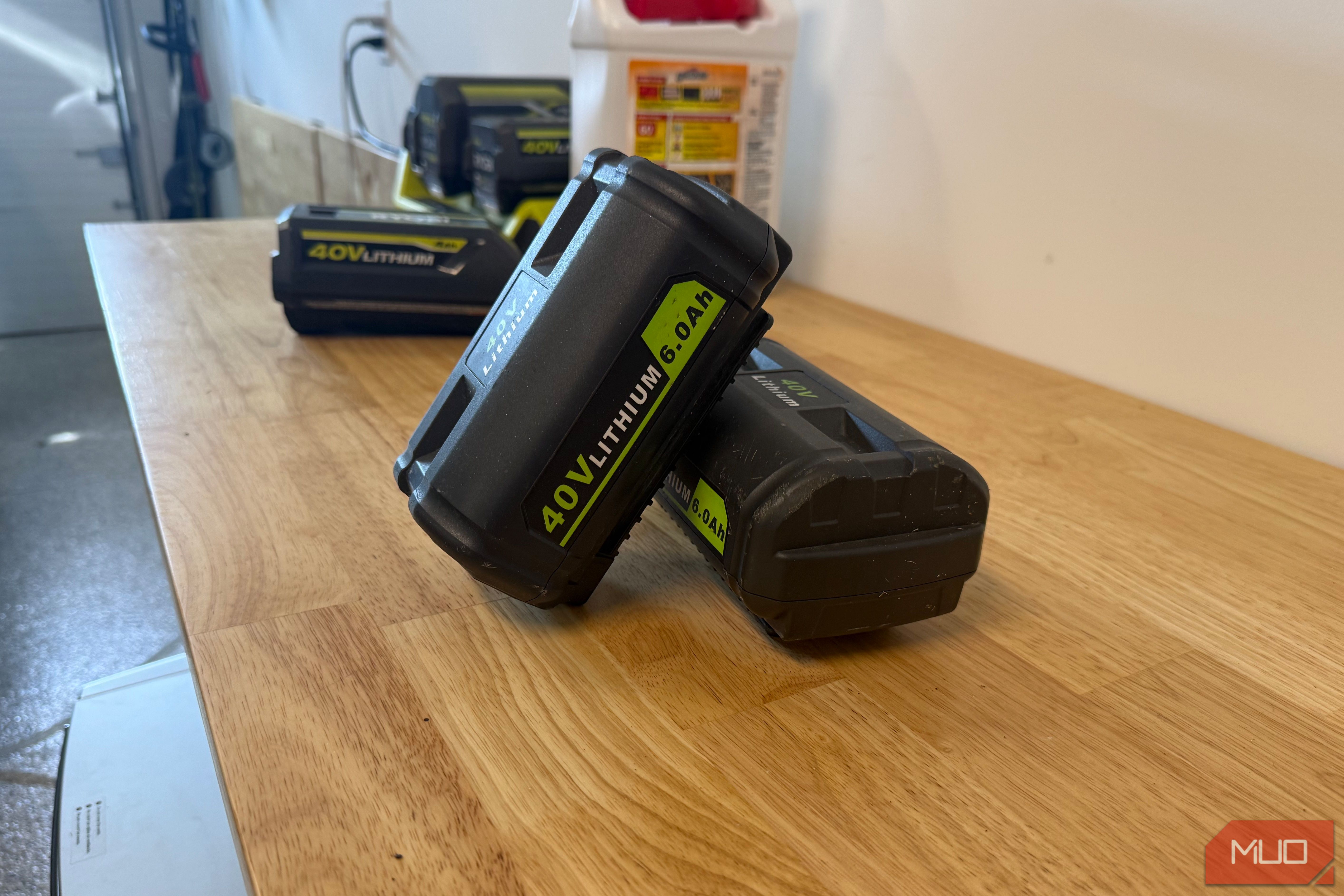
I run more than 20 Ryobi ONE+ tools off a single shelf of batteries, and every pack on it came from Home Depot. That habit stuck after I recycled a batch of off-brand packs I’d bought on Amazon. Off-brand packs at least admit what they are. Counterfeits don’t. They borrow Ryobi’s name, colors, and model numbers, then ship with cells and circuitry Ryobi never approved. The timing makes things worse. Ryobi began renaming its 18V packs in August 2026, and old and new labels will share store shelves for months, which gives a convincing fake plenty of cover. Most fakes fail at least one of the five checks below, and you can run all of them before a pack ever reaches your charger. The price and the seller don’t match a real Ryobi pack Ryobi sells through a short list of stores In the US, Ryobi batteries are a Home Depot exclusive, and the renamed 18V ONE+ Lithium packs rolling out this fall follow the same rule. Home Depot, Ryobi’s Direct Tools Factory Outlet for reconditioned and blemished stock, and a handful of authorized sellers cover nearly all legitimate supply. A marketplace storefront you’ve never heard of claiming “genuine OEM” deserves a closer look. Price is the louder warning. The PBP005 4.0Ah lists at $99, and Ryobi runs battery promotions often enough that patient buyers rarely pay full retail. Even so, real discounts have a floor. When you sort out which Ryobi packs are worth buying, sale prices land far above what the sketchiest listings charge. A brand-new “genuine” pack at a quarter of retail is used, mislabeled, or fake. A counterfeit carries no Ryobi warranty at all, so a failure after the return window becomes your problem alone. The label lists half a dozen model numbers A genuine pack answers to exactly one Flip a genuine Ryobi battery over and the label names one model: PBP005 on my green 4.0Ah, PBP004 on the teal one, and PBP007 on the 6.0Ah HP. Counterfeit packs and their listings take a different approach. They pile on old part numbers like P102, P103, P104, P105, P107, P108, and P109 so the product shows up in every search a buyer might try. That’s a compatibility pitch dressed up as a model number, and no genuine pack carries that kind of list. The rebrand adds a second check worth running. High Performance packs are becoming 18V ONE+ Lithium, and High Performance EDGE packs are becoming 18V ONE+ Lithium EDGE. Ryobi’s labels already trip up plenty of shoppers, and counterfeiters count on that confusion. Compare the pack’s wording and model number against Ryobi’s website before you buy. A pack wearing a name or tier Ryobi never sold didn’t come out of a Ryobi factory. The capacity doesn’t fit the case More amp hours need more room Counterfeiters love a big number. Listings stamp 8.0Ah on a slim pack the same size as a 4.0Ah, often with P108 printed alongside it, a model number Ryobi once used for a 4.0Ah battery. Ryobi does sell a real 8.0Ah pack, the PBP1008, but it gets there with larger 21700 cells inside a bigger housing. Capacity comes from cell size and cell count, and a slim shell only holds so much of either. People who have opened fakes keep finding the same shortfall. One eBay reviewer cracked open a supposed 4.0Ah pack and found 10 cells rated at 1,500mAh each, which adds up to 3.0Ah. Another opened a claimed 5.0Ah pack and found just five cells, with empty space where five more belonged. Side by side on my shelf, the 6.0Ah HP stands taller than my 4.0Ah packs and weighs more. Any pack claiming more capacity in less space is promising something its cells can’t deliver. It weighs less than it should A kitchen scale catches what the label hides Missing cells mean missing mass, which makes a kitchen scale one of the easiest counterfeit detectors you already own. Home Depot’s spec sheets put the PBP005 4.0Ah at 1.83 pounds and the PBP007 6.0Ah HP at 2.18 pounds. A pack advertising 6.0Ah or more that weighs about what a 4.0Ah should, or less, is hiding something. If you own a genuine pack with the same rating, weigh the two together, since spec-sheet figures can drift a little from the real thing. The weight gap becomes a runtime gap as soon as the pack goes to work. Project Farm ran genuine and knockoff Milwaukee M18 batteries through the same tool, and the genuine pack lasted more than 39 minutes. The knockoffs quit somewhere between 16 and 26. That test covered a different brand, but the lesson carries over to Ryobi. Counterfeiters cut costs on cells first, and cells account for both a pack’s weight and its runtime. The fine print is missing or misspelled Serial numbers, safety marks, and spelling Genuine packs carry a dense label on the underside listing the model number, serial number, voltage, capacity, and compliance details. Counterfeits often skip the serial number or print a label that looks thin next to the real thing. The FBI’s guidance on counterfeit goods lists misspelled labels and missing manufacturer numbers among the most common warning signs. Spelling errors turn up more often than you’d expect. A listing that sells “Ryobii” packs with “Lithiumm Ionn” cells tells you how much care went into the product. Safety marks deserve the same scrutiny. A pack advertising CE, FCC, and RoHS badges in place of a recognized lab like UL or CSA gives you no evidence that anyone tested it with Ryobi’s chargers and tools. Those three badges tell you very little about whether a lithium-ion pack will stay cool under a heavy load. Buy your next pack where Ryobi sells it If a pack in your garage fails two or more of these checks, stop using and charging it. Ask the seller for a refund, report the listing to the marketplace, and drop the battery at a lithium-ion recycling point instead of the trash. Then replace it the dull way, from Home Depot, ideally during one of Ryobi’s frequent battery sales. ONE+ has kept the same battery connection since 1996, so a genuine pack bought today should run tools you haven’t even bought yet. A counterfeit can’t offer that.