Summary
Summary
- Starting October 9, free Gemini users will only have access to Flash-Lite, while AI Plus subscribers will lose access to Pro.
- Gemini’s Low, Medium, and High effort settings let users balance response quality against how quickly they consume their usage allowance.
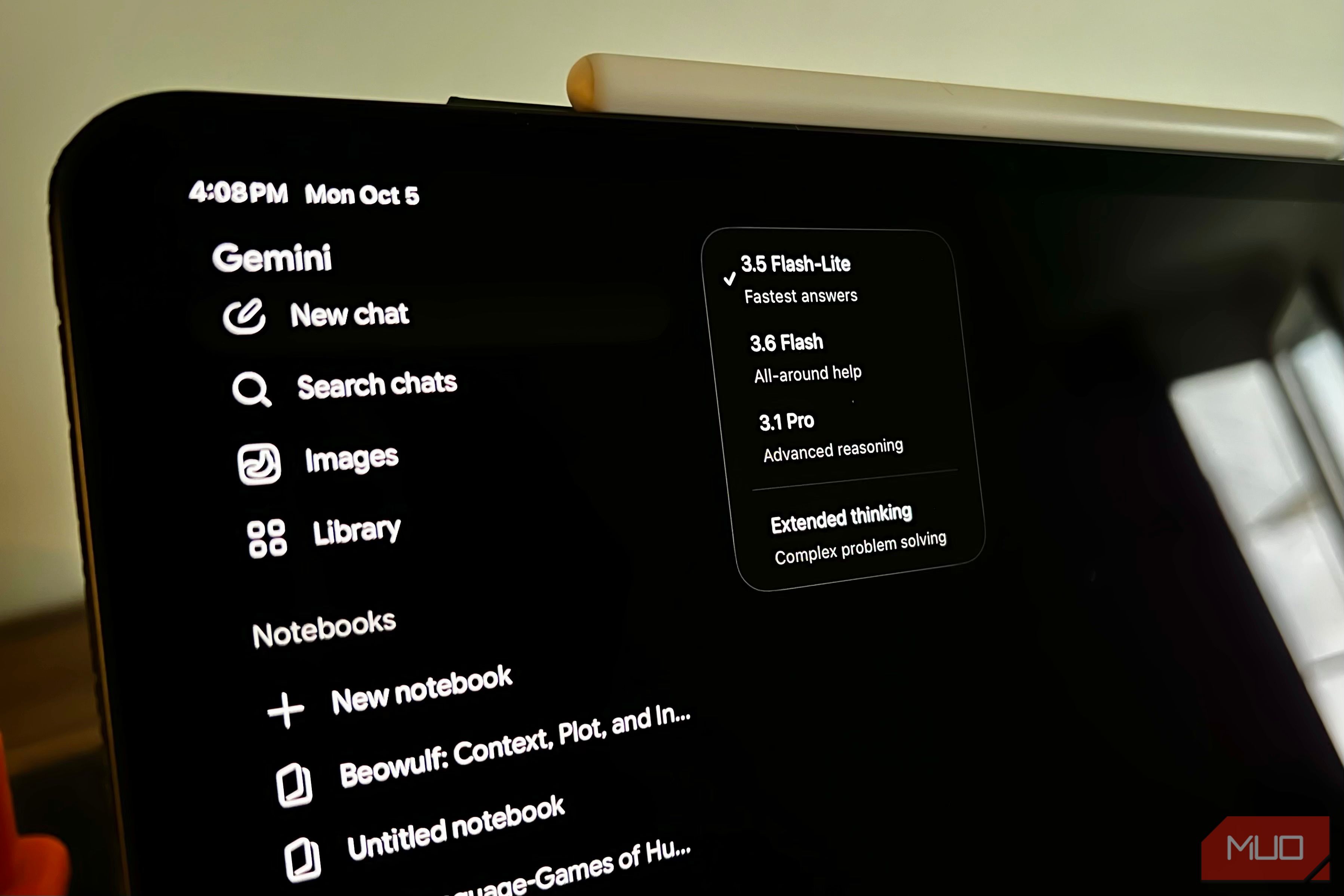
- Google joins OpenAI in restricting access to advanced AI models, as the enormous cost of running them increasingly falls on users. Google is moving more capable Gemini models behind paid subscriptions. According to Google’s updated support page, people using Gemini without a Google AI plan will only be able to use the Flash-Lite model. The Flash and the more advanced Pro models that you could use up until now will be inaccessible on October 9 unless you get a paid plan. AI Plus subscribers are affected, too. As Google’s most affordable AI subscription, AI Plus will only allow switching between the Flash-Lite and Flash models and, like the free tier, will lose access to Pro. If you’re on the AI Plus subscription, Google will send you an email explaining when these changes will take effect for your account. Less flexibility and pricier AI models And different “effort” grades to make matters even more confusing With these changes coming to personal accounts, accessing the three currently available Gemini models will look like this:
- Gemini Flash-Lite: accessible without a plan and available on all paid tiers
- Gemini Flash: not accessible without a plan, but available on all paid tiers
- Gemini Pro: only available on AI Pro and AI Ultra subscriptions Moreover, Google will allow you to choose between Low, Medium, and High effort levels when using any of its models. In theory, raising the effort should help Gemini complete tougher tasks and produce more thorough answers, but it will also consume your usage allowance faster. This kind of resembles ChatGPT’s model picker. With some models, OpenAI lets you select effort levels, but you can turn the knob to 11 if “high” effort is not enough for the task at hand by choosing “extra high.” (Just imagine what we can do with AI when these companies give us the “ultra extra mega high” effort option, am I right?) I’m not sure if these labels are supposed to make it easier to use AI or not. Names such as “Flash” and “Pro” are too abstract to give me any tangible measurement of what capabilities I can expect. Now add effort grades for each, and I’ll end up arguing with myself over whether to choose a lazy genius AI or a dumber model with more perseverance to minimize my token usage. Running the best AI models is getting expensive Google is not the only one making changes that have dissatisfied just about all of its AI users. OpenAI has recently pulled a similar move by halving advanced-model allowances on some paid plans. Many users complained about this, saying they are not getting their money’s worth. To soften the blow, OpenAI began giving some existing Pro users free GPT credits as a temporary buffer. In a shocking turn of events, however, Anthropic has taken a more generous approach lately. Alongside the launch of Claude Opus 5.5, the company raised its five-hour usage limits by 20 percent for Pro, Max, Team, and eligible Enterprise subscribers and reset their limits. That said, users are still complaining about reaching hourly and weekly limits long before finishing a task. It’s not difficult to understand why these companies keep tinkering with access. It has always been a go-to strategy in Silicon Valley to offer products and services for cheap to establish a recurring audience and then begin raising the prices. Many AI businesses are still spending far more than they earn. OpenAI, for example, reportedly generated 38.5 billion net loss. Unfortunately, the bill is increasingly landing on users’ laps. Gemini may keep getting smarter, but from October 9, its smartest options will depend much more heavily on how much you pay.